

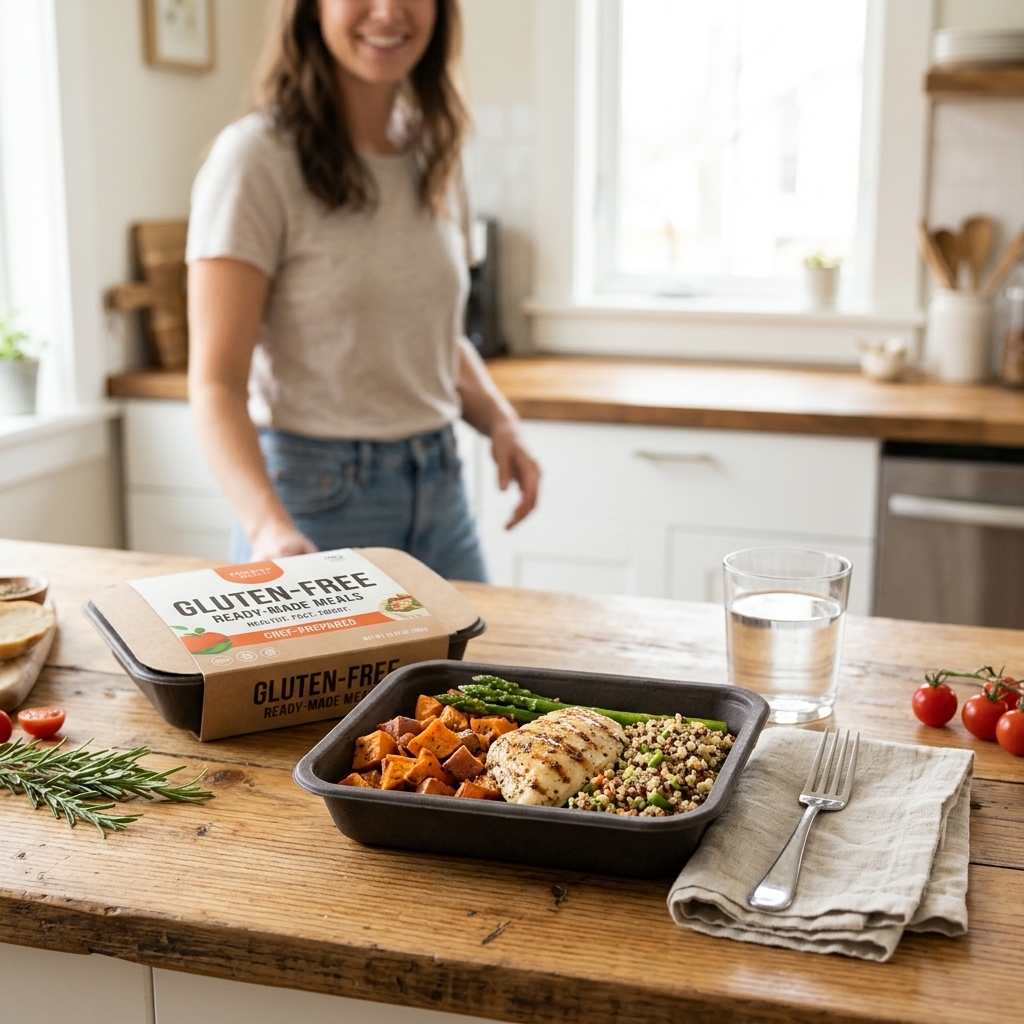

Managing coeliac disease or a severe gluten intolerance requires constant vigilance, especially when relying on pre-prepared food. A single trace of wheat, rye, barley, or oats can trigger significant health symptoms, making ingredient lists alone insufficient for safe meal selection. Understanding the difference between general marketing claims and formal certification helps consumers make informed choices without guesswork.
In Australia, strict food safety frameworks govern how manufacturers produce, test, and label their dishes. Knowing what sits behind a certification logo—and how it differs from informal kitchen practices—empowers you to evaluate ready-made options with confidence.
How Gluten-Free Certification Works for Ready-Made Meals
Formal gluten-free certification is a voluntary, third-party verification process that goes beyond basic self-declaration. Independent organisations audit a food manufacturer's entire supply chain, ingredient sourcing, and production facility before granting permission to display a recognised certification mark on packaging.
For consumers seeking reliable gluten free ready made meals, certification provides an added layer of accountability. Rather than relying solely on a brand's internal assurances, certified products undergo regular laboratory testing and scheduled facility inspections to confirm that finished dishes meet strict safety thresholds.
Third-Party Audits and Ongoing Compliance
Certification bodies require manufacturers to document every raw material entering their kitchen. Suppliers must provide certificates of analysis proving that base ingredients—such as sauces, spices, and starches—contain no detectable gluten.
Once approved, the facility must maintain ongoing compliance through periodic batch testing and unannounced or scheduled audits. If a recipe changes or a new ingredient supplier is introduced, the updated product must be re-evaluated before it can carry the certification mark.
Why Certification Matters for Pre-Prepared Dishes
Ready-made meals often combine multiple complex components, including gravies, marinades, and grain alternatives. Each added ingredient increases the risk of hidden gluten entering the final dish.
Certified production lines help minimise this ambiguity by enforcing documented checks at every stage of assembly, packaging, and storage.
Australian Food Standards and Labelling Rules Explained
In Australia, food labelling is regulated under the Australia New Zealand Food Standards Code, overseen by Food Standards Australia New Zealand (FSANZ). This legal framework sets clear boundaries around what manufacturers can print on packaging.
Under the Code, a food labelled as 'gluten-free' must contain no detectable gluten. Unlike some overseas jurisdictions that permit a threshold of up to 20 parts per million, Australian regulations apply a stricter 'no detectable gluten' standard, meaning any measurable trace disqualifies a product from carrying the claim.
Mandatory Allergen Declarations
Australian law requires manufacturers to declare gluten-containing cereals—specifically wheat, rye, barley, and oats—in plain English on the nutrition and ingredient panel. Even if a dish is not marketed as gluten-free, these allergens must be clearly highlighted.
Precautionary statements such as 'may contain gluten' are voluntary, but reputable producers use them when shared equipment creates a genuine risk of trace cross-contact.
The Role of Coeliac Australia Endorsement
Alongside government regulations, Coeliac Australia operates an endorsement programme that allows qualifying brands to display the Crossed Grain logo. Products bearing this symbol have been independently verified to meet the organisation's strict criteria for people with coeliac disease.
Seeing this logo on professional gluten free ready made meals signals that the producer has met both national legal standards and additional community-backed testing benchmarks.
Testing, Cross-Contamination Controls, and Kitchen Protocols
Even when a recipe uses naturally gluten-free ingredients, airborne flour or shared cooking surfaces can compromise the final meal. Preventing cross-contamination is therefore one of the most demanding aspects of safe meal production.
Manufacturers achieve this either by operating dedicated gluten-free facilities or by implementing rigorous separation protocols within shared commercial kitchens. Both approaches require strict adherence to documented hygiene and scheduling rules.
Dedicated Facilities Versus Shared Kitchens
A dedicated gluten-free kitchen processes no wheat, barley, rye, or oats on site, which substantially reduces the risk of accidental cross-contact during preparation. This model offers the highest level of assurance for individuals with severe sensitivities.
Shared kitchens can still produce safe meals, provided they schedule gluten-free runs first thing in the morning after a deep sanitisation, use colour-coded utensils, and store certified ingredients in sealed, segregated areas.
Laboratory Swabbing and Batch Testing
To verify that cleaning protocols actually work, producers use surface swab tests to check benches, slicers, and conveyor belts for protein residue before cooking begins. Finished meal batches are also sampled and sent to accredited laboratories for ELISA testing, which detects gluten proteins down to extremely small concentrations.
Understanding 'Gluten-Free' Versus 'Gluten-Friendly' Claims
Consumers frequently encounter terms such as 'gluten-friendly', 'low gluten', or 'made without gluten-containing ingredients' on menus and meal delivery websites. These phrases are not legally equivalent to 'gluten-free' and do not carry the same safety guarantees.
A 'gluten-friendly' meal typically means the recipe itself excludes gluten-based ingredients, but the dish was prepared in an environment where cross-contamination remains possible. For someone with coeliac disease, this distinction is critical, as even microscopic traces can cause intestinal damage without immediate symptoms.
Practical Steps for Choosing Safe Ready-Made Meals
Before ordering from a meal service, inspect the product page or packaging for clear, unambiguous wording. Look for an explicit 'gluten-free' claim backed by a recognised certification logo, rather than vague assurances about ingredient choices.
If you are unsure about a provider's kitchen setup, contact their customer support team to ask whether they use a dedicated facility, how they test finished batches, and whether their sauces and seasonings are independently verified. Transparent providers will readily share their food safety protocols so you can dine with peace of mind.
Conclusion
Navigating the ready-made meal market with coeliac disease or gluten intolerance requires looking beyond marketing headlines to understand the standards underneath. Australian food laws, third-party certifications, and strict kitchen controls all work together to protect consumers from hidden allergens.
By prioritising verified gluten-free labels, checking for recognised endorsement logos, and asking direct questions about cross-contamination practices, you can enjoy convenient meals without compromising your health.
Frequently Asked Questions
What does 'no detectable gluten' mean under Australian food standards?
Under the Australia New Zealand Food Standards Code, 'no detectable gluten' means that laboratory testing cannot find any measurable trace of gluten in the finished food product. This is stricter than the 20 parts per million threshold used in several other countries.
Is a 'gluten-friendly' ready-made meal safe for coeliac disease?
No, a 'gluten-friendly' meal is generally not considered safe for people with coeliac disease because it indicates the dish was prepared in a kitchen where cross-contamination may occur. Individuals with coeliac disease should look for products explicitly labelled 'gluten-free' or carrying a recognised certification mark.
How do manufacturers test ready-made meals for gluten?
Producers typically use accredited laboratory methods such as ELISA testing on finished meal samples alongside surface swabbing of kitchen equipment. These tests confirm that both the ingredients and the preparation environment meet strict safety thresholds.
Are oats allowed in certified gluten-free meals in Australia?
No, Australian food standards prohibit oats from being included in any product labelled 'gluten-free'. This is because oats contain avenin, a protein that can trigger reactions in some people with coeliac disease, and they are frequently contaminated with wheat or barley during harvesting.
Why should I look for third-party certification on meal packaging?
Third-party certification means an independent organisation has audited the manufacturer's ingredients, suppliers, and kitchen protocols. It provides an extra layer of verification beyond a brand's own internal claims.



