

Industrial machinery relies on controlled rotational movement to perform various manufacturing, material handling and mechanical operations. Torque and speed are two essential parameters that influence the performance of hydraulic equipment.
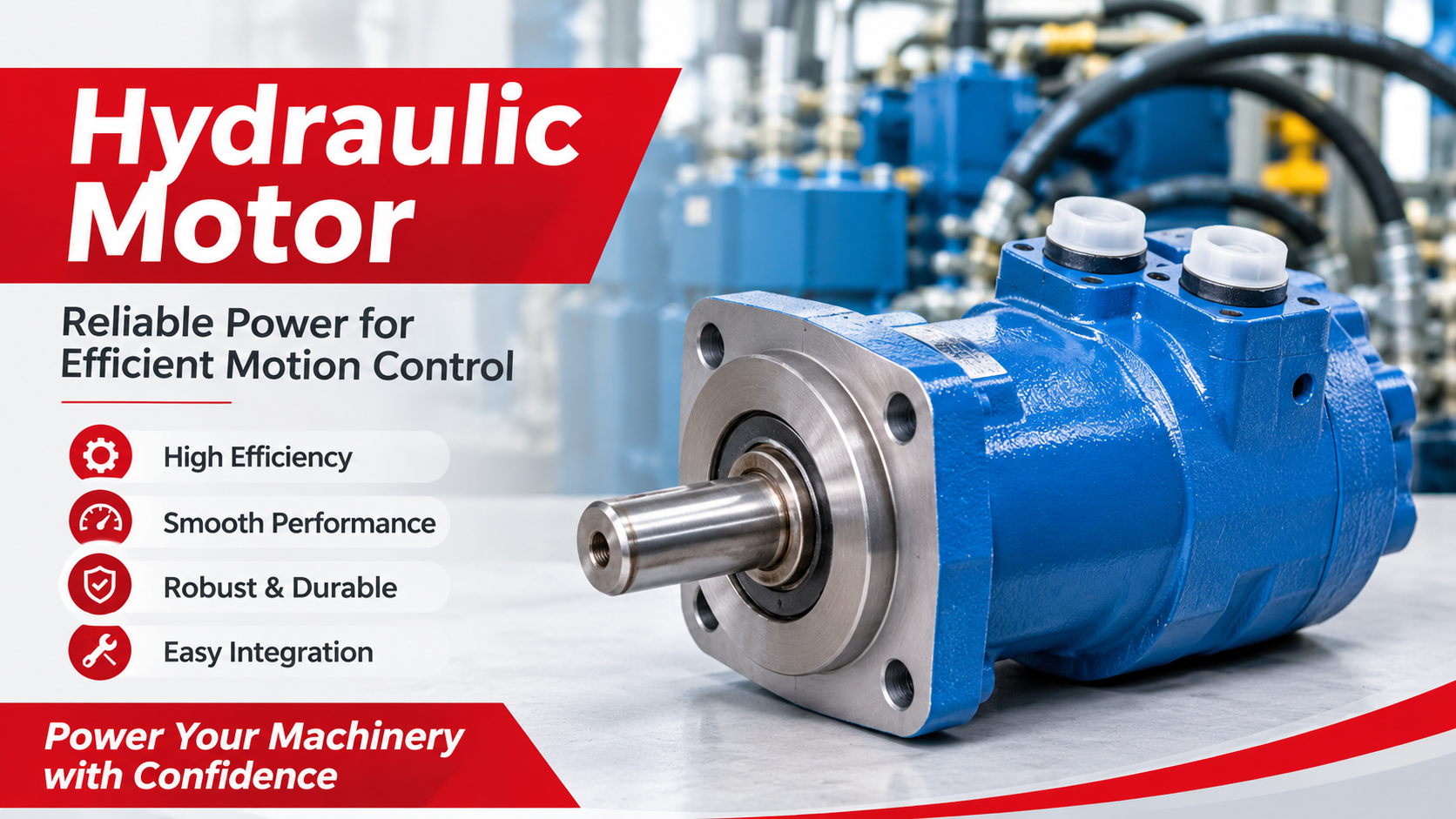
A Hydraulic Motor converts hydraulic energy into mechanical rotational energy. It allows industrial equipment to perform demanding operations by delivering the required torque and rotational speed.
Understanding the relationship between these parameters helps equipment manufacturers, engineers and industrial buyers select suitable components, manage energy consumption and improve operational reliability.
What Is Torque in a Hydraulic Motor?
Torque refers to the rotational force generated by a motor. It determines the motor's ability to rotate mechanical components against a resisting load.
Industrial equipment such as winches, conveyors and drilling machines often requires substantial torque to perform demanding operations.
Hydraulic motor torque primarily depends on the following factors:
-
Pressure difference across the motor
-
Motor displacement
-
Mechanical efficiency
-
Operating load
Higher pressure differences generally produce greater torque at a given displacement, provided the motor operates within its rated limits.
Understanding Hydraulic Motor Speed
Hydraulic motor speed refers to the number of revolutions completed by the output shaft per minute. It is generally measured in revolutions per minute (RPM).
Motor speed primarily depends on fluid flow rate, displacement and volumetric efficiency.
Experienced Hydraulic Motor Manufacturers offer different motor configurations to accommodate the speed and torque requirements of industrial equipment.
While some machines require slow and powerful rotational movement, others depend on higher rotational speeds to maintain production efficiency.
What Is the Relationship Between Hydraulic Motor Torque and Speed?
Torque and speed work together to determine the mechanical power delivered by a motor.
At a constant flow rate, increasing motor displacement generally reduces rotational speed while increasing torque at a given pressure difference.
Engineers must balance these parameters according to the intended application.
|
Parameter |
Torque |
Speed |
|---|---|---|
|
Measurement unit |
Newton metre (Nm) |
Revolutions per minute (RPM) |
|
Primary influencing factor |
Pressure difference |
Fluid flow rate |
|
Main function |
Rotational force |
Rotational movement |
|
High-demand applications |
Winches and drilling machines |
Fans and centrifugal drives |
|
Displacement effect |
Increases with displacement |
Decreases with displacement at constant flow |
Selecting a motor based only on torque or speed may result in inefficient machinery performance.
How Torque and Speed Influence Industrial Machine Performance
1. Load Handling Capacity
Adequate torque helps machinery overcome resistance during demanding mechanical operations. This is particularly important in material handling, construction and heavy engineering applications.
2. Production Efficiency
Appropriate rotational speed allows industrial machinery to operate according to its intended production cycle. Consistent speed control can also support uniform processing.
3. Energy Consumption
A correctly sized motor can help minimise avoidable energy losses. Excessive pressure drops, internal leakage and unsuitable displacement may increase power consumption.
4. Component Durability
Operating within recommended torque and speed limits helps reduce unnecessary mechanical stress on shafts, bearings and other connected components.
5. Operational Stability
Proper motor sizing and hydraulic circuit design support controlled movement under changing load conditions.
Industrial Applications Based on Torque and Speed Requirements
Different industries require different combinations of rotational speed and torque.
|
Industrial application |
Primary operating requirement |
|---|---|
|
Conveyor systems |
Consistent speed and torque |
|
Construction machinery |
High torque under varying loads |
|
Agricultural equipment |
Reliable rotational performance |
|
Industrial mixers |
Controlled speed and sustained torque |
|
Marine winches |
High torque at low speeds |
|
Drilling equipment |
High torque and adjustable speed |
|
Manufacturing machinery |
Precise speed control |
Reliable Hydraulic Motor Suppliers can help industrial buyers evaluate different motor configurations based on equipment specifications and operating conditions.
Factors to Consider When Selecting an Industrial Hydraulic Motor
Industrial buyers should evaluate several technical parameters before purchasing a hydraulic drive component.
-
Maximum and continuous operating pressure
-
Required starting and running torque
-
Rotational speed range
-
Motor displacement capacity
-
Hydraulic fluid compatibility
-
Mechanical and volumetric efficiency
-
Mounting and shaft configuration
Buyers should also discuss spare parts availability, technical documentation and maintenance support with Hydraulic Motor Dealers before finalising their purchase.
How to Maintain Consistent Hydraulic Motor Performance
Regular maintenance helps industrial facilities maintain stable torque and speed during machinery operation.
Maintenance teams should monitor fluid cleanliness, operating pressure, oil temperature and abnormal vibrations. They should also inspect hydraulic connections and investigate changes in rotational performance.
Maintaining accurate equipment service records can help identify developing problems before they cause significant production interruptions.
Why Choose N.T. Associates for Industrial Hydraulic Motors?
N.T. Associates & Trading Co. offers hydraulic motors in gear, vane and piston configurations for various industrial applications.
Businesses searching for Hydraulic Motor Manufacturers in India can explore the company's product range and discuss application-specific requirements, including operating pressure, rotational speed and torque capacity.
Selecting compatible hydraulic components supports reliable machinery operation and long-term industrial productivity.
Conclusion
Torque and speed directly influence the operating characteristics of hydraulic motors. Understanding their relationship helps industrial buyers make informed purchasing decisions and improve equipment compatibility.
By evaluating motor displacement, hydraulic pressure, fluid flow and operating conditions, businesses can select suitable equipment, reduce avoidable energy losses and maintain consistent industrial performance.
Frequently Asked Questions (FAQs)
1. What determines the torque of a hydraulic motor?
Motor displacement, pressure difference across the motor and mechanical efficiency primarily determine its output torque.
2. How can hydraulic motor speed be controlled?
Motor speed can be controlled by regulating hydraulic fluid flow or adjusting displacement in compatible variable displacement motors.
3. Which hydraulic motors are suitable for high-torque applications?
Radial piston motors and suitable orbital hydraulic motors are commonly used in low-speed, high-torque applications.
4. What causes a hydraulic motor to lose torque?
Internal leakage, insufficient pressure difference, component wear and hydraulic fluid contamination can contribute to torque loss.
5. How do I select the right hydraulic motor for industrial machinery?
Evaluate load requirements, operating pressure, torque, rotational speed, displacement and hydraulic circuit compatibility before selecting a motor.



