

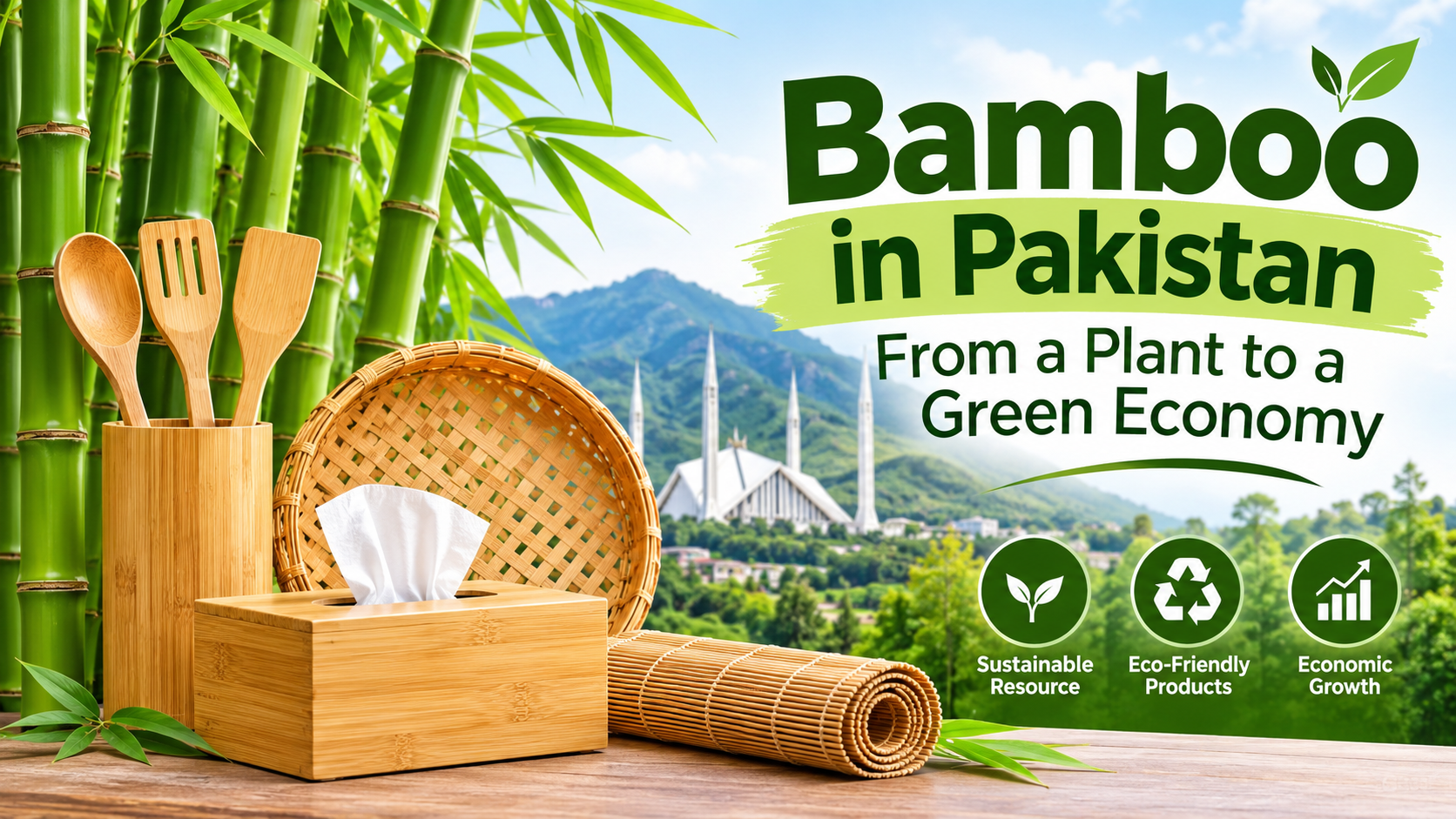

As environmental concerns continue to grow around the world, people are becoming more interested in sustainable materials and eco-friendly alternatives. From reducing plastic consumption to choosing renewable resources, small lifestyle changes can contribute to a healthier environment. One natural resource receiving increasing attention is bamboo.
Bamboo is a fast-growing plant with a wide range of applications in agriculture, construction, furniture, food production, and household products. Its versatility makes it an interesting opportunity for developing countries like Pakistan, where sustainable industries can support both environmental protection and economic growth.
1. Why Bamboo Is an Important Natural Resource
Bamboo is technically a type of grass rather than a tree. Unlike many traditional timber species, certain bamboo varieties grow rapidly and can be harvested repeatedly when managed responsibly.
Its practical characteristics make it useful for several industries. Bamboo can be processed into furniture, decorative items, kitchen accessories, construction materials, and packaging solutions.
Another important advantage is its ability to grow in different environmental conditions, depending on the species. With appropriate agricultural practices, bamboo cultivation can provide additional opportunities for farmers and rural communities.
2. Bamboo and Sustainable Agriculture
Agriculture plays an essential role in Pakistan's economy. Exploring alternative crops and renewable resources can help farmers diversify their activities and develop additional income streams.
Bamboo cultivation offers opportunities in suitable regions where soil, rainfall, temperature, and water availability support its growth.
Farmers can potentially benefit from bamboo through:
-
Selling harvested bamboo for furniture and handicrafts.
-
Supplying raw materials to manufacturing businesses.
-
Supporting local nurseries and plantation projects.
-
Exploring bamboo-based food processing.
-
Developing value-added agricultural products.
However, successful cultivation requires suitable species selection, proper plantation management, and access to reliable markets.
3. Bamboo in Food and Traditional Products
Bamboo is not only useful for construction and furniture. Tender bamboo shoots are also consumed in different Asian cuisines.
They can be prepared in various ways, including cooking, pickling, preserving, and processing into different food products.
Pakistan's food industry has opportunities to explore bamboo-based products and introduce consumers to new traditional and modern food experiences.
Some examples include:
-
Bamboo murabba as a sweet preserved food.
-
Bamboo jam as a breakfast spread.
-
Bamboo-based beverages.
-
Other innovative preserved bamboo shoot products.
These products demonstrate how agricultural resources can become commercially valuable through processing, packaging, and marketing.
4. Eco-Friendly Bamboo Products for Everyday Homes
Sustainability does not always require major lifestyle changes. Sometimes, replacing frequently used household products with alternatives made from renewable materials can be a practical starting point.
Bamboo is increasingly being used to manufacture household accessories because of its natural appearance, versatility, and useful physical properties.
Popular applications include:
-
Bamboo tissue boxes.
-
Manual kitchen grinders.
-
Kitchen wrap dispensers.
-
Decorative baskets and storage containers.
-
Furniture and home accessories.
Consumers exploring bamboo Pakistan can discover how this renewable material is being incorporated into everyday household and lifestyle products.
Choosing durable products and using them for longer periods can also help reduce unnecessary consumption.
5. Bamboo in Construction and Architecture
The construction industry is another area where bamboo offers interesting possibilities.
Bamboo has been used traditionally in different parts of the world for housing, furniture, bridges, and temporary structures. Its relatively lightweight nature and flexibility make it suitable for certain architectural applications.
Modern construction techniques can further improve its usefulness through proper treatment, engineering, and protective finishes.
Potential applications include:
-
Eco-friendly cottages.
-
Garden structures and pergolas.
-
Decorative interior elements.
-
Walkways and outdoor seating.
-
Tourism lodges and recreational spaces.
Nevertheless, bamboo construction requires professional assessment. Fire protection, moisture resistance, structural design, and proper treatment are essential for safety and durability.
6. Supporting Rural Businesses and Entrepreneurship
Bamboo can also contribute to small-business development.
Local entrepreneurs can explore opportunities in plantation management, bamboo processing, handicrafts, furniture manufacturing, packaging, and online retail.
For example, a small business could purchase responsibly sourced bamboo, transform it into kitchen accessories, and sell finished products through local markets or e-commerce platforms.
This creates opportunities for different participants throughout the supply chain, including farmers, craftspeople, manufacturers, packaging suppliers, and retailers.
With appropriate training and investment, bamboo-related businesses could become an additional source of employment in rural communities.
7. Bamboo and Environmental Sustainability
One of bamboo's most attractive characteristics is its rapid growth. Certain species can regenerate from established root systems, allowing repeated harvesting under appropriate management.
Bamboo also has an extensive root system that can help stabilize soil in suitable landscapes. This makes it useful in some erosion-control and land-management projects.
However, bamboo should not automatically be considered environmentally friendly in every situation. Its overall environmental impact depends on cultivation methods, harvesting practices, processing, transportation, and product lifespan.
Responsible sourcing and careful plantation management are therefore important.
8. The Importance of Reducing Plastic Consumption
Plastic pollution is a major environmental challenge, and households can contribute to reducing unnecessary waste through better purchasing decisions.
Bamboo offers an alternative material for certain products commonly manufactured using plastic.
For example, consumers can explore bamboo tissue boxes, kitchen accessories, storage products, and decorative items.
The most sustainable choice is generally a product that is responsibly sourced, durable, practical, and used for a long time.
Businesses also have an important role in educating consumers about material choices, product quality, and responsible consumption.
9. The Future of Bamboo in Pakistan
Pakistan has opportunities to develop a stronger bamboo industry by connecting agriculture with manufacturing, food processing, tourism, and retail.
However, achieving this potential requires coordinated efforts.
Some important steps include:
-
Encouraging agricultural research and suitable bamboo cultivation.
-
Providing farmers with technical guidance.
-
Developing processing and manufacturing facilities.
-
Supporting local craftspeople and small businesses.
-
Improving product quality and market access.
-
Encouraging responsible sourcing and sustainable production.
The development of a complete supply chain could help transform bamboo from an underutilized natural resource into a valuable economic opportunity.
Conclusion
Bamboo represents an interesting combination of environmental potential, commercial versatility, and economic opportunity. From agriculture and food products to furniture, construction, and household accessories, this renewable material has applications across multiple industries.
For Pakistan, developing the bamboo sector could create new opportunities for farmers, manufacturers, entrepreneurs, and consumers.
By supporting responsible cultivation, value-added manufacturing, and sustainable consumption, the country can take meaningful steps toward building a greener and more resource-efficient economy.



