

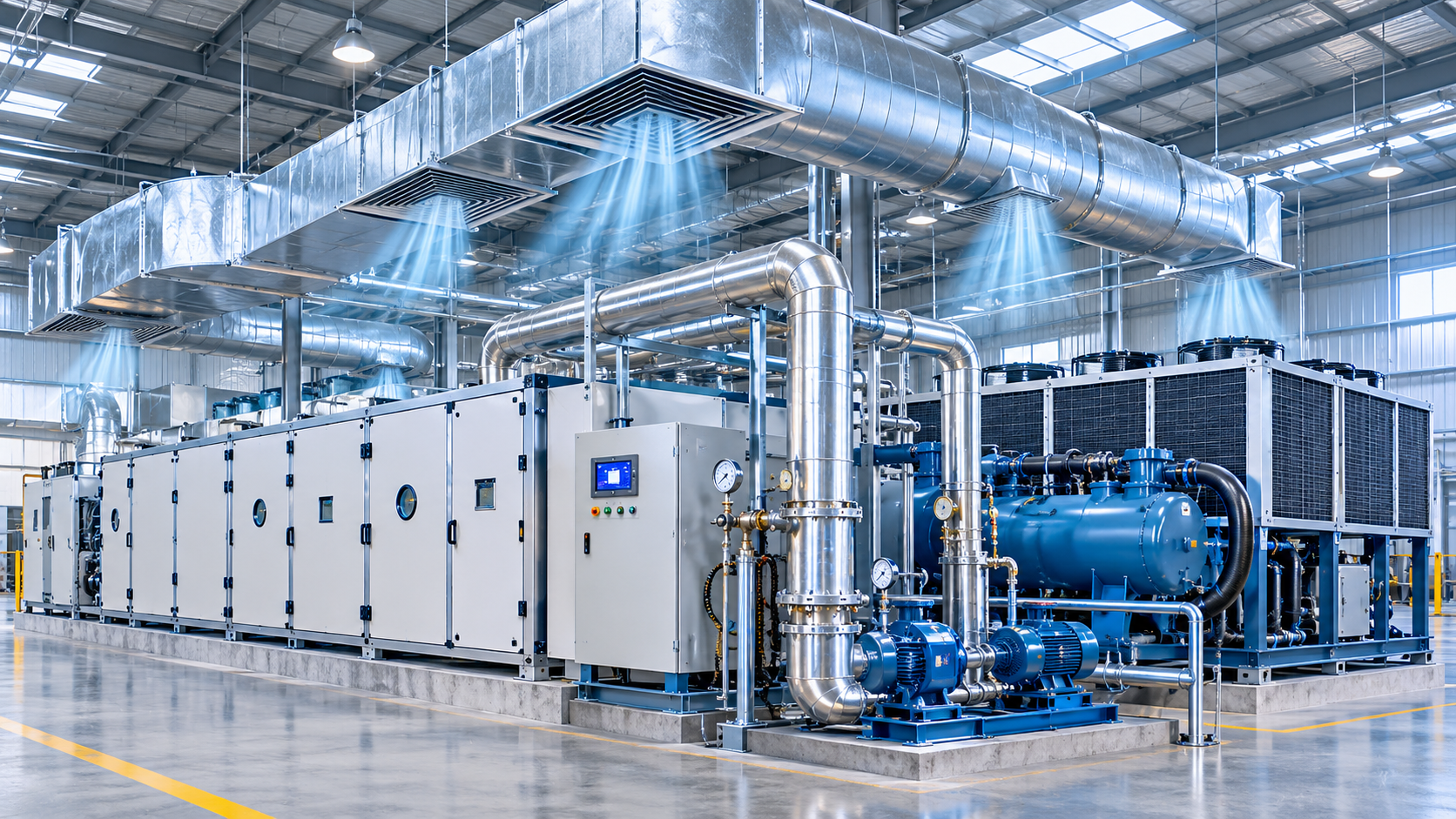

Selecting the right heating, ventilation and air-conditioning solution is an important decision for industrial and commercial facilities. The right equipment helps maintain comfortable indoor conditions, supports production requirements and manages energy consumption. However, choosing unsuitable equipment can result in inefficient operation, inconsistent temperatures and higher maintenance expenses.
Modern HVAC Systems are available in different configurations to accommodate building sizes, operating conditions and environmental requirements. Understanding these options before purchasing equipment can help businesses make informed investment decisions. Choosing experienced HVAC Systems Manufacturers is equally important because technical guidance and proper system selection influence long-term performance.
1. Understand Your Facility's Cooling and Heating Requirements
The first step is to identify the environmental conditions your facility needs to maintain. Different buildings have different temperature, humidity and ventilation requirements.
For example, a manufacturing facility with heat-generating machinery may require a different cooling arrangement than an office building. Similarly, pharmaceutical and food processing facilities may need additional attention to filtration, airflow and temperature stability.
Consider the following factors:
-
Total building area and ceiling height.
-
Number of employees and occupancy levels.
-
Heat generated by machinery and electrical equipment.
-
Outdoor temperature and local climate.
-
Required indoor temperature and humidity.
-
Fresh-air and ventilation requirements.
-
Daily operating hours and production schedules.
A professional cooling-load assessment helps determine the approximate capacity needed for the application.
2. Understand Different Types of HVAC Systems
Before selecting equipment, businesses should understand the available system configurations.
Central HVAC Systems
Central systems condition air or distribute heating and cooling through a centralized arrangement. They are commonly considered for larger commercial buildings, institutions and industrial facilities.
Split HVAC Systems
Split systems contain indoor and outdoor components. They are generally suitable for smaller spaces or specific areas where independent temperature control is required.
Packaged HVAC Systems
Packaged equipment combines major heating and cooling components into a single unit. Depending on the design, these systems can serve selected commercial and industrial applications.
Ductless HVAC Systems
Ductless configurations provide heating or cooling without requiring conventional extensive duct networks. They may be suitable for selected rooms or zones.
Hybrid HVAC Systems
Hybrid arrangements combine different heating and cooling technologies to meet specific operating requirements. Their suitability depends on climate, energy sources and building design.
Businesses should select configurations based on actual requirements rather than assuming that one arrangement suits every facility.
You can explore HVAC Systems to understand different equipment configurations and applications.
3. Evaluate Energy Efficiency
Energy consumption contributes significantly to the operating cost of HVAC installations. Therefore, efficiency should be considered during the equipment selection process.
Important factors include:
Equipment efficiency: Compare available efficiency ratings and performance data under relevant operating conditions.
Motor performance: Efficient motors and fans can help reduce electricity requirements.
Variable-speed operation: Where supported by the equipment design, variable-speed technology can adjust output according to demand.
Insulation quality: Properly insulated ducts and pipelines help reduce thermal losses.
Smart controls: Temperature sensors and programmable controls can improve operational management.
Businesses should compare actual operating conditions rather than relying only on advertised efficiency figures.
4. Check Air Quality and Ventilation Requirements
An HVAC system should do more than regulate indoor temperature. Proper ventilation and filtration are important for maintaining suitable indoor air quality.
Evaluate the quantity of fresh air required, the type of filtration needed and the removal of unwanted indoor air. Sensitive environments may require specialized filtration and carefully controlled airflow.
Filter selection should match the application. For example, HEPA filtration should only be specified where the required system design and application justify it.
5. Select Experienced HVAC Systems Manufacturers
The manufacturer you choose can influence equipment quality, system suitability and long-term service support.
When comparing HVAC Systems Manufacturers, consider these points:
-
Experience in relevant industrial or commercial applications.
-
Product specifications and technical documentation.
-
Customization and engineering capabilities.
-
Quality of components and manufacturing standards.
-
Installation and commissioning assistance.
-
Warranty coverage and maintenance guidance.
-
Availability of technical support.
Ask for clear equipment specifications and confirm that the proposed configuration matches your facility's requirements.
6. Consider Installation and Maintenance
Even well-designed equipment needs proper installation to perform effectively. Installation planning should include equipment positioning, electrical connections, drainage, duct routing, piping and access for maintenance.
Preventive maintenance should cover filters, cooling coils, fans, motors, electrical connections and control systems. Maintenance intervals should follow equipment manuals and actual operating conditions.
Businesses should also ensure that technicians have access to relevant operating and maintenance documentation.
Why Consider Aquatech Plus?
Aquatech Plus focuses on designing, manufacturing and installing industrial equipment, including chillers, water purification systems and complete beverage production lines.
With more than 15 years of industry experience, the company emphasizes customized, energy-conscious and dependable engineering solutions. Its industrial equipment experience can help businesses explore suitable solutions for their operational requirements.
Frequently Asked Questions
1. Which HVAC System is best for industrial buildings?
The best system depends on building size, cooling load, ventilation requirements, operating conditions and the nature of industrial processes.
2. How do I calculate HVAC capacity?
Capacity is determined through a cooling and heating load assessment that considers building dimensions, insulation, occupancy, equipment heat loads and outdoor conditions.
3. Why is ventilation important in HVAC Systems?
Ventilation helps introduce fresh air, remove unwanted indoor air and maintain suitable indoor air quality.
4. What should I check before selecting HVAC Systems Manufacturers?
Review their experience, product specifications, customization options, installation support, warranty terms and technical service capabilities.
5. Can HVAC Systems reduce electricity costs?
Yes. Proper sizing, efficient components, intelligent controls, insulation and regular maintenance can help reduce energy consumption.
Conclusion
Choosing an appropriate HVAC installation requires careful consideration of capacity, efficiency, ventilation, equipment quality and maintenance. Businesses that evaluate these factors before purchasing can make better long-term decisions.
Aquatech Plus supports industrial customers with customized engineering and equipment solutions.



