

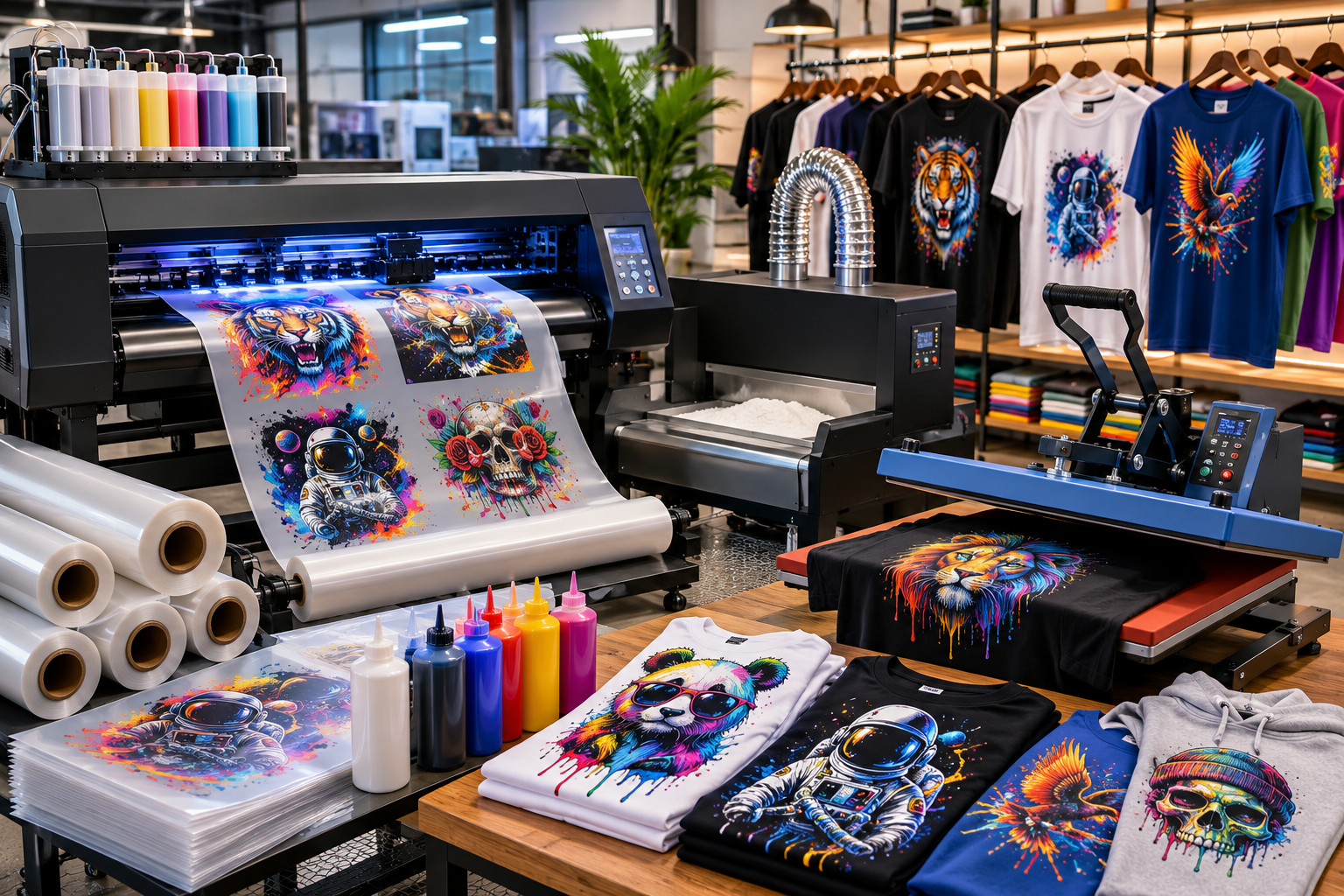
Starting or expanding a custom apparel business requires careful decisions about equipment, production capacity, and long-term costs. Choosing the right DTF printing solutions for print shops can help businesses manage different order sizes, produce detailed garment designs, and serve customers with varied customization needs. However, selecting equipment should involve more than comparing prices. Print quality, operating requirements, maintenance, and available support all play important roles in finding a setup that fits your business.
1. Understand Your Business Requirements
Before comparing equipment, identify the type of work your business expects to handle. A small startup producing personalized shirts may have different requirements from an established print shop managing bulk orders for brands, schools, or promotional events.
Consider the products you plan to offer. Will you mainly print on T-shirts, hoodies, sportswear, tote bags, or other fabric items? Think about your expected daily order volume and whether your customers typically request individual designs or larger batches.
These details help establish practical equipment requirements. A business handling occasional custom orders may not need the same production capacity as a shop working with regular wholesale clients. Understanding your workload first can prevent unnecessary spending and make it easier to compare suitable options.
2. Evaluate Print Quality and Consistency
Print quality directly affects how customers perceive your products. Detailed graphics, small text, smooth color transitions, and consistent coverage can make a difference in the finished garment.
When evaluating equipment, look beyond sample images. Ask about the printing process, supported media, ink compatibility, and recommended operating conditions. If possible, review physical samples featuring different design elements, including fine lines, solid colors, and complex artwork.
Consistency is equally important. A machine may produce an attractive first print, but a commercial operation needs dependable results across repeated jobs. Consistent output can reduce reprints, material waste, and delays.
It is also useful to understand how the complete production process works. Film handling, powder application, curing, and heat pressing all contribute to the final result. The printer is only one part of the workflow, so evaluate the entire setup rather than judging equipment in isolation.
3. Match Production Speed to Your Order Volume
Production speed matters when deadlines are tight or order volumes increase. However, advertised speed figures do not always represent the time required to complete a finished garment.
Consider the complete workflow, including artwork preparation, printing, powder application, curing, transfer, and pressing. Bottlenecks in any of these stages can affect how many orders your shop completes each day.
Estimate your average and peak workloads before choosing equipment. If demand changes throughout the year, consider whether your setup can handle seasonal increases without creating excessive operating costs.
A suitable DTF Printer should match your actual production needs. Buying equipment with more capacity than your business can use may increase initial and ongoing expenses. On the other hand, choosing a setup that is too limited could make it difficult to meet customer deadlines as demand grows.
4. Compare Printhead Technology and Maintenance Needs
Printhead technology is one of the factors worth researching when comparing equipment. Different configurations can influence production performance, maintenance routines, and operating requirements.
Ask suppliers for information about the printhead configuration, recommended maintenance schedule, replacement availability, and compatibility with consumables. Also find out what routine cleaning and storage procedures are recommended.
Maintenance should be part of your purchasing decision from the beginning. Every printing operation needs a practical process for keeping equipment clean and operating correctly. Skipping routine care can contribute to downtime, inconsistent output, and additional expenses.
Before making a decision, make sure your team understands the maintenance requirements. Clear documentation and accessible technical assistance can make day-to-day operation easier, particularly for businesses that are new to this printing method.
5. Check Software and Workflow Compatibility
Software plays an important role in preparing artwork and managing print jobs. A suitable RIP software workflow can help operators arrange designs, manage color settings, and prepare files for production.
Before purchasing equipment, ask which software is included and whether it supports the file types and design processes your team already uses. Find out whether the software requires additional licensing fees and whether updates or technical assistance are available.
A straightforward workflow can also reduce training time. Operators should be able to understand the basic steps for importing artwork, adjusting layouts, preparing jobs, and sending files to production.
If your business handles many different designs, consider how easily the software can support repeat orders and organized job management. A well-planned workflow helps reduce avoidable mistakes and keeps production moving efficiently.
6. Calculate the Total Cost of Ownership
The purchase price is only one part of the investment. Businesses should also consider the ongoing costs involved in operating and maintaining their equipment.
Create a realistic budget that includes:
-
Printer purchase and installation costs
-
Ink, film, powder, and other consumables
-
Heat press and curing equipment
-
Software licenses and updates
-
Routine maintenance and replacement parts
-
Electricity and workspace requirements
-
Training and technical support
Material usage and production waste should also be considered. Testing different materials and establishing consistent operating procedures can help a business understand its actual cost per transfer.
Avoid choosing equipment based only on the lowest advertised price. A less expensive option may not provide the workflow, support, or capacity your business requires. Comparing the total cost over time gives you a more useful basis for making a purchasing decision.
7. Consider Supplier Support and Training
Reliable supplier support can be especially valuable when introducing new equipment. Even experienced printing businesses may need assistance with setup, software, troubleshooting, or maintenance.
Before ordering, ask what kind of technical support is available. Find out whether assistance is provided remotely, whether training resources are included, and how replacement parts can be obtained.
It is also worth checking the supplier's experience with the equipment and related consumables. Clear answers to practical questions can help you understand what to expect after the purchase.
Training should cover more than switching on the machine. Operators need to understand file preparation, material handling, routine care, and the complete transfer process. Proper onboarding can help reduce avoidable errors and support more consistent production.
8. Choose Equipment That Can Support Future Growth
Your current workload may not reflect what your business will need a year or two from now. As customer demand increases, you may want to introduce new products, accept larger orders, or offer faster turnaround times.
When comparing DTF Printers, consider whether the equipment and surrounding workflow can support your expected business development. Look at available upgrades, compatible accessories, software capabilities, and the supplier's ability to provide ongoing assistance.
Planning for growth does not necessarily mean buying the largest system available. Instead, choose equipment that meets your present requirements while leaving room for realistic expansion.
Make a Practical, Informed Decision
Choosing printing equipment is a business decision that affects production quality, daily operations, customer satisfaction, and long-term expenses. Start by understanding your order volume, evaluate print consistency, compare maintenance requirements, and calculate the complete cost of ownership.
Take time to review supplier support and assess how each option fits your workflow. A careful comparison can help you avoid unnecessary expenses and select equipment that supports your business goals.
The most suitable setup is not automatically the fastest or most expensive. It is the one that delivers dependable performance, fits your budget, and gives your business a practical foundation for serving customers and growing over time.



