

A brand that launches with a single blush shade and a single moisturizer soon discovers a structural problem: the two products demand different equipment, different stability protocols, and often different factories.Indian cosmetic manufacturing has evolved to address this gap, yet the phrase “under one roof” carries weight only when a facility can demonstrate genuine capability across both categories rather than merely advertising it. Anycolorcosmetics understands this tension because its own production range spans color cosmetics and complexion products, giving brands a reference point for what dual-category manufacturing actually requires. So what separates a facility that truly handles both from one that simply lists both on a website?
The answer begins with equipment compatibility. A color cosmetics line involves pigment dispersion, high-shear mixing, and pressing or filling systems designed for powders, creams, and liquids with heavy pigment loads. Skincare production leans toward emulsification, homogenization, and filling systems calibrated for lower-viscosity formulas. A facility that runs both must maintain separate production zones or rigorous changeover protocols to prevent cross-contamination, particularly when pigment residues could compromise a skincare batch. The physical layout of the plant matters as much as the machinery list.
Shared research and development is the second pillar. Formulators who understand pigment behavior may lack depth in active ingredient stabilization, and vice versa. Indian cosmetic manufacturing operations that serve both categories effectively tend to maintain distinct formulation teams or cross-trained chemists who can move between color and skincare without treating either as an afterthought. Stability testing protocols differ as well: a pigmented emulsion faces color drift concerns that a clear serum does not, while an active-rich skincare formula faces potency and preservative challenges that a pressed powder avoids entirely.
Regulatory documentation adds another layer. Color cosmetics and skincare fall under the same broad regulatory framework in India, yet the specific testing and labeling requirements diverge. A manufacturer serving both categories must track compliance for pigments, UV filters, and active ingredients simultaneously. Brands evaluating a partner should ask for documentation examples from both product types rather than accepting a generic certificate as proof of capability.
Packaging and filling logistics complete the picture. A brand launching a blush compact and a serum bottle from the same partner benefits from consolidated shipping and unified quality reporting, but only if the facility can manage both packaging formats without scheduling conflicts. Smaller operations sometimes accept dual-category orders while quietly prioritizing one line over the other during peak periods, a risk that surface-level capability claims obscure.
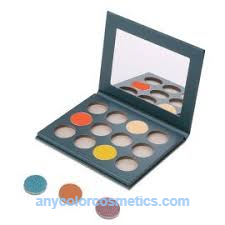
Anycolorcosmetics positions its production around the reality that brands increasingly refuse to choose between color and skincare. The company’s product range encompasses eyeshadow, contour, blush, highlighter, foundation, concealer, lip products, and complexion items, reflecting a manufacturing approach built for brands that treat makeup and skincare as connected rather than separate. A brand planning a launch that spans a tinted moisturizer and a matching blush can explore the full scope of available formulations at https://www.anycolorcosmetics.com/product before committing to a production partner. The right facility does not simply claim dual capability; it shows the zones, the teams, and the documentation that make the claim real.



