

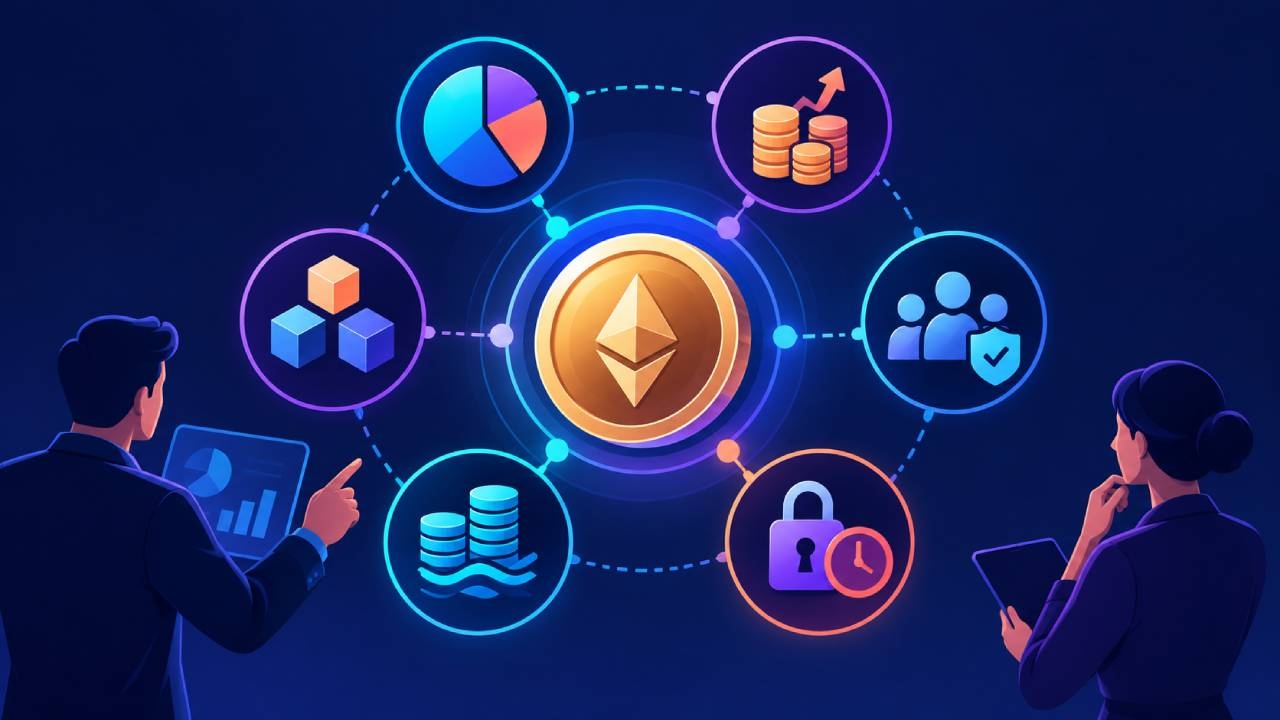

A successful crypto token needs more than a smart contract and a blockchain network. It also needs a clear economic model that explains how tokens are created, distributed, used, and managed over time. This model is known as tokenomics, and it plays an important role in the long-term operation of a blockchain project.
Building effective tokenomics requires careful planning around token supply, utility, incentives, governance, and distribution. A token development company helps businesses turn these requirements into a structured token model that supports their project's purpose and technical design.
Whether a business is developing a utility token, governance token, DeFi token, or real-world asset (RWA) token, professional guidance can help identify economic risks and establish a practical foundation before launch.
What Is Tokenomics in Crypto Token Development?
Tokenomics refers to the economic structure of a cryptocurrency token. It defines how the token functions within an ecosystem and how its supply, distribution, incentives, and demand mechanisms are designed.
A tokenomics model typically covers:
-
Token supply: The maximum, initial, or ongoing supply of tokens.
-
Token utility: The functions and benefits associated with holding or using the token.
-
Token distribution: How tokens are allocated to users, founders, investors, and ecosystem participants.
-
Vesting schedules: The conditions and timelines governing when allocated tokens become available.
-
Incentive mechanisms: How users, developers, validators, or contributors may receive rewards.
-
Governance: How token holders participate in eligible project decisions, if applicable.
These elements should work together to support the project's objectives. A poorly planned model can create excessive selling pressure, weak token utility, unfair allocation, or incentives that are difficult to sustain.
1. Aligning Tokenomics With Business Goals
A token development company begins by understanding the project's business model, target audience, and intended token use cases.
For example, a DeFi protocol may need tokens for governance, incentives, or protocol-specific functions. A gaming platform may use tokens to support eligible in-game activities. An RWA project may require a structure that reflects the legal rights and restrictions associated with tokenized assets.
The company helps define the token's role before technical implementation begins. This step reduces the risk of creating a token without a clear purpose.
The goal is to ensure that tokenomics supports actual product activity rather than relying only on speculative interest.
2. Designing the Token Supply Model
Token supply influences how tokens enter circulation and how the project manages issuance over time. A token development company helps evaluate suitable supply models based on the project's requirements.
Common approaches include:
-
Fixed supply: A predetermined number of tokens can be created, subject to the contract's design.
-
Inflationary supply: Additional tokens may be issued according to predefined rules.
-
Burn mechanisms: Tokens may be permanently removed from circulation under specified conditions.
-
Capped emissions: Token issuance is limited by a defined maximum or schedule.
Each approach has trade-offs. A fixed supply does not automatically create demand, while inflationary rewards need a sustainable funding mechanism.
The development team can implement the selected supply rules in smart contracts where appropriate. The economic assumptions should be reviewed before deployment, especially when token issuance or burning affects user incentives.
3. Planning Token Distribution and Vesting
Token distribution determines how the supply is allocated among different participants. A token development company helps translate the allocation plan into a structure that can be communicated clearly and implemented technically.
Potential allocation categories include the community, ecosystem development, treasury, team, advisors, investors, and rewards. The appropriate percentages depend on the project's funding needs, governance model, and long-term plans.
Vesting schedules can help manage the release of tokens allocated to founders, employees, advisors, or investors. Instead of making an entire allocation available immediately, a project may use a defined release schedule with a cliff or periodic unlocks.
Smart contracts can automate certain vesting conditions, reducing the need for manual administration. However, the release schedule must be designed carefully because large unlocks may affect circulating supply and market behavior.
Clear documentation helps users understand who receives tokens, when they become available, and which restrictions apply.
4. Building Utility and Incentive Mechanisms
A token needs a defined function within its ecosystem. A token development company helps identify how the token may support product usage and how incentives can encourage useful participation.
Depending on the project, token utility may include access to platform features, governance participation, transaction-related functions, staking, or ecosystem rewards.
For example, a decentralized application could use incentives to encourage users to complete specific activities. However, rewards should be linked to a meaningful purpose rather than designed solely to attract short-term participation.
The team should assess where rewards come from, how long the incentive program can operate, and whether the model encourages sustainable activity.
A token development company can then implement the relevant smart contract functions and connect them with the wider platform, where required.
5. Connecting Tokenomics With Smart Contract Development
Tokenomics describes the economic rules, while smart contracts help enforce selected rules on the blockchain.
A token development company translates approved requirements into technical specifications. These may cover token issuance, transfers, vesting, staking, reward distribution, access controls, and governance functions.
Testing is important because coding errors or poorly defined permissions can create financial and operational risks. Depending on the token's complexity, the project may require unit tests, testnet deployments, independent security audits, and ongoing monitoring.
Not every economic rule should be automated. Some decisions may depend on legal agreements, governance procedures, off-chain records, or external verification. The technical architecture must reflect these requirements accurately.
6. Reviewing Risks and Improving the Model
Tokenomics should be reviewed before launch and updated when legitimate project needs change.
A token development company can help identify risks such as excessive team allocation, unclear utility, unsustainable reward emissions, concentrated token ownership, or poorly timed unlocks.
Useful review questions include:
-
Can the project fund its promised incentives?
-
Does token utility match the product's real functions?
-
Are distribution and vesting terms clearly documented?
-
Could large unlocks create unexpected supply pressure?
-
Are governance rights and administrative permissions defined?
-
Have the economic assumptions been tested under different scenarios?
Tokenomics design cannot guarantee token demand, price stability, or commercial success. Its purpose is to establish a transparent, workable structure that supports the project's objectives and helps stakeholders understand the associated risks.
Conclusion
A token development company helps businesses build tokenomics by connecting economic planning with blockchain implementation. From supply design and token allocation to utility, vesting, incentives, and smart contract development, each component needs to support the project's actual use case.
A well-planned tokenomics model gives users and stakeholders a clearer understanding of how a token operates. It also helps development teams identify potential risks before deployment and create a stronger foundation for future growth.
Businesses planning a new token should evaluate both the economic model and the technical expertise required to implement it. INORU provides token development solutions to help businesses plan and build blockchain-based token systems around their project requirements.



