

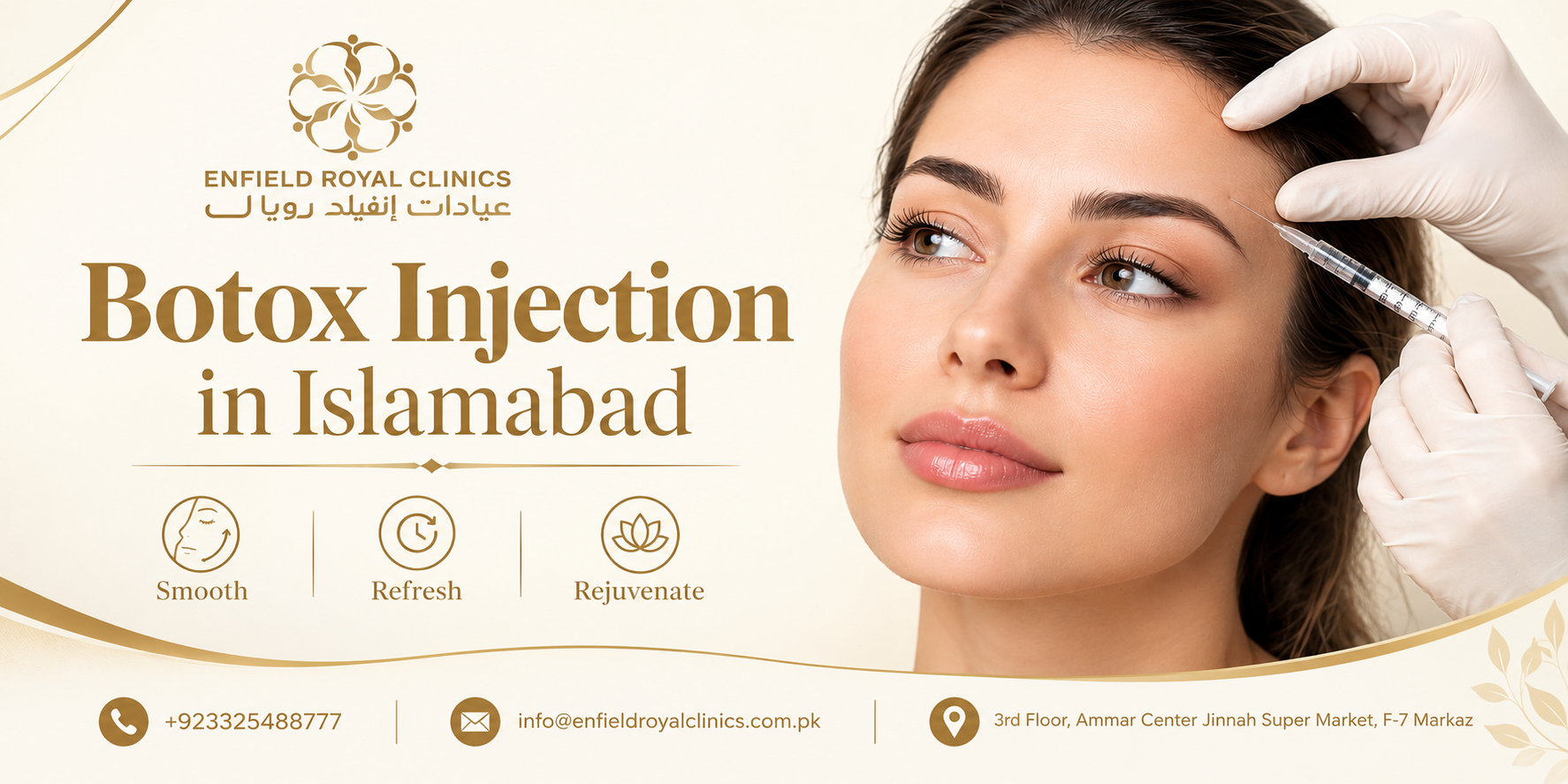

Botox injection treatment has become a popular non-surgical option for people who want to reduce the appearance of facial wrinkles and achieve a smoother, refreshed look. It is commonly used to soften forehead lines, frown lines between the eyebrows, and crow’s feet around the eyes. Beyond cosmetic applications, Botox is also used for certain medical conditions, including muscle spasms and excessive sweating.
People considering Botox injection in Islamabad often want to understand how the treatment works, how long the results last, and what they can expect during recovery. Learning about the procedure, its benefits, and possible side effects can help individuals make informed decisions about their skincare and aesthetic goals.
What Is Botox Injection Treatment?
Botox is a purified form of botulinum toxin type A, a substance that temporarily reduces muscle activity when administered in carefully controlled doses. In cosmetic treatments, it helps relax specific facial muscles responsible for creating expression lines.
Facial wrinkles often develop because of repeated movements such as smiling, frowning, squinting, and raising the eyebrows. Over time, these movements can cause lines to become more noticeable, even when the face is at rest.
Botox works by temporarily blocking the signals that nerves send to selected muscles. As the muscles relax, the skin above them appears smoother, making certain wrinkles less prominent.
Unlike dermal fillers, which add volume beneath the skin, Botox primarily targets muscle movement. The two treatments serve different purposes, although they may sometimes be used together as part of an individualized aesthetic plan.
How Does Botox Injection Treatment Work?
Botox works by interfering with the communication between nerves and muscles. Normally, nerve endings release a chemical messenger called acetylcholine, which tells muscles to contract. Botox temporarily blocks the release of this messenger at the treated area.
When the targeted muscles contract less frequently or less forcefully, the skin experiences less folding during facial expressions. This helps soften dynamic wrinkles and may prevent certain expression lines from becoming more pronounced while the treatment remains effective.
The treatment usually involves a few small injections into specific facial muscles. The exact injection points and dosage depend on the individual's facial anatomy, muscle strength, treatment goals, and medical history.
The procedure is generally quick and does not require general anesthesia. Some people experience mild discomfort, similar to a brief pinch, during the injections.
Results do not appear immediately. Early changes may become noticeable within a few days, while the full effect typically develops over approximately 10–14 days. The timing can vary depending on the individual and the area being treated.
Which Facial Areas Can Botox Treat?
Botox is commonly used to address expression-related wrinkles in several areas of the face. A qualified medical professional evaluates facial movement and skin condition before recommending treatment.
Common treatment areas include:
-
Forehead lines: These horizontal lines appear when a person raises their eyebrows.
-
Frown lines: Vertical lines between the eyebrows may become noticeable during concentration or frowning.
-
Crow’s feet: Fine lines around the outer corners of the eyes can develop from repeated squinting and smiling.
-
Bunny lines: Small wrinkles along the sides of the nose may appear during certain facial expressions.
-
Chin dimpling: Botox may help soften an uneven or dimpled chin caused by muscle activity.
-
Jaw muscles: In selected cases, injections into the masseter muscles may help manage jaw clenching or create a less prominent jaw appearance.
Not every facial line responds equally well to Botox. Dynamic wrinkles caused mainly by muscle movement generally respond better than deep lines that remain visible when the face is relaxed. Other treatments may be more appropriate for wrinkles associated with volume loss, sun damage, or changes in skin texture.
When considering Botox injection in Islamabad, individuals should discuss their desired results and expectations during a professional consultation rather than assuming that every wrinkle can be eliminated.
What Happens During a Botox Injection Procedure?
The procedure typically follows a straightforward process designed to support comfort, safety, and natural-looking results.
1. Initial consultation
The process begins with an assessment of the person's facial features, skin concerns, medical history, current medications, and aesthetic goals. The practitioner identifies suitable treatment areas and explains the expected results and possible risks.
2. Preparation of the treatment area
The skin is cleaned before the injections. A topical numbing product or another comfort measure may be offered when appropriate, although many people tolerate the procedure without additional anesthesia.
3. Administration of injections
A fine needle is used to inject small amounts of Botox into the selected muscles. The number of injections depends on the treatment area and the individual's needs. Most cosmetic sessions take approximately 10–20 minutes, although appointment times may vary.
4. Aftercare instructions
After the procedure, the practitioner provides instructions about normal activities and precautions. Many people return to their usual daily routine shortly afterward.
The treatment does not normally require significant downtime. However, temporary redness, swelling, tenderness, or bruising may occur at the injection sites.
People should follow their practitioner's instructions and avoid rubbing or massaging the treated areas immediately after the procedure. They should also ask when to resume strenuous exercise or other activities if specific restrictions are recommended.
What Are the Benefits and Possible Side Effects of Botox?
One of the main advantages of Botox is that it can reduce certain wrinkles without surgery. The procedure is relatively quick, requires little recovery time, and can be adjusted to suit different facial features and treatment goals.
Potential benefits include:
-
Softer forehead lines and frown lines.
-
Reduced visibility of crow’s feet.
-
A smoother appearance during facial expressions.
-
Temporary results without surgical incisions.
-
Treatment of selected medical conditions when clinically appropriate.
However, Botox is not suitable for everyone, and the outcome depends on correct product handling, appropriate dosing, injection technique, and individual muscle response.
Possible side effects include bruising, swelling, redness, headache, and temporary discomfort. In some cases, people may experience drooping eyelids or eyebrows, uneven facial movement, or an appearance that feels less expressive than expected.
Rarely, botulinum toxin effects can spread beyond the injection site and cause serious symptoms, including difficulty swallowing, speaking, or breathing. These symptoms require immediate medical attention.
Botox may not be appropriate for individuals with certain neuromuscular conditions or an allergy to its ingredients. Pregnancy and breastfeeding also require particular caution because safety information is limited. A qualified healthcare professional should review the person's circumstances before treatment.
For those exploring Botox injection in Islamabad, choosing a properly qualified and licensed medical professional who uses an approved product is an important part of reducing avoidable risks.
How Long Do Botox Results Last?
Botox results are temporary. For many cosmetic treatments, the effects last approximately three to four months, although some individuals experience shorter or longer-lasting results.
Several factors can influence how long the effects remain visible, including:
-
The treatment area and strength of the targeted muscles.
-
The dose and injection technique.
-
The individual's metabolism and muscle activity.
-
Previous treatment history.
-
The type and depth of the wrinkles being treated.
As the effect gradually wears off, muscle movement returns and expression lines may become noticeable again. Maintenance sessions can be discussed with the practitioner when appropriate, but treatment should not be repeated more frequently than medically recommended.
Botox does not stop the natural ageing process or permanently remove wrinkles. A balanced skincare routine, sun protection, adequate hydration, and healthy lifestyle habits can complement treatment and support overall skin health.
Individuals should allow enough time to assess their results before considering additional injections. Early changes can take several days to develop, and evaluating the outcome too soon may lead to unnecessary treatment.
For more information visit Enfield royal clinic in islamabad
Frequently Asked Questions
1. Is Botox injection treatment painful?
Most people describe Botox injections as causing mild, brief discomfort, similar to a small pinch. The needles are fine, and the procedure generally does not require significant pain management. Temporary tenderness or redness may occur afterward.
2. How many days does Botox take to show results?
Initial changes may appear within three to five days, while the full effect usually develops within 10–14 days. The exact timeline varies according to the treated area, dosage, and individual response.
3. Can Botox make the face look unnatural?
Botox does not necessarily create an unnatural appearance. When appropriately administered, it can soften wrinkles while preserving natural facial expressions. Excessive dosing or unsuitable injection placement may cause an overly frozen appearance or uneven muscle movement, making professional assessment important.
4. Is Botox injection treatment permanent?
No. Botox temporarily reduces muscle activity, and its effects gradually wear off. Cosmetic results commonly last around three to four months, after which muscle movement and expression lines may gradually return.
Conclusion
Botox injection treatment works by temporarily reducing the nerve signals responsible for activating selected muscles. This helps soften expression-related wrinkles and can provide a smoother, refreshed appearance without surgery or lengthy recovery.
Understanding how the treatment works, which facial areas it can address, and what results to expect helps individuals make informed decisions. Anyone considering Botox injection in Islamabad should seek a consultation with a qualified medical professional, discuss their health history, and understand both the potential benefits and risks before proceeding. The most appropriate treatment plan prioritizes safety, realistic expectations, and results that complement the individual's natural facial features.



