

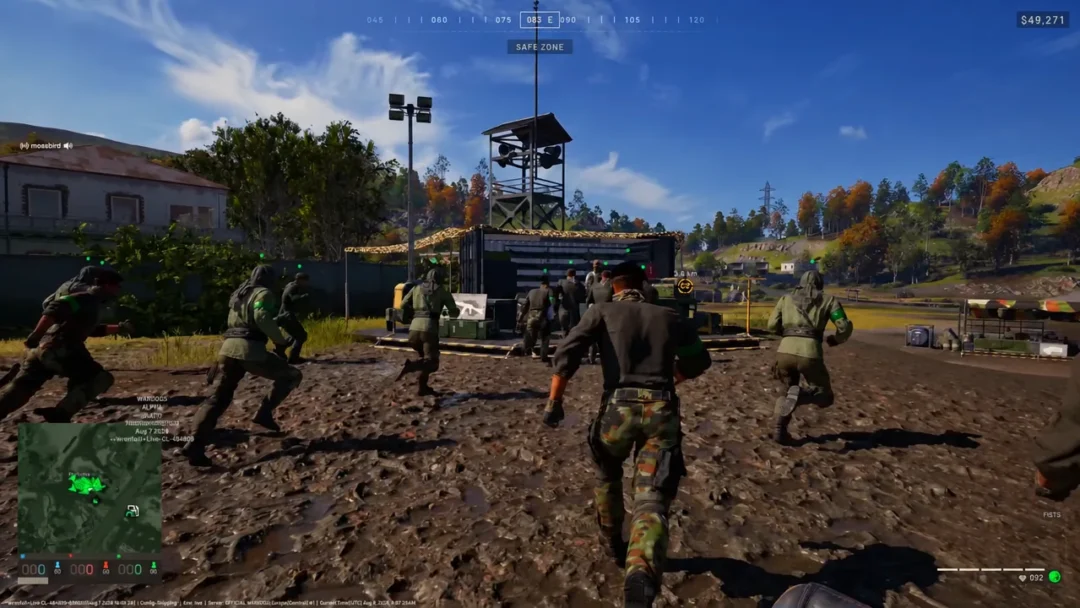

A WARDOGS match can change direction in seconds. A team that controls the objective early may suddenly face pressure from two sides, while a squad that starts poorly can recover by improving its positioning and coordinating a more focused attack. Managing Wardogs Bot Lobby cash is part of the wider preparation process, but the real challenge is connecting resource decisions to the way a match unfolds. Equipment should support a clear role, purchases should reflect the current tactical situation, and every expensive choice should have a reason beyond simply carrying more firepower.
Build a Spending Plan Before Entering Combat
A useful loadout plan begins with the role you expect to perform. Assault players may need a reliable primary weapon for frequent engagements, while marksmen should consider the distances they expect to cover. Support players need equipment that helps them contribute to the squad, and players responsible for transport or construction should evaluate whether those investments fit the current objective.
This approach prevents a common problem in resource management: buying equipment first and deciding how to use it afterward. A more effective sequence starts with the battlefield task, identifies the equipment needed to complete it, and then evaluates whether the cost is justified. Players should also consider whether their preferred equipment remains useful if the enemy changes the direction of the fight.
| Purchase priority | Main question | Practical decision |
|---|---|---|
| Essential weapon and ammunition | Can I perform my assigned role without these? | Cover the basic requirements first |
| Specialized equipment | Does it solve a specific tactical problem? | Buy it when the situation supports its use |
| Transport or heavy support | Will it help the squad reach or control an important position? | Consider the route, team size, and expected threat |
| Optional upgrades | Will the improvement matter in the next engagement? | Avoid spending simply because cash is available |
| Reserve resources | Could the next life require a different setup? | Preserve flexibility when the situation is uncertain |
The purpose of this plan is not to minimize every purchase. It is to make spending more deliberate so that the squad can respond when its first approach fails.
Understand the Value of Objective-Based Play
WARDOGS uses a Control Zone system in which three teams compete for points, with the first team to reach 100 points winning the match. The Hot Zone offers double cash and increases the contribution of players inside it toward zone control, making it an important part of both combat and resource planning. However, the high-value area can also attract multiple teams, turning it into one of the most dangerous places on the map.
A squad should evaluate the situation before committing to the Hot Zone. If the area is open and the enemy is distracted, moving in quickly may provide a useful advantage. If several opponents already control the surrounding approaches, a direct push may lead to repeated losses. In that case, securing a nearby route, supporting teammates, or waiting for a better opening can create a more sustainable path into the area.
Objective-based actions also help the team avoid a narrow focus on eliminations. A player who watches an entrance, revives a teammate when it is safe, or transports reinforcements can contribute to the match even without leading the kill count. These responsibilities help keep the squad active and make it easier to maintain pressure over a longer engagement.
Adjust Your Loadout When the Match Changes
The ideal loadout at the beginning of a match may not remain the best option later. A team that initially expects close-range combat may discover that the enemy is holding open ground with marksmen. A squad planning to advance through buildings may instead need to defend a route against repeated vehicle pressure. The ability to recognize these changes is more important than sticking rigidly to the original plan.
Season 2 adds weapons that support different approaches, including the TCX-SPR assault rifle, PP-19 Bizon submachine gun, Evo-3 Ultra light machine gun, and M14 marksman rifle. Players should consider how their equipment complements the rest of the squad rather than choosing the same type of weapon simply because it feels familiar.
| Changing battlefield condition | Adjustment to consider | Why it helps |
|---|---|---|
| Repeated close-range engagements | Favor equipment suited to compact spaces | Reduces the mismatch between weapon role and engagement distance |
| Enemies controlling open ground | Improve ranged coverage or change the route | Avoids repeated exposure to the same firing lanes |
| A defended entrance blocks the advance | Coordinate pressure from another direction | Forces defenders to divide their attention |
| The squad must hold an exposed approach | Consider sustained fire and suitable cover | Helps maintain pressure without unnecessary movement |
| A planned attack loses momentum | Regroup and reassess the objective | Prevents additional resources from being spent on the same failed push |
Changing equipment is only one option. Sometimes the more efficient adjustment is to change the route, assign different responsibilities, or delay an attack until the squad can approach together. A better plan can outperform a more expensive loadout.
Treat Vehicles as Tactical Investments
Vehicles offer mobility and specialized capabilities, but they should be purchased or deployed with a defined purpose. The Wolf-110 supports rapid movement, its armed variant adds a mounted M2 Browning, the T-72B3 provides armored support, and the Flakpanzer Gepard serves an anti-air role. Each option has strengths, limitations, and costs that should be considered in relation to the current battlefield.
A transport vehicle is most valuable when it moves players toward a useful position faster or more safely than they could reach it on foot. An armored vehicle can support a ground engagement, but it does not eliminate the need for infantry to control the objective. Anti-air equipment is most relevant when aerial threats are influencing the team's ability to move or defend. Choosing a vehicle without considering these requirements can consume resources while leaving the main tactical problem unresolved.
The squad should also plan what happens after the vehicle reaches its destination. Players need a clear dismount point, a route into the objective, and a way to respond if the vehicle is disabled or the approach becomes unsafe. These details help turn a vehicle purchase into a coordinated maneuver instead of an expensive trip across the map.
Account for Season 2 Weather and Equipment Changes
Season 2 introduced rainy weather that affects spotting range, environmental sound, and Molotov effectiveness. Thunder can mask footsteps, creating opportunities for coordinated movement, while reduced visibility can make long-range observation more difficult. Players should adjust their movement and engagement choices rather than relying on the same approach in every match.
The update also added buildable objects such as the MG Nest, Large Shelter, and Wooden Step. These provide new ways to influence defensive positions, but their value depends on placement and the team's ability to use them. A machine-gun emplacement covering an important approach may strengthen a defense, whereas a structure positioned away from the objective may offer little practical benefit. Before investing resources, identify the problem the structure is supposed to solve and make sure it supports the wider plan.
Weather and construction can also affect how a squad chooses to spend. If poor visibility makes a long-range position less useful, a different role may deserve priority. If the enemy repeatedly attacks one entrance, a well-placed defensive structure may provide more value than another weapon upgrade. The correct decision depends on the situation rather than a universal spending formula.
Avoid the Most Common Resource Mistakes
One of the biggest mistakes is treating expensive equipment as a guarantee of success. A powerful weapon cannot compensate for poor positioning, and a vehicle cannot secure a Control Zone if the squad fails to support the objective. Another mistake is spending too much on a single approach and leaving no flexibility when the enemy counters it.
Players can reduce these problems by reviewing each purchase against the next task. Ask whether the equipment suits the likely engagement distance, whether teammates can support its use, and whether the purchase contributes to objective control. If the answer is unclear, consider a simpler setup or a different tactical plan. This habit encourages more consistent decisions without requiring players to use the same loadout in every situation.
Resource planning should also account for the team's condition. A squad that is struggling to maintain its position may need reliable basic equipment and coordinated movement more than a specialized upgrade. A team that already controls the area may be able to justify a more focused investment to protect its advantage. Spending should respond to the match rather than follow a fixed routine regardless of circumstances.
Make Every Purchase Support the Next Objective
Strong WARDOGS play comes from balancing preparation with adaptation. Choose equipment that matches the role, use the Hot Zone when the situation supports it, and avoid sacrificing objective control for unnecessary fights. Season 2's weapons, vehicles, and weather conditions provide more ways to approach combat, but the fundamentals remain the same: understand the battlefield, coordinate with teammates, and make decisions that improve the squad's position.
Players considering buy Wardogs Bot Lobby should keep resource planning connected to practical gameplay goals, including weapon selection, vehicle needs, and the ability to adjust after an unsuccessful engagement. A thoughtful approach to equipment and cash helps keep the focus on what matters most in WARDOGS: winning useful positions, supporting the squad, and turning small tactical advantages into match-winning momentum.



