

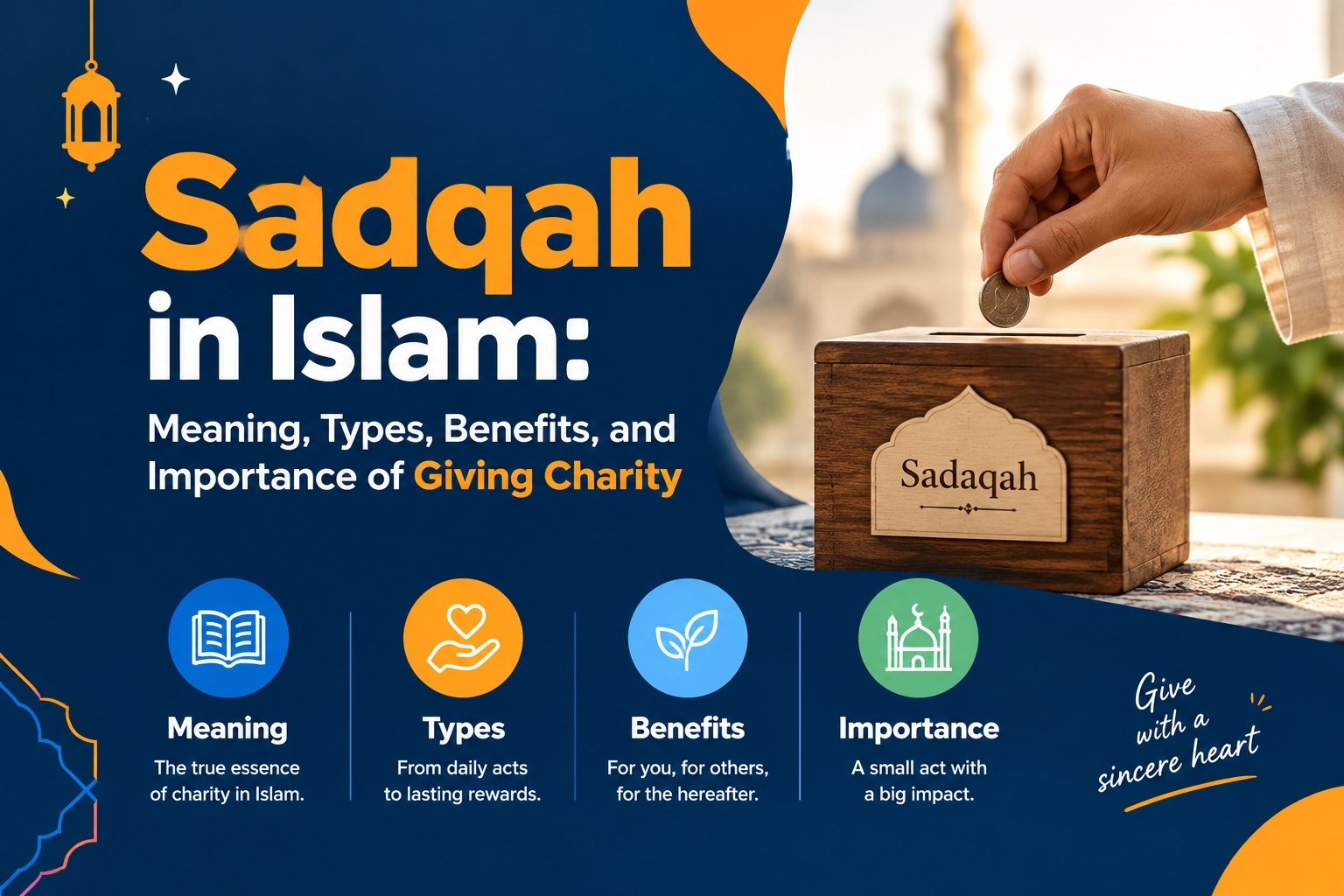
Sadqah in Islam: Meaning, Types, Benefits, and Importance of Giving Charity
Table of Contents
- What Is Sadqah in Islam Explained Simply
- The Literal and Spiritual Meaning of Sadaqah
- Sadqah vs. Zakat: What's the Real Difference?
- Types of Sadqah Every Muslim Should Know
- Sadqah Jariyah (Ongoing Charity)
- Real-Life Examples of Sadqah Jariyah
- One-Time Sadqah and Voluntary Giving
- How to Give Sadqah: Your Practical Step-by-Step Guide
- Can Sadqah Be Given on Ashura?
- Can You Give Sadqah for an Ill Person?
- How to Remove Sadqah (Expiation and Atonement)
- The Life-Changing Benefits of Giving Sadqah
- Spiritual and Emotional Rewards
- Social and Community Impact
- How to Calculate Zakat Step by Step (Bonus Guide)
- Final Thoughts: Start Your Sadqah Journey Today
- FAQs
What Is Sadqah in Islam Explained Simply
Ever wondered why some people seem to glow with an inner peace that money simply can't buy? In Islam, the answer often circles back to one beautiful concept: sadaqah. But what is sadqah in Islam explained simply? Let's break it down without the jargon.
At its core, sadaqah is voluntary charity. It's the act of giving — whether it's money, food, time, or even a warm smile — purely for the sake of Allah (SWT). Unlike zakat, which is obligatory and comes with strict rules, sadqah flows freely from the heart. You can give it anytime, anywhere, to anyone. No minimum amount. No calendar deadline. Just pure, unfiltered generosity.
Think of it like this: if zakat is the rent you owe for living in a world blessed by God, then sadaqah is the tip you leave because the service was extraordinary. It's extra. It's personal. And honestly? It transforms you from the inside out.
For a deeper dive into how charitable giving shapes communities, check out the incredible work being done at Al Mustafa Canada, where every donation ripples outward into real, tangible change.
The Literal and Spiritual Meaning of Sadaqah
The word sadaqah comes from the Arabic root "ṣ-d-q," which means truthfulness, sincerity, and righteousness. Isn't that fascinating? The very act of giving charity is linguistically tied to being truthful. Why? Because when you give sadqah, you're essentially proving that your faith isn't just lip service — it's real. It's lived.
Spiritually, sadaqah acts as a shield. The Prophet Muhammad ﷺ said, "Sadaqah extinguishes sin as water extinguishes fire" (Tirmidhi). Imagine that. Every coin you drop into a donation box, every meal you hand to a hungry stranger, is literally dousing the flames of your past mistakes. That's not just charity. That's spiritual warfare.
Sadqah vs. Zakat: What's the Real Difference?
This is where a lot of people get tangled up, so let's untangle it together.
| Feature | Zakat | Sadqah |
|---|---|---|
| Obligation | Mandatory (Fard) | Voluntary (Nafl) |
| Amount | 2.5% of qualifying wealth | Any amount you wish |
| Timing | Once a lunar year | Anytime, day or night |
| Recipients | 8 specific categories (Quran 9:60) | Anyone in need |
| Type of Wealth | Savings, gold, livestock, etc. | Money, food, kindness, a smile |
Simple enough, right? Zakat is the skeleton — the non-negotiable framework. Sadqah is the flesh and muscle that brings the body of charity to life. Both matter enormously, but they serve different purposes in your spiritual toolkit.
If you'd like help calculating your zakat accurately, Al Mustafa Canada's Zakat page offers a straightforward calculator and guidance.
Types of Sadqah Every Muslim Should Know
Not all sadqah looks the same. In fact, the diversity of giving in Islam is almost staggering. Let's explore the main categories so you can figure out which type resonates with your current situation.
Sadqah Jariyah (Ongoing Charity)
Sadqah jariyah — also spelled sadqah jariya — is the gift that keeps on giving. Literally. It's a form of continuous charity whose rewards flow to you even after you've passed away. The Prophet ﷺ described it as one of only three deeds that survive death (Sahih Muslim).
Real-Life Examples of Sadqah Jariyah
- Building a well in a drought-stricken village (every sip of water = reward for you)
- Funding a school or scholarship program
- Planting trees whose fruit feeds generations
- Donating medical equipment to a hospital
- Contributing to the construction of a mosque
Want to start a sadqah jariyah project that outlives you? Explore the Sadaqah Jariyah programs at Al Mustafa Canada for vetted, high-impact opportunities.
One-Time Sadqah and Voluntary Giving
This is your everyday, spontaneous charity. The $10 you hand to a homeless person on a cold Tuesday morning. The groceries you buy for your elderly neighbor. The iftar meals you sponsor during Ramadan through Al Mustafa Canada's Ramadan campaign. It doesn't need to be grand. It just needs to be sincere.
How to Give Sadqah: Your Practical Step-by-Step Guide
Okay, so you're convinced. You want to give sadqah. But how, exactly? Here's a no-nonsense walkthrough:
- Set your intention (niyyah). Remind yourself you're doing this for Allah alone — not for Instagram likes or social clout.
- Choose your channel. You can give directly to someone in need, through a mosque, or via a trusted organization like Al Mustafa Canada's Donate page.
- Pick your amount. Remember, the Prophet ﷺ said even half a date counts. Don't let a small bank balance stop you.
- Select your recipients. Orphans, widows, travelers, the sick — the list is wide open for sadqah.
- Make dua after giving. Ask Allah to accept your charity and multiply its reward.
Can Sadqah Be Given on Ashura?
Absolutely, yes! Can sadqah given on Ashura? Not only is it permissible, but many scholars encourage it. The Day of Ashura (10th of Muharram) is already a day of immense spiritual significance. Fasting on this day expiates the sins of the previous year, and pairing that fast with generous sadaqah amplifies your rewards exponentially. Think of Ashura as a spiritual multiplier — every good deed gets a turbo boost.
Can You Give Sadqah for an Ill Person?
Here's a question I get asked a lot: can you give sadqah for an ill person? The short answer is a resounding yes. In Islamic tradition, giving charity on behalf of someone who is sick is considered a powerful form of intercession. You're essentially telling Allah, "I'm willing to part with my wealth to ease their suffering." Many families give sadqah during a loved one's illness as a way of seeking shifa (healing). You can direct your donation to medical relief efforts through Al Mustafa Canada's Emergency Relief page.
How to Remove Sadqah (Expiation and Atonement)
Now, the phrase "how to remove sadqah" can be a bit confusing, so let me clarify. What most people actually mean is how to use sadqah as kaffarah (expiation) — a way to atone for broken oaths, missed fasts, or other religious obligations. In these cases, sadaqah serves as a spiritual eraser. For example, if you break an oath, you can feed ten poor people as expiation (Quran 5:89). The charity "removes" the spiritual burden. It's like hitting the undo button on a mistake — except the undo button costs you a few dollars and earns you a mountain of reward.
The Life-Changing Benefits of Giving Sadqah
Let's talk about why you should care. What's in it for you? (And yes, it's okay to ask that — Islam is practical, not naive.)
Spiritual and Emotional Rewards
- Purification of the soul. Sadqah scrubs your heart clean of greed and attachment to material things.
- Protection from calamity. The Prophet ﷺ said, "Give charity without delay, for it stands in the way of calamity" (Tirmidhi).
- Increased sustenance. Counterintuitive, right? You give money away, and Allah replaces it with more. It's the divine version of compound interest.
- Inner peace. There's a reason donors report feeling happier. Giving literally rewires your brain's reward centers.
Social and Community Impact
- Poverty reduction. Your sadqah feeds families, clothes children, and keeps roofs over heads.
- Education access. Sponsoring a student's tuition through Al Mustafa Canada's Education programs can break generational cycles of poverty.
- Clean water access. A single well can serve an entire village for decades. Check out Al Mustafa Canada's Water Projects.
- Orphan care. Over 150 million orphans worldwide need support. Al Mustafa Canada's Orphan Sponsorship connects you directly with children who need you.
Table: Quick Comparison of Sadqah Impact Areas
| Impact Area | Example Project | Estimated Cost | Longevity of Reward |
|---|---|---|---|
| Clean Water | Well construction | $1,500–$5,000 | Decades (Jariyah) |
| Education | School sponsorship | $50–$200/month | Lifetime of student |
| Healthcare | Medical camp funding | $500–$2,000 | One-time + ongoing |
| Food Relief | Ramadan food packs | $30–$100 | Seasonal |
| Shelter | Home rebuilding | $2,000–$10,000 | Generational |
How to Calculate Zakat Step by Step (Bonus Guide)
Since we're on the topic of giving, let's quickly tackle how to calculate zakat step by step — because many people confuse it with sadqah and end up underpaying or overpaying.
- Identify your zakatable assets. This includes cash savings, gold, silver, stocks, and business inventory.
- Subtract your liabilities. Deduct any debts you owe (mortgages, loans, credit cards).
- Check the nisab threshold. If your net wealth exceeds the value of 87.48 grams of gold (or 612.36 grams of silver), you owe zakat.
- Calculate 2.5%. Multiply your net zakatable wealth by 0.025.
- Distribute to eligible recipients. The Quran specifies eight categories in Surah At-Tawbah (9:60).
Need a hand? Use the Zakat Calculator at Al Mustafa Canada to get an instant, accurate figure.
Final Thoughts: Start Your Sadqah Journey Today
Here's the thing about sadaqah — you don't need to be wealthy to practice it. You don't need a grand plan. You just need a willing heart and the courage to let go of something you love for someone you may never meet. Whether it's a dollar, a du'a, or a decade-long sadqah jariyah project that outlives you by centuries, every act of giving sends ripples through the fabric of the universe. And those ripples? They come back to you in ways you can't even imagine yet.
So don't wait for the "perfect" moment. The perfect moment is right now. Open your wallet, open your heart, and give sadqah — because the world is hurting, and you have the power to heal a small corner of it. Start today with Al Mustafa Canada and watch how a single act of generosity can transform lives, including your own. For more information about their mission, visit their About Us page, explore their Programs, or reach out via their Contact page.
FAQs
1. What is sadqah, and how is it different from zakat?
Sadaqah is voluntary charity in Islam that you can give at any time, in any amount, to anyone in need. Zakat, on the other hand, is a mandatory 2.5% levy on qualifying wealth paid once a year to specific categories of recipients. Think of zakat as the minimum requirement and sadqah as the unlimited bonus round.
2. Can I give sadqah on behalf of someone who has passed away?
Yes! Giving sadaqah on behalf of a deceased loved one is one of the most beautiful acts in Islam. The rewards reach them in their grave, and it's considered a form of sadqah jariyah if the charity is ongoing — like funding a well or a school in their name.
3. Is there a specific time or day when giving sadqah is more rewarding?
While you can give sadqah any day of the year, certain occasions amplify the rewards. These include the month of Ramadan, the Day of Ashura, the first ten days of Dhul Hijjah, and Fridays. That said, the best time to give is when the need is greatest — regardless of the calendar.
4. Can sadqah be given to non-Muslims?
Absolutely. While zakat has specific recipient restrictions, sadaqah has no such boundaries. You can give voluntary charity to anyone — Muslim or non-Muslim, neighbor or stranger. The Prophet ﷺ himself encouraged kindness to all of humanity, and your sadqah is a powerful expression of that universal compassion.
5. How do I know if my sadqah has been accepted by Allah?
There's no notification bell for this one, unfortunately! But scholars point to certain signs: a feeling of inner peace after giving, an increase in your sustenance over time, and a growing desire to give even more. The key is sincerity. If your intention is pure and you give without expecting anything in return from people, trust that Allah sees it, records it, and rewards it beyond your imagination. To ensure your donations reach verified, trustworthy channels, consider giving through Al Mustafa Canada's Sadaqah page.



