

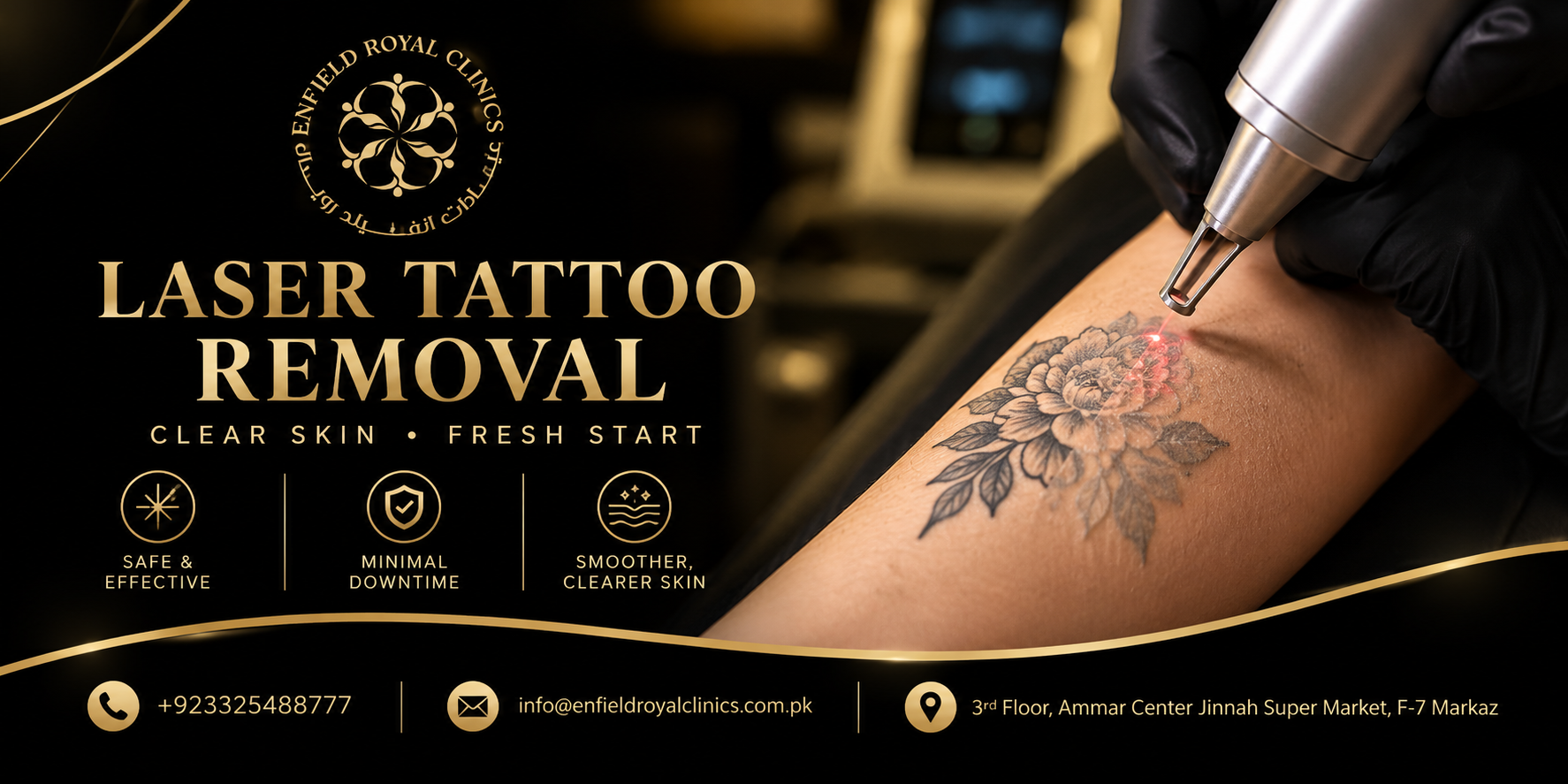

Old tattoos can carry personal memories, represent important life experiences, or reflect a style that no longer suits a person's preferences. Over time, however, some individuals may decide that an old design no longer matches their lifestyle, appearance, or professional goals. In such cases, tattoo removal can offer a way to fade unwanted ink and improve the skin's appearance.
For people considering Tattoo Removal in Islamabad, understanding how the procedure works, what results are realistic, and which factors affect success can help them make an informed decision. Modern laser technology has made tattoo removal a popular option, but the outcome depends on several factors, including ink color, tattoo depth, skin type, and the age of the tattoo.
Why Do People Consider Removing Old Tattoos?
There are many reasons why someone may want to remove an older tattoo. Personal preferences can change over the years, and a design that once felt meaningful may no longer reflect the individual's identity or interests. Others may wish to remove a tattoo because of changes in their career, lifestyle, or personal circumstances.
Older tattoos can also become blurred or faded as the skin changes and the ink settles over time. Although some people appreciate this softened appearance, others may prefer clearer, more even-looking skin.
Tattoo removal may be considered when a person wants to:
-
Remove a design that no longer feels appropriate.
-
Fade a tattoo before covering it with a new design.
-
Reduce the visibility of unwanted ink.
-
Address changes in the appearance of an old tattoo.
-
Feel more comfortable with their skin's appearance.
The decision is personal, and there is no requirement to remove a tattoo simply because it has become old. The most suitable choice depends on the individual's goals and expectations.
How Does Laser Tattoo Removal Work on Old Ink?
Laser tattoo removal is a commonly used method for reducing unwanted tattoo pigment. During treatment, a specialized laser delivers short pulses of energy into the skin. The energy targets the tattoo ink and breaks it into smaller particles that the body's natural processes can gradually clear away.
Old tattoos may respond differently depending on how the ink was originally applied and how much pigment remains in the skin. Some older designs have already faded considerably, which may make their remaining pigment less noticeable. However, an old tattoo is not automatically easier to remove than a newer one.
The laser settings must be selected according to the tattoo's characteristics and the person's skin type. Different ink colors absorb laser energy differently, so the treatment approach may vary from one tattoo to another.
After each session, the body needs time to process the fragmented pigment. This is why tattoo removal usually requires multiple appointments rather than a single procedure. Gradual fading allows the skin to recover between sessions and gives the treatment process time to work.
What Factors Affect the Removal of Old Tattoos?
The success of tattoo removal depends on several factors. A professional assessment helps determine whether the treatment is likely to meet the person's expectations.
Ink color: Black and dark-blue pigments often respond well to commonly used laser wavelengths. Green, yellow, turquoise, and certain other colors may be more challenging because they absorb laser energy differently.
Tattoo age: Older tattoos may have faded naturally, leaving less visible pigment than they originally contained. However, the remaining ink may still be deeply embedded or resistant to treatment.
Ink depth and density: Tattoos with dense pigment or ink placed deeper in the skin may require additional sessions. Professional tattoos can sometimes be more challenging to remove because their ink distribution may be more consistent and concentrated.
Tattoo size: Smaller tattoos may take less time to treat during an appointment, while larger designs can require more treatment time and careful planning.
Skin type: Skin tone and individual skin characteristics influence the selection of appropriate laser settings. A suitable treatment plan helps reduce the risk of unwanted pigmentation changes.
Overall skin health: Existing skin conditions, a history of unusual scarring, certain medications, and recent tanning can influence treatment suitability and timing.
These factors explain why results vary from person to person. An individual assessment is more reliable than estimating success based on the tattoo's age alone.
What Results Can Patients Expect From Tattoo Removal in Islamabad?
People exploring Tattoo Removal in Islamabad should understand that the main goal is usually gradual fading, although some tattoos can become nearly or completely invisible after treatment. Complete removal cannot be guaranteed, and a faint outline or residual pigment may remain.
Several sessions are commonly needed, with intervals between appointments to allow the skin to heal. The number of sessions depends on the size, colors, depth, density, and location of the tattoo, along with the person's response to treatment.
Following a session, the treated area may appear red or swollen and can feel tender. Temporary blistering or scabbing may also occur. These reactions vary, and the skin should be allowed to heal naturally rather than being rubbed, scratched, or picked.
Progress is generally assessed over time. Taking photographs under similar lighting conditions can help an individual compare the tattoo's appearance between sessions.
It is also important to remember that tattoo removal does not always restore the skin to its exact original appearance. Changes in pigmentation, textural differences, or scarring can occur, although appropriate technique and aftercare can help reduce some risks.
How Can Patients Prepare for Treatment and Support Healing?
Preparation and aftercare are important parts of a safe tattoo removal process. Before treatment, the individual should discuss their medical history, skin sensitivity, medications, previous scarring, and any earlier attempts to remove or alter the tattoo.
The treatment provider should examine the tattoo and explain the expected results, possible side effects, and likely treatment schedule. A test spot may be considered in selected cases to assess how the skin responds.
After treatment, patients should follow the specific aftercare instructions provided. General recommendations may include:
-
Keeping the treated area clean and protecting it from unnecessary friction.
-
Avoiding picking at blisters, scabs, or peeling skin.
-
Applying only recommended skin-care products.
-
Protecting the area from direct sunlight and using suitable sun protection once appropriate.
-
Avoiding swimming, excessive heat, or strenuous activities when advised during early healing.
-
Contacting a qualified healthcare professional if severe pain, spreading redness, pus, fever, or other signs of infection develop.
Appointments should be spaced appropriately to give the skin time to recover. Attempting to speed up the process by arranging sessions too close together can increase the risk of complications.
Is Tattoo Removal the Right Choice for Old Ink?
Tattoo removal may be a good choice for someone who wants to reduce or eliminate an unwanted design and understands that the process takes time. It can also be useful for people who want to fade an existing tattoo before getting a cover-up design.
However, the procedure may not be suitable for everyone. Individuals with active skin infections, certain skin conditions, a tendency to develop raised scars, or other relevant health concerns may need additional evaluation before proceeding.
A consultation can help establish whether laser removal, tattoo fading, a cover-up, or another approach best matches the person's needs. It also provides an opportunity to discuss the possibility of incomplete removal and potential skin changes.
Ultimately, an old tattoo can often be improved through a carefully planned removal process, but age alone does not determine the outcome. The safest decision comes from understanding the available options, choosing an appropriately qualified treatment provider, and following a realistic plan for gradual fading and recovery.
For more information visit Enfield royal clinic in islamabad
Frequently Asked Questions
1. Are old tattoos easier to remove than new tattoos?
Not necessarily. Older tattoos may have faded naturally, which can help in some cases. However, ink depth, color, density, and skin response are also important factors in determining how well a tattoo responds to treatment.
2. How many sessions are needed to remove an old tattoo?
The number of sessions varies according to the tattoo's size, ink colors, depth, and density. Some tattoos require several sessions, while others need more extensive treatment. An individual assessment provides a more realistic estimate.
3. Can an old tattoo be removed completely?
Some tattoos can become nearly or completely invisible, but complete removal is not guaranteed. Residual pigment, faint outlines, pigmentation changes, or textural differences may remain after treatment.
4. Is laser tattoo removal safe for every skin type?
Laser tattoo removal can be performed on different skin types, but treatment settings must be selected carefully. A qualified provider should assess the person's skin tone, medical history, and risk of pigmentation changes before recommending treatment.



