


Industrial Form Fill Seal Machine: Features, Benefits, and Applications
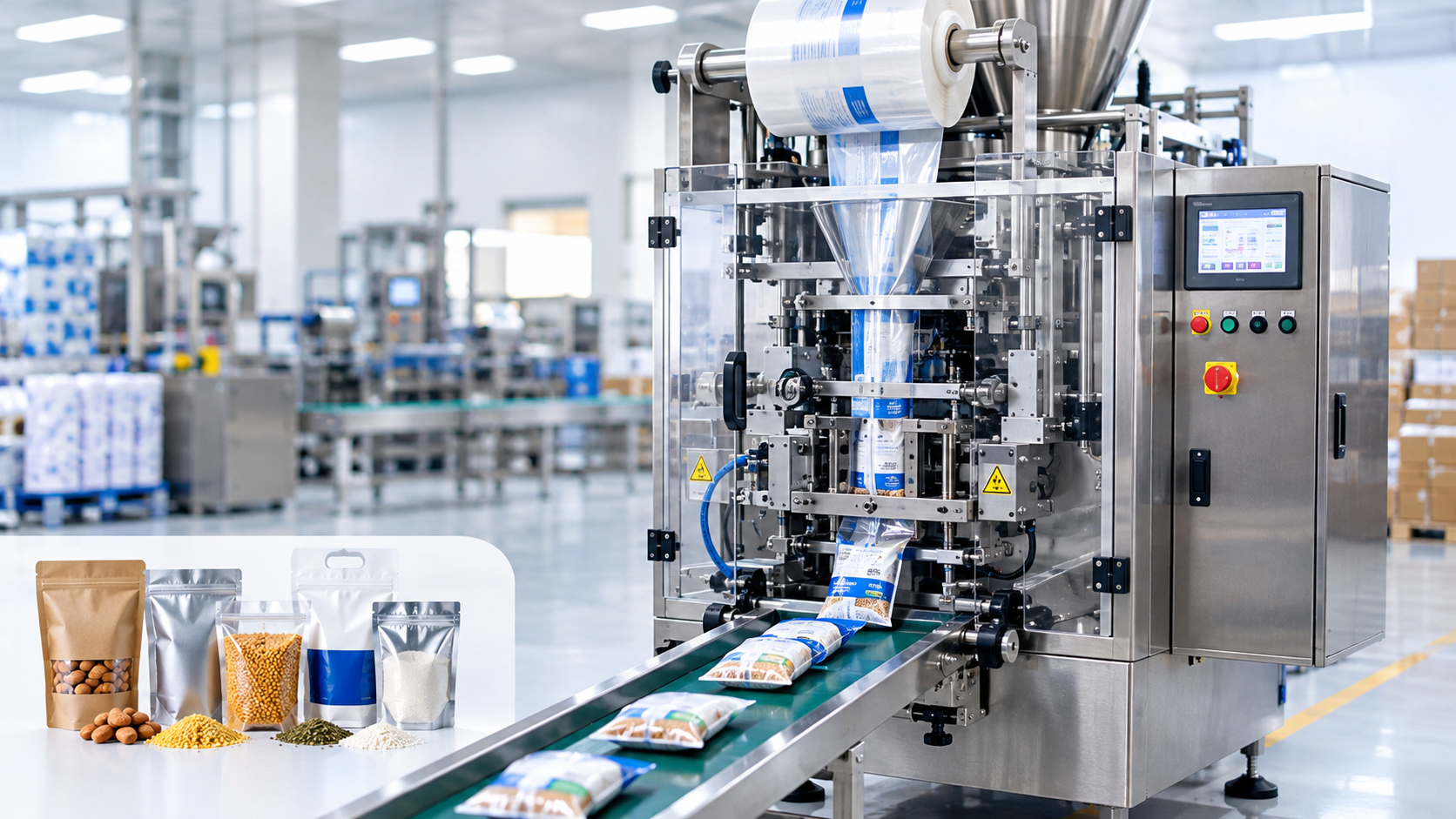
Packaging lines lose time and money when bags are made, filled, and sealed in separate steps. Manual handling slows output, and uneven fills lead to product giveaway and customer complaints. This is where a form fill seal machine helps, because it builds the pouch from flat film, fills it with product, and seals it in one continuous cycle. Manufacturers use it to cut labor, keep pack weights consistent, and raise output without adding floor space. This guide covers how it works, which features matter, and where it performs best.
What Is a Form Fill Seal Machine?
A form fill seal machine, often called an FFS machine, handles three jobs in a single system. It forms the package from a roll of film, fills it with a measured amount of product, and seals it closed. Because the package is made on the machine, you buy film rolls instead of stocking pre-made pouches.
Most industrial models also add date coding, tear notches, and gas flushing as optional steps in the same cycle.
How the Machine Works
The process follows a fixed sequence on every cycle:
- Film unwinding: A roll of packaging film feeds into the machine.
- Forming: The film wraps around a forming tube and becomes a tube shape.
- Vertical sealing: A heated jaw seals the back seam of the tube.
- Filling: A doser, auger, or weigher drops a set amount of product into the tube.
- Cross sealing and cutting: The jaws seal the top of one pack and the bottom of the next, then cut between them.
This cycle repeats many times per minute, which is why the machine suits high volume production.
Key Features to Look For
Not every machine fits every product. These features decide how well it performs on your line.
Filling System Compatibility
Match the filler to your product. Powders usually need an auger filler, free flowing granules suit a multihead weigher, and liquids or pastes need a piston or pump filler.
Servo Driven Controls
Servo motors give precise film pulling and jaw movement. This improves seal quality and reduces film waste, especially at higher speeds.
Touchscreen PLC Interface
A clear control panel lets operators store recipes, change pack sizes quickly, and view fault messages without calling a technician.
Sanitary Construction
For food and pharma use, look for stainless steel contact parts and a design that allows fast cleaning between batches.
Main Benefits for Manufacturers
The value of an FFS system shows up in daily operations.
- Higher output: Continuous forming and filling removes the pauses that manual or semi automatic work creates.
- Lower packaging cost: Roll film costs less than pre-made pouches.
- Consistent quality: Accurate dosing and uniform seals reduce giveaway and customer complaints.
- Smaller footprint: One machine replaces several separate stations.
- Longer shelf life: Sealed packs with optional nitrogen flushing protect product from air and moisture.
Vertical vs Horizontal Machines
Vertical Form Fill Seal
Vertical machines are the common choice for pillow bags, gusseted bags, and stick packs. They work well for powders, snacks, grains, and liquids.
Horizontal Form Fill Seal
Horizontal machines form pouches lying flat. They suit stand up pouches, zipper pouches, and products that need gentle handling or a premium look.
Applications Across Industries
A form fill seal machine adapts to many sectors:
- Food and snacks: Chips, nuts, rice, spices, and frozen items.
- Bakery and confectionery: Biscuits, candy, and dry mixes.
- Beverages: Coffee, tea, and drink powders.
- Pharmaceuticals and nutraceuticals: Powders, granules, and supplement sachets.
- Chemicals and agriculture: Fertilizer, detergent powder, and seeds.
- Personal care: Shampoo sachets, lotions, and creams.
Common Mistakes When Buying
Many buyers focus on price alone and pay for it later. Avoid these errors:
- Choosing a machine without testing it on your actual product and film.
- Ignoring future growth, then outgrowing the speed within a year.
- Skipping a check on spare part availability and local service support.
- Selecting the wrong filler type for the product’s flow behavior.
Questions to Ask Before You Buy
Put these questions to every supplier:
- Can you run a trial with my product and film?
- What is the real output speed for my pack size?
- Which parts wear out first, and how fast can you deliver them?
- What training and installation support is included?
- Can the machine handle more than one pack size?
Choosing the Right Automatic Packaging Machine
An automatic packaging machine is a long term investment, so evaluate it as a system. Look at product type, target speed, film structure, and your plant’s cleaning needs together. A supplier that asks detailed questions about your product is usually a better partner than one that quotes instantly. Pair the machine with reliable upstream and downstream equipment, such as weighers and cartoners, to keep the whole line balanced.
Frequently Asked Questions
1. What is a form fill seal machine used for?
It packs products into pouches or bags that it forms from film on the machine itself. Food, pharma, chemical, and personal care companies use it for powders, granules, liquids, and solids.
2. What is the difference between vertical and horizontal FFS machines?
Vertical machines form bags in a downward motion and suit pillow bags and sachets. Horizontal machines form pouches flat and suit stand up or zipper pouches.
3. How fast can an industrial form fill seal machine run?
Speed depends on pack size, product, and film. Many machines reach dozens of packs per minute, and high speed models go well beyond that on small sachets.
4. What packaging films work with these machines?
Common options include polyethylene, laminated films, and metallized films. The right choice depends on shelf life, barrier needs, and seal temperature.
5. How do I maintain a form fill seal machine?
Clean product contact parts after each run, inspect sealing jaws and heaters often, and follow the lubrication schedule. Planned maintenance reduces downtime and extends machine life.
Conclusion
A form fill seal machine combines forming, filling, and sealing into one efficient process. It lowers packaging cost, improves consistency, and scales with your production. Test the equipment with your own product, check service support, and match the machine to your long term goals.
- Goth Lifestyle
- Fashion & Style
- Music & Bands
- Art & Photography
- Creative Writing & Poetry
- Events & Scene
- Occult & Spirituality
- DIY & Tutorials
- Beauty & Self-Care
- Relationships & Dating
- Gaming & Media
- Tech & Gadgets
- Body Art & Piercings
- Underground Culture
- Spotlights & Interviews
- Travel & Places
- Lifestyle & Daily Life
- Fitness & Health
- Travel & Adventure
- Books & Literature
- Tech & Gaming
- Movies & TV
- Food & Drinks
- Humor & Memes
- Pets & Animals
- General Arts & Crafts

 English
 Arabic
 French
 Spanish
 Portuguese
 Turkish
 Dutch
Dutch
 Italiano
 Russian
 Romaian
 Portuguese (Brazil)
 Greek
Greek
