


How Can Businesses Use Asset Tokenization to Unlock Trapped Corporate Capital?
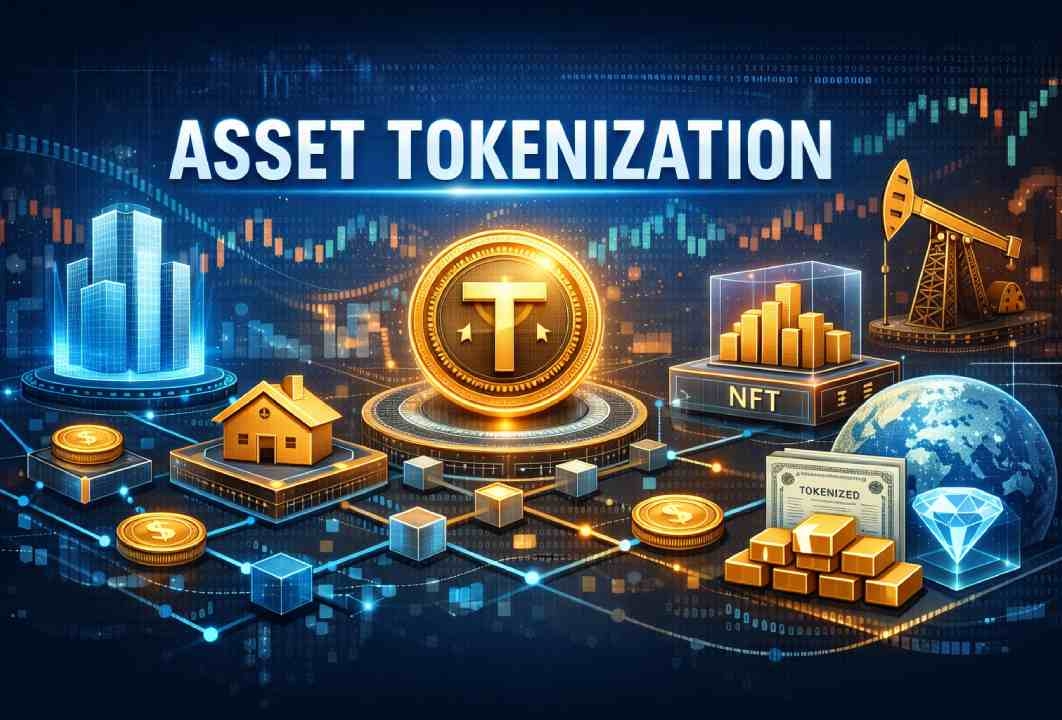
Businesses often hold valuable assets that remain underutilized because converting them into working capital can be expensive, time-consuming, or operationally complex. Commercial properties, equipment, inventory, unpaid invoices, intellectual property, and future revenue streams may represent substantial value, yet accessing that value through traditional financing can involve lengthy approval processes and restrictive lending conditions.
Asset tokenization offers an alternative approach by representing ownership interests, financial claims, or specific rights connected to real-world assets as digital tokens on a blockchain. Depending on the legal structure, these tokens can support new financing arrangements, fractional participation, and more efficient asset management.
For companies seeking to improve liquidity without immediately selling core assets, asset tokenization could create additional pathways to unlock trapped corporate capital. By connecting eligible assets with digital issuance platforms and suitable investors, businesses can explore new ways to finance expansion, strengthen working capital, and improve capital efficiency.
However, tokenization is not an automatic source of liquidity. Its effectiveness depends on asset quality, legal enforceability, investor demand, regulatory compliance, and the costs of implementing the solution.
What Is Trapped Corporate Capital?
Trapped corporate capital refers to value tied up in assets, receivables, inventory, deposits, or operational resources that cannot be readily converted into usable funds. Although these resources may contribute to a company's long-term value, they may not provide the immediate liquidity needed to meet expenses, invest in growth, or manage cash flow.
For example, a manufacturing business may own expensive machinery but lack sufficient cash to purchase raw materials. A property developer may hold completed commercial units that generate limited income while waiting for buyers. Similarly, a company may have substantial unpaid invoices but struggle to cover payroll and supplier payments before customers settle their balances.
Traditional financing methods can help address these challenges, but they may require collateral, extensive documentation, or lengthy underwriting.
Asset tokenization introduces another potential route by allowing businesses to structure eligible assets or associated financial rights into digitally represented interests. When supported by appropriate legal arrangements and investor participation, this approach may help companies access capital while retaining some control over their underlying operations.
How Does Asset Tokenization Help Unlock Corporate Capital?
Asset tokenization connects physical or financial assets with blockchain-based representations of defined rights. The process typically begins with identifying an asset, evaluating its value, establishing a legally enforceable structure, and defining what the tokens represent.
A business may tokenize eligible receivables, for example, by structuring investor claims against a pool of invoices. Alternatively, it may create a financing arrangement linked to commercial property income or equipment-related cash flows. Investors receive the rights specified in the offering documents, while the company obtains capital under agreed terms.
Smart contracts can automate selected processes, including token issuance, transfer restrictions, investor eligibility checks, and distribution calculations. These functions may reduce certain administrative tasks, although legal agreements, reliable asset records, and appropriate compliance procedures remain essential.
The central opportunity is to make previously difficult-to-finance assets more accessible to structured capital markets without assuming that every asset can be freely traded or divided.
7 Ways Businesses Can Use Asset Tokenization to Unlock Trapped Capital
1. Tokenizing Commercial Real Estate Assets
Commercial properties can hold significant corporate value while generating limited immediate liquidity. Office buildings, warehouses, retail centers, and industrial facilities may require substantial capital to maintain, expand, or operate, making it difficult for businesses to access the value tied up in these assets.
Real estate tokenization enables businesses to structure digital tokens representing defined ownership interests, investment rights, or claims on property-related income. Depending on the arrangement, companies may raise capital from multiple eligible investors rather than relying exclusively on traditional property sales or secured loans.
For example, a business holding an income-generating warehouse could establish a suitable investment structure and issue tokens linked to its economic interests. The capital raised could support expansion, operational improvements, or debt management.
This approach may help businesses unlock property value while retaining ownership or operational control, provided the legal structure supports those outcomes.
2. Unlocking Working Capital Through Tokenized Receivables
Unpaid invoices are a common source of trapped corporate capital. Businesses often deliver products or services well before receiving payment, creating gaps between operating expenses and incoming revenue.
Tokenized receivables financing can represent eligible invoice claims through blockchain-based digital instruments. These claims may be structured for financing or transfer to investors under legally enforceable agreements.
A supplier with verified invoices from creditworthy customers, for instance, could explore a financing arrangement that provides earlier access to funds instead of waiting for the full payment cycle.
Tokenization may improve transaction visibility, support automated recordkeeping, and streamline selected administrative processes. Nevertheless, invoice verification, debtor creditworthiness, collection arrangements, and enforceable transfer rights remain essential.
3. Monetizing Underutilized Equipment and Machinery
Manufacturing equipment, construction machinery, transportation assets, and specialized industrial tools can represent substantial investments. However, these assets may not always generate sufficient returns relative to their value, particularly when capacity remains unused.
Businesses can explore tokenization structures linked to equipment ownership, lease payments, or contractual revenue generated by machinery. The specific model determines whether investors receive an ownership interest, a financing claim, or rights to defined cash flows.
For example, an industrial company could structure financing around equipment lease revenues to obtain funds for additional production capacity. The arrangement may allow the business to access capital without immediately selling the machinery outright.
Asset valuation, maintenance costs, insurance, depreciation, and the enforceability of investor rights should be assessed before selecting this model.
4. Turning Inventory Into a Financing Opportunity
Inventory ties up cash that businesses could otherwise use for production, marketing, payroll, and expansion. This challenge is particularly relevant to manufacturers, wholesalers, distributors, and businesses operating across complex supply chains.
Tokenization may support financing arrangements involving eligible inventory, warehouse receipts, or legally recognized claims over stored goods. Digital records can help participants track asset identifiers, quantities, custody information, and relevant transaction documentation.
For example, a distributor holding verified inventory could explore a financing structure secured by eligible goods. The funds could then support new purchases or fulfill additional customer orders.
However, digital tokens do not independently establish ownership of physical inventory or eliminate the risk of duplicate financing. Independent verification, custody controls, valuation procedures, and clear enforcement mechanisms are necessary.
5. Accessing Capital Through Intellectual Property
Patents, software licenses, trademarks, and other intellectual property assets may generate recurring licensing income while remaining difficult to finance through conventional asset-backed lending.
Intellectual property tokenization can represent defined economic rights associated with these assets, subject to applicable laws and contractual restrictions. A business might structure tokens linked to eligible licensing revenue or establish an investment vehicle that holds specified intellectual property rights.
For example, a technology company with established software licensing agreements could explore financing based on eligible future royalty payments. The resulting capital might fund research, product development, or market expansion.
The company must distinguish between transferring intellectual property ownership and granting investors rights to particular income streams. Valuation uncertainty, infringement risks, license restrictions, and the reliability of projected revenue can materially affect financing outcomes.
6. Tokenizing Future Corporate Revenue Streams
Businesses with recurring contractual revenue may be able to structure financing around predictable future cash flows. Potential examples include equipment leases, subscription contracts, infrastructure usage fees, and long-term commercial service agreements.
Revenue-linked tokenization allows a business to explore funding arrangements connected to specified income streams rather than relying exclusively on its balance sheet or physical collateral.
Consider an infrastructure operator receiving regular payments under long-term service contracts. A legally structured financing arrangement could give eligible investors rights to a defined portion of those revenues in exchange for upfront capital.
Such arrangements can help businesses match financing with revenue-generating activities. However, future revenues are not guaranteed, and investor returns may be affected by contract termination, customer defaults, operating expenses, or changes in demand.
7. Exploring Tokenized Corporate Debt and Financing Instruments
Businesses that need additional funding may consider tokenized debt instruments or other digitally represented financing products. Under an appropriate structure, tokenized corporate debt can represent contractual repayment obligations, including principal and interest where applicable.
Blockchain-based infrastructure may support digital issuance records, automated payment calculations, and controlled transfers between eligible participants.
For example, an established company seeking to finance a new production facility could evaluate a compliant digital debt issuance alongside conventional borrowing options.
Tokenization does not automatically reduce borrowing costs or improve a company's creditworthiness. The issuer must still assess interest obligations, repayment capacity, disclosure requirements, investor protections, and the applicable securities framework.
Key Benefits of Asset Tokenization for Corporate Capital Efficiency
Asset tokenization may provide businesses with several potential advantages when it is supported by appropriate legal, financial, and technological arrangements.
Improved liquidity options: Businesses can explore financing against eligible assets and cash flows instead of depending entirely on outright sales or conventional loans.
Access to a broader investor base: Digitally structured offerings may reach eligible investors across different markets, subject to applicable distribution rules and restrictions.
Fractional participation: Assets can be structured into smaller investment interests where legally permitted, potentially making individual offerings accessible to a wider range of qualified participants.
Greater transaction transparency: Blockchain records can improve the visibility of token issuance, transfers, and selected asset-related activities. Their usefulness still depends on accurate information entering the system.
Automation of financial processes: Smart contracts may automate specified payment distributions, eligibility rules, and transaction workflows, reducing some administrative burdens.
More flexible financing structures: Companies can evaluate different approaches involving property interests, receivables, equipment, debt instruments, or contractual revenue rights.
These benefits are not guaranteed. The Federal Reserve's guidance on tokenized securities emphasizes that tokenized instruments must still meet applicable legal and risk-management requirements. Digitizing an asset does not remove the underlying financial risks.
How Can Businesses Implement Asset Tokenization?
A successful tokenization initiative begins with a clear financing objective rather than simply choosing a blockchain platform.
Step 1: Identify Assets With Untapped Financial Potential
Businesses should evaluate which assets are underutilized, generate predictable cash flows, or could support a viable financing arrangement. Candidate assets may include commercial property, unpaid invoices, equipment, inventory, and contractual revenue.
Step 2: Evaluate Asset Value and Financial Viability
Independent valuation, ownership verification, cash-flow analysis, and risk assessment help determine whether an asset is suitable for tokenization. Businesses should also estimate the potential funding amount and compare it with implementation and ongoing costs.
Step 3: Establish the Legal and Regulatory Structure
Companies must define exactly what each token represents. It could represent an ownership interest, debt obligation, claim on revenue, or another contractual right. The structure must address enforceability, investor eligibility, disclosures, transfer restrictions, taxation, and any applicable licensing obligations.
Step 4: Develop the Tokenization Platform
The technology infrastructure may include token issuance, investor onboarding, identity verification, compliance controls, smart contracts, custody integrations, reporting, and payment distribution features.
The platform should be selected according to the asset type, transaction volume, security requirements, integration needs, and intended investor market.
Step 5: Connect With Suitable Investors and Financing Partners
Businesses need a credible route to capital. This may involve regulated intermediaries, institutional investors, private capital providers, or other eligible participants, depending on the offering structure.
Transparent documentation, credible asset information, clear repayment or distribution terms, and appropriate risk disclosures help investors assess the opportunity.
Step 6: Monitor Assets and Manage Investor Obligations
After issuance, businesses must maintain accurate asset records, monitor underlying performance, administer payments, manage compliance requirements, and communicate material changes to investors.
Tokenization is an ongoing financial operation, not simply a one-time technology deployment.
Challenges Businesses Should Consider Before Tokenizing Assets
Despite its potential, asset tokenization involves several challenges that businesses should address before committing capital.
Regulatory uncertainty: Tokenized ownership interests, debt instruments, and revenue-linked products may fall under different legal frameworks. Requirements depend on the asset, rights granted, issuer, investor location, and transaction structure.
Asset valuation and verification: Physical assets and future cash flows require reliable valuation methods and continuing oversight. Blockchain records alone cannot verify the condition or market value of an underlying asset.
Investor liquidity: Token issuance does not guarantee an active secondary market. Businesses should avoid promising easy resale unless suitable, legally compliant trading arrangements actually exist.
Cybersecurity and custody: Smart-contract vulnerabilities, compromised credentials, inadequate key management, and platform outages can create material operational and financial risks.
Implementation costs: Legal structuring, audits, platform development, investor onboarding, custody, and compliance can make tokenization uneconomical for some assets or smaller financing requirements.
Integration with existing systems: Companies must coordinate tokenization infrastructure with accounting software, enterprise resource planning systems, payment providers, banking arrangements, and internal reporting processes.
The International Financial Services Centres Authority has examined regulatory approaches to real-world asset tokenization, including financial securities. Its work illustrates why legal structure and governance must accompany technological development.
The Future of Asset Tokenization in Corporate Finance
Corporate finance is increasingly exploring how digital infrastructure can support the issuance, administration, and settlement of financial instruments. Tokenization may eventually become part of broader treasury operations, asset-backed financing strategies, and institutional capital markets infrastructure.
For businesses, the opportunity extends beyond creating digital representations of physical property. It includes evaluating whether receivables, equipment, inventory, contractual revenue, and other eligible assets can support more flexible financing arrangements.
The most effective implementations will likely focus on commercially valuable assets with clear ownership records, reliable cash flows, enforceable rights, and identifiable investor demand. Integration with existing financial infrastructure will also remain important as companies seek practical solutions rather than technology experiments.
Ultimately, asset tokenization should be evaluated as one financing option among several. Its value depends on whether it improves access to capital, reduces operational friction, or creates financing flexibility at an acceptable cost and risk level.
Conclusion
Asset tokenization offers businesses a potential way to unlock trapped corporate capital by connecting eligible assets and financial rights with digitally structured financing opportunities. From commercial real estate and equipment to receivables, inventory, intellectual property, and future revenue streams, companies can explore alternatives to relying exclusively on asset sales and traditional borrowing.
However, successful implementation requires more than issuing blockchain tokens. Businesses need reliable asset verification, enforceable legal structures, appropriate regulatory compliance, secure technology, and credible investor demand.
By aligning tokenization with specific working-capital requirements and long-term financial objectives, companies can assess whether this approach supports better liquidity management and more efficient use of corporate assets.
Frequently Asked Questions
1. What is asset tokenization in corporate finance?
Asset tokenization is the process of representing ownership interests, financial claims, or other rights associated with assets as digital tokens on a blockchain or distributed ledger. Businesses may use it to explore new financing arrangements and improve access to capital.
2. Which corporate assets can be tokenized?
Potential candidates include commercial real estate, equipment, inventory, receivables, intellectual property, debt instruments, and contractual revenue streams. Suitability depends on ownership, legal rights, valuation, regulatory requirements, and investor demand.
3. Can asset tokenization help businesses raise working capital?
Yes, potentially. Businesses may structure financing arrangements around eligible invoices, property interests, equipment, or other assets to access funds earlier. The outcome depends on the structure, financing costs, investor participation, and enforceability of the underlying rights.
4. Does asset tokenization guarantee liquidity?
No. Tokenization does not guarantee investor demand, resale opportunities, or lower financing costs. Companies must evaluate market conditions, asset quality, legal restrictions, and the availability of appropriate trading or financing channels.
5. How can businesses develop an asset tokenization platform?
Businesses typically begin by identifying suitable assets and defining the financing model. They then establish the legal structure, choose the technology infrastructure, implement smart contracts and compliance controls, onboard eligible investors, and create processes for ongoing asset monitoring and reporting.
- Goth Lifestyle
- Fashion & Style
- Music & Bands
- Art & Photography
- Creative Writing & Poetry
- Events & Scene
- Occult & Spirituality
- DIY & Tutorials
- Beauty & Self-Care
- Relationships & Dating
- Gaming & Media
- Tech & Gadgets
- Body Art & Piercings
- Underground Culture
- Spotlights & Interviews
- Travel & Places
- Lifestyle & Daily Life
- Fitness & Health
- Travel & Adventure
- Books & Literature
- Tech & Gaming
- Movies & TV
- Food & Drinks
- Humor & Memes
- Pets & Animals
- General Arts & Crafts

 English
 Arabic
 French
 Spanish
 Portuguese
 Deutsch
 Turkish
 Dutch
Dutch
 Italiano
 Russian
 Romaian
 Portuguese (Brazil)
