


Blackout Blinds for Bedroom Windows With Better Light Control
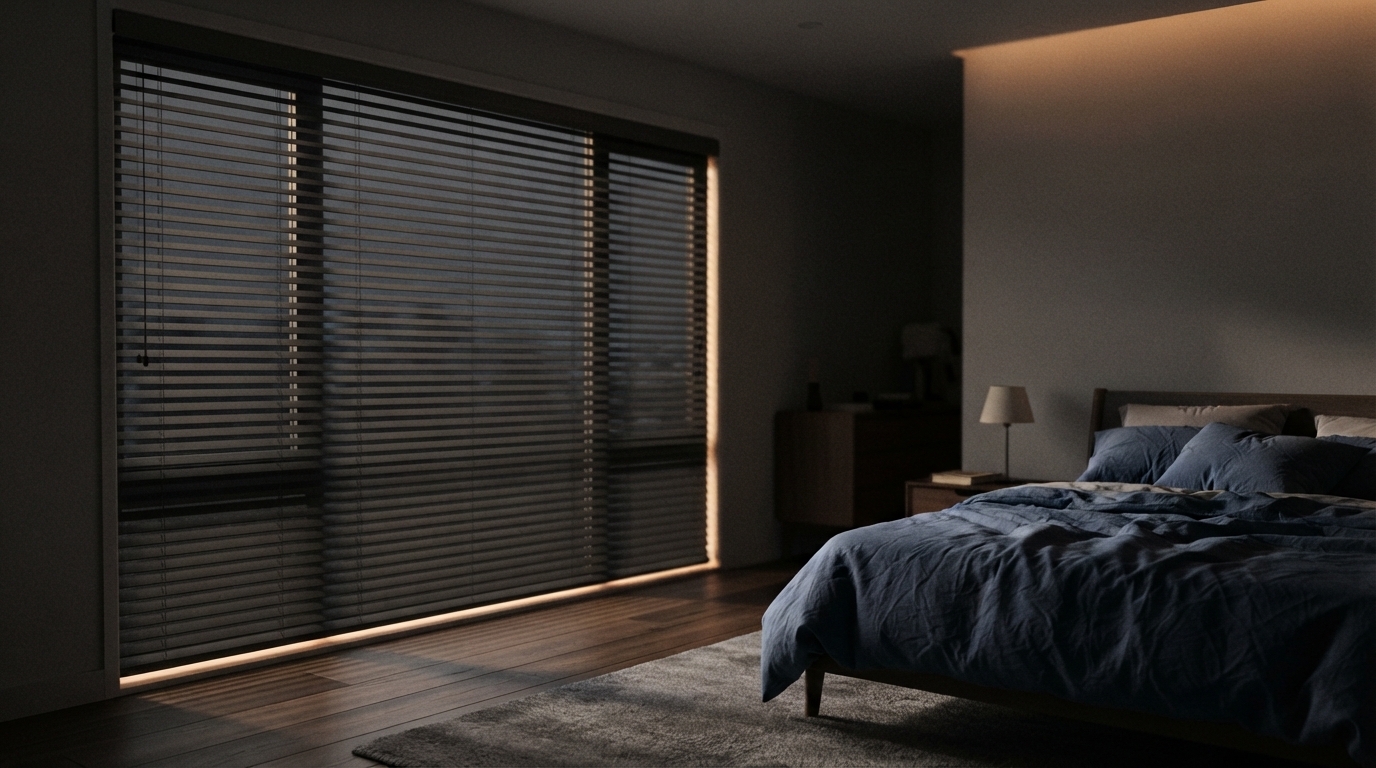
The right window covering can make a noticeable difference to how dark, private and comfortable a bedroom feels. Blackout window blinds are designed to control unwanted daylight and artificial light, making them particularly useful in bedrooms, nurseries and rooms used for daytime sleep.
A bedroom doesn't have to face the sun all day to have a light problem. Street lamps can shine through at night. Early morning sunlight can come through before you're ready to wake up. Even a small amount of light around a conventional blind can be frustrating when you're trying to create a genuinely dark sleeping space.
That's where the design of the window covering matters.
Why bedroom light control is different
Many blinds are designed primarily for privacy or general light filtering. That's useful in living rooms and other areas of the home, but a bedroom can have different requirements.
Someone who works night shifts, for example, may need to sleep during daylight hours. Parents may want a darker nursery for daytime naps. Others simply find that a bright bedroom makes it harder to maintain a comfortable sleep environment.
The issue isn't always the blind material itself. Light can also enter around the edges of a window covering.
A blind that looks opaque when closed may still leave noticeable brightness around the sides, top or bottom. The size of these gaps depends on the window, blind design and installation.
This is one reason blackout blinds for bedroom windows are increasingly designed as complete systems rather than simply a piece of blackout fabric hanging in front of the glass.
What makes blackout window blinds different?
The term "blackout" can mean different things depending on the product.
A standard blackout roller blind may use an opaque fabric to reduce light passing directly through the material. That can work well, but it doesn't necessarily address light entering around the edges.
A more comprehensive blackout system considers several parts of the window:
- The blind material: Designed to prevent light passing through the covering.
- The frame: Helps position the blind closely around the window.
- The side seals: Can reduce light escaping around the edges.
- The closure: Keeps the covering firmly positioned when shut.
- The window measurements: A closer fit can reduce unwanted gaps.
This distinction is important when the goal isn't simply "less sunlight" but a bedroom that feels genuinely dark.
The problem with relying on ordinary blinds
Traditional blinds can be perfectly suitable for many rooms. The problem starts when they're expected to perform a job they weren't designed for.
Consider a bedroom facing a street. A conventional blind might cover most of the glass, yet light from a nearby lamp can still be visible around the edges.
During summer, early daylight presents another challenge. A bedroom can become bright long before someone wants to get up.
Curtains can help, too, particularly when they overlap the window properly. But the result depends heavily on how the curtains are fitted and how much light can travel around them.
For people who specifically need strong bedroom light control, a close-fitting blackout system can therefore be worth considering.
Blackout blinds can support a darker sleep environment
Darkness is one part of a comfortable sleep setting. It isn't a substitute for good sleep habits, and blackout blinds can't solve every sleep problem.
They can, however, help control one environmental factor: unwanted light.
This matters particularly for people whose schedules don't match natural daylight.
Daytime sleepers
Shift workers and night workers often have to sleep when the outside world is bright. Blackout window blinds can help make the bedroom feel more like a night-time environment during the day.
Children's bedrooms and nurseries
Young children may also benefit from a darker room during daytime naps. For nurseries, practical considerations matter alongside light control, including safe operation and avoiding loose or dangling cords.
Bedrooms facing bright streets
External lighting can remain visible throughout the night. A well-fitted blackout covering can provide greater privacy while limiting the amount of artificial light entering the room.
Made-to-measure matters
Windows aren't identical. Even two windows in the same house can have different dimensions, frames and surrounding spaces.
That's why made-to-measure blackout blinds can offer an advantage over generic sizes.
The objective isn't simply to find something that covers the window. It's to select a system designed around its measurements.
A closer fit can be particularly important when light control is the priority. If a blind leaves large gaps beside the glass, the blackout material itself can only do so much.
This is also where the installation method becomes relevant.
What about no-drill blackout blinds?
Not everyone wants to drill into their walls or window frames.
Renters may have restrictions on permanent alterations. Homeowners may simply prefer an installation method that doesn't require drilling, tools or extensive preparation.
No-drill blackout systems are designed around this requirement.
LumiGlide, for example, positions its total blackout system around made-to-measure sizing and tool-free installation without drilling. Its approach combines a fitted frame and sealing system with a blackout blind rather than relying solely on a conventional blind mounted above the window.
For someone comparing blackout options, this is an important distinction to investigate: how does the system actually attach to the window, and where does it control light?
The answer can tell you more about expected light control than the word "blackout" on the product label.
Blackout isn't only about darkness
Light control is usually the main reason people search for blackout window blinds, but the design can affect several other aspects of a bedroom.
Privacy
A properly closed blackout covering can prevent unwanted visibility through the window, particularly at night when indoor lighting makes rooms more visible from outside.
Thermal comfort
Windows can contribute to heat loss in winter and solar heat gain in warmer weather. Some fitted blackout systems include additional layers intended to provide thermal insulation.
This doesn't mean a blind should be treated as a replacement for proper glazing or insulation. Its contribution depends on the construction of the window, the blind and the room.
Noise
A window covering isn't a substitute for acoustic glazing or proper sound insulation. However, some blackout systems incorporate materials and frames intended to help dampen external noise.
Again, the sensible approach is to treat this as one part of the overall bedroom environment rather than expecting a blind to eliminate outside sound.
How to choose blackout blinds for a bedroom
Before choosing a product, start with the problem you're trying to solve.
| Bedroom problem | Feature worth considering |
|---|---|
| Bright morning sunlight | Strong blackout material |
| Street lighting at night | Close-fitting blackout design |
| Light entering around ordinary blinds | Frame or side-sealing system |
| Daytime sleeping | High-level light control |
| Nursery naps | Blackout plus safe operation |
| Renting | No-drill installation |
| Uneven or unusual window sizes | Made-to-measure sizing |
| Need for greater privacy | Full window coverage |
| Bedroom gets uncomfortable in warm or cold weather | Thermal-insulating construction |
| Outside noise is distracting | Noise-dampening features |
The table also highlights an important point: there isn't one "best" blind for every bedroom.
The right choice depends on the window, the amount and source of unwanted light, installation restrictions and the other characteristics that matter to the household.
Look beyond the word "blackout"
When comparing products, it's easy to focus on a single specification.
Instead, ask a few practical questions:
- How much light passes through the blind material?
- What happens at the edges of the window?
- Is the product measured specifically for the window?
- How is it installed?
- Does installation require drilling?
- How is the blind operated?
- Are there loose cords or other safety considerations?
- Does the construction provide any thermal or noise-dampening benefits?
- Can the blind be opened easily when daylight is wanted?
- Does the design suit the actual window rather than just its approximate size?
These questions are more useful than choosing a blind simply because its product description contains the word "blackout."
A practical way to think about bedroom darkness
Imagine closing your bedroom blinds at 10 p.m. The fabric itself blocks the light, but a bright line remains around the sides.
The room is darker.
It isn't dark.
Now consider a fitted system designed to cover the window more closely, with a frame and sealing elements intended to minimise those gaps. The difference isn't necessarily the material alone. It's the way the complete system interacts with the window.
That distinction explains why blackout blinds for bedroom windows should be assessed as a complete installation rather than just a fabric specification.
Final thoughts
Good bedroom light control starts with identifying where the unwanted light is actually coming from.
It may be passing through the blind. It may be entering around the edges. It may come from a street lamp, early morning sunlight or daylight during an afternoon nap.
Blackout window blinds can address the problem, but the quality of the result depends heavily on the design, fit and installation.
For bedrooms where darkness is a priority, look beyond generic blackout fabric. Consider made-to-measure sizing, edge coverage, privacy, installation requirements and any additional thermal or noise-dampening features.
A product such as LumiGlide's total blackout system is one example of this broader approach, combining a fitted blackout design with a no-drill installation method. The useful lesson for anyone researching bedroom blinds is simple: don't judge light control by the blind alone. Look at the whole window system.
If your current bedroom remains bright after the blinds are closed, start by finding the source of the remaining light. That will make it much easier to choose a window covering that actually addresses the problem.
- Goth Lifestyle
- Fashion & Style
- Music & Bands
- Art & Photography
- Creative Writing & Poetry
- Events & Scene
- Occult & Spirituality
- DIY & Tutorials
- Beauty & Self-Care
- Relationships & Dating
- Gaming & Media
- Tech & Gadgets
- Body Art & Piercings
- Underground Culture
- Spotlights & Interviews
- Travel & Places
- Lifestyle & Daily Life
- Fitness & Health
- Travel & Adventure
- Books & Literature
- Tech & Gaming
- Movies & TV
- Food & Drinks
- Humor & Memes
- Pets & Animals
- General Arts & Crafts

 English
 Arabic
 French
 Spanish
 Portuguese
 Deutsch
 Turkish
 Italiano
 Russian
 Romaian
 Portuguese (Brazil)
 Greek
Greek