


Makeup Packaging Boxes Materials, MOQs and Finishes
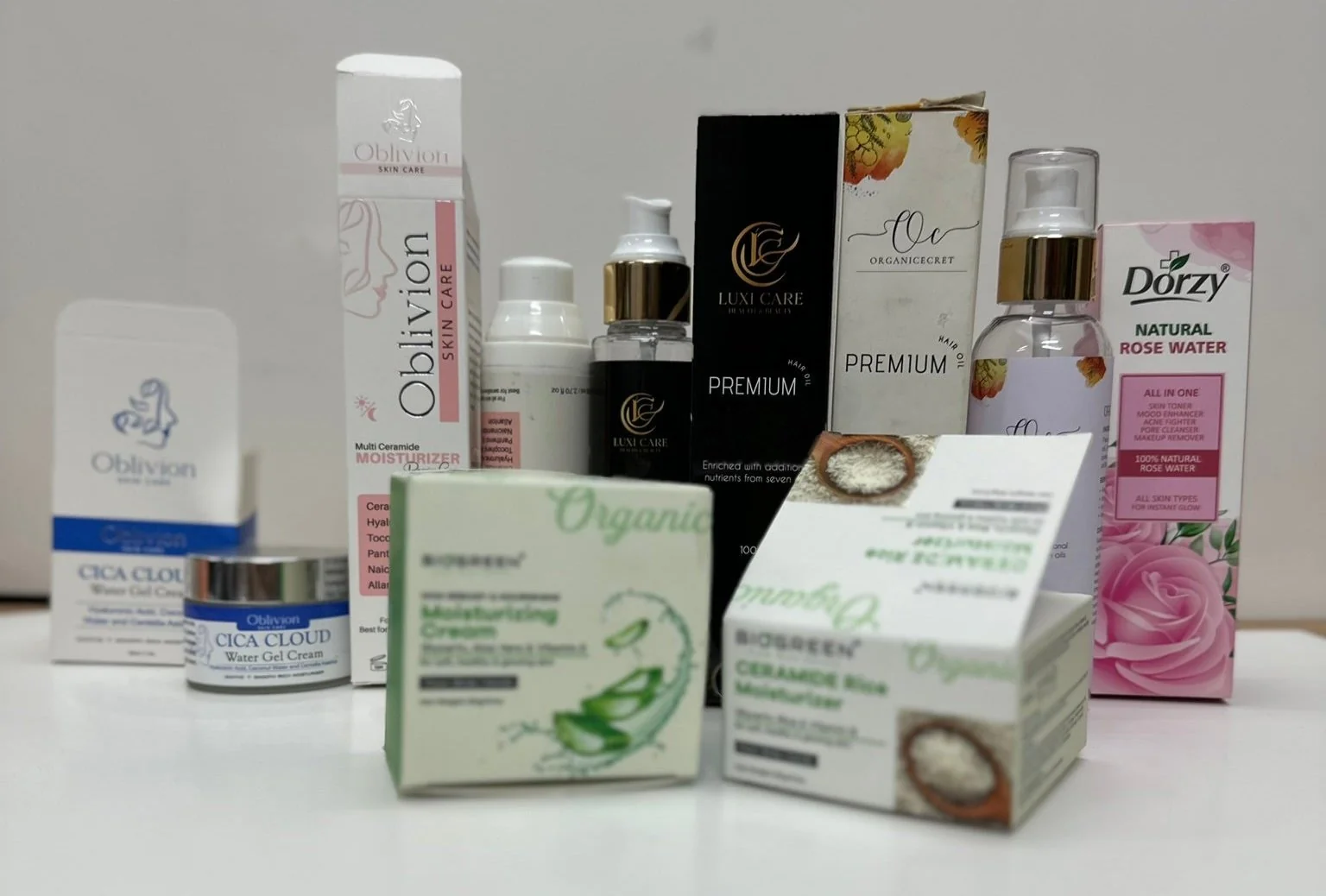
Sourcing makeup packaging boxes for the first time involves more decisions than most new beauty brands expect: board type, minimum order quantity, finish, and structural fit for the specific product, palette, compact, tube, or bottle, all interact to determine both cost and lead time. This guide walks through the decisions in the order most brand owners actually need to make them.
Getting these choices right the first time avoids the common trap of ordering a run that looks fine on screen but feels cheap in hand, or committing to a minimum order quantity that ties up cash before the product has proven itself.
Brands that skip this planning stage often find out the hard way, after a production run is already paid for, that their chosen structure doesn't actually fit the product, or that the MOQ they agreed to ties up more cash than the SKU has proven it can sell through.
Folding Carton vs. Rigid Box for Makeup Products
Folding cartons are the default choice for most makeup packaging because they're lightweight, inexpensive at moderate volumes, and print well with vibrant color. Rigid boxes cost more but suit higher-price-point products, think eyeshadow palettes or gift sets, where the box itself is part of the perceived value.
A useful rule of thumb: if the product retails under roughly $25, a well-printed folding carton usually delivers the best cost-to-perception ratio. Above that, rigid construction starts to pay for itself in perceived quality.
Typical MOQs for Custom Makeup Packaging Runs
Minimum order quantities for custom-printed folding cartons typically start in the 500–1,000 unit range, driven largely by plate setup costs rather than material cost. Rigid boxes carry higher minimums, often 300–500 units, because tooling and hand-assembly steps make very short runs inefficient for the manufacturer.
Brands testing a new SKU before committing to a full production run should ask suppliers directly about short-run or digital-print options, which can bring MOQs down substantially at a modest per-unit cost increase.
Finish Options: Soft-Touch, Spot UV, Foil Stamping
Soft-touch lamination gives packaging a velvet-like texture that beauty customers strongly associate with premium formulation, even though the finish has nothing to do with what's inside the box.
Spot UV adds glossy contrast over logos or pattern elements, and foil stamping in gold, rose gold, or holographic finishes remains the most common way beauty brands signal a premium price point.
Structural Considerations for Palettes, Compacts & Tubes
Palettes need a snug internal fit to prevent shifting and pan cracking during shipping, compacts benefit from a secure closure mechanism so they don't pop open in a customer's bag, and tubes typically ship in a simple sleeve or tuck-top carton rather than a full box. Matching the structure to the product's actual failure points, not just its shape, prevents costly redesigns after the first shipping damage claims come in.
Sourcing Timeline: From Brief to First Production Run
A realistic timeline for sourcing makeup packaging boxes starts with a design brief that specifies product dimensions, weight, and any structural requirements like a mirror insert or magnetic closure. From there, most suppliers need one to two weeks to produce a physical dieline sample, which the brand should physically test with an actual filled product rather than an empty mockup.
Color proofing typically runs in parallel with structural approval, and both should be signed off before a full production run is scheduled. Brands working toward a specific launch date should build in a buffer of at least a week beyond the supplier's stated production timeline, since finish steps like foil stamping or soft-touch lamination often extend turnaround beyond a standard printed carton.
Brands should also plan for how packaging will handle product line extensions. A structure and dieline designed with only the initial SKU in mind can become a bottleneck later if a new shade range or format doesn't fit the original box without a costly redesign.
Quick Specification Checklist for Makeup Packaging Boxes
● Structure (folding carton vs. rigid) matched to price point and volume
● MOQ confirmed against actual sales forecast, not just supplier minimums
● Finish tested against the brand's exact Pantone reference
● Physical dieline sample tested with the real filled product
● Ingredient panel space planned into the design from the start
● Timeline includes a buffer beyond the supplier's stated production window
Common Mistakes When Ordering Makeup Packaging Boxes
● Locking in a full production MOQ before testing a shorter digital-print run, especially for a new or unproven SKU.
● Specifying a finish like soft-touch lamination without checking how it will look combined with the brand's chosen Pantone color.
● Skipping a physical dieline sample and approving packaging based on a flat digital mockup alone.
● Failing to standardize structural dielines across similar SKUs, which multiplies tooling costs unnecessarily as a product line grows.
Frequently Asked Questions About Makeup Packaging Boxes
What's the minimum order quantity for custom makeup packaging boxes?
Custom-printed folding cartons typically start at 500–1,000 units, while rigid boxes usually carry higher minimums of 300–500 units due to tooling costs.
Should a new makeup brand start with folding cartons or rigid boxes?
Folding cartons generally offer the best cost-to-perception ratio for products retailing under about $25; rigid boxes make more sense above that price point.
How long does it take to get makeup packaging boxes into production?
Most projects need two to three weeks for prototyping and color proofing before a full production run begins, though this varies by supplier and finish complexity.
What information should go into a packaging brief for a makeup product?
Include exact product dimensions and weight, any structural needs like a mirror or magnetic closure, target finish, and desired MOQ before requesting quotes.
How should packaging plans account for future product line extensions?
Choosing a structure and dieline with some flexibility for size or shade variations up front avoids a costly redesign when the line expands later.
Does standardizing packaging structure across SKUs actually save money?
Yes, reusing a structural dieline across similar SKUs and varying only the printed graphics reduces tooling costs and simplifies production as a line grows.
Key Takeaways
● Structure choice (folding carton vs. rigid), MOQ, and finish are the three decisions that most affect both cost and lead time for makeup packaging.
● Folding cartons suit most everyday makeup SKUs; rigid boxes are better reserved for higher-price-point or gift-set items.
● MOQs are largely driven by plate and tooling setup cost rather than material cost, so short-run digital printing is worth asking about for new SKUs.
● A physical dieline sample tested with the actual filled product catches structural problems that a digital mockup will miss.
● Building a buffer into the production timeline, especially for finished elements like foil stamping, helps protect a fixed launch date.
Final Thoughts
Sourcing makeup packaging boxes doesn't have to be complicated once the core variables, structure, MOQ, and finish, are mapped against the product's price point and expected sales volume. Brands that plan for label space, test with a physical dieline, and build in a realistic timeline consistently avoid the costly rework that catches less-prepared teams off guard.
For brands managing multiple SKUs across a growing line, standardizing structural dielines wherever possible, even while varying the printed graphics, reduces both tooling cost and the administrative overhead of tracking separate specifications for every product, which becomes increasingly valuable as a catalog expands beyond a handful of items.
- Goth Lifestyle
- Fashion & Style
- Music & Bands
- Art & Photography
- Creative Writing & Poetry
- Events & Scene
- Occult & Spirituality
- DIY & Tutorials
- Beauty & Self-Care
- Relationships & Dating
- Gaming & Media
- Tech & Gadgets
- Body Art & Piercings
- Underground Culture
- Spotlights & Interviews
- Travel & Places
- Lifestyle & Daily Life
- Fitness & Health
- Travel & Adventure
- Books & Literature
- Tech & Gaming
- Movies & TV
- Food & Drinks
- Humor & Memes
- Pets & Animals
- General Arts & Crafts

 English
 Arabic
 French
 Portuguese
 Deutsch
 Turkish
 Dutch
Dutch
 Italiano
 Russian
 Romaian
 Portuguese (Brazil)
 Greek
Greek