Web Analytics
  • Stonewall Jackson trusted very few men. He demanded absolute discipline, unquestioning obedience, and relentless aggression. But there was one general whose brilliance he admired—and whose behavior he could never fully forgive. Their partnership helped win battles, yet their personal relationship remained one of the Confederacy’s most complicated rivalries.


    Time Period: 1862–1863
    Conflict: American Civil War
    Key Figures: Stonewall Jackson and A.P. Hill


    The image portrays two of the Confederacy's most famous commanders: Lieutenant General Thomas “Stonewall” Jackson and Major General Ambrose Powell (A.P.) Hill. Together they helped create some of the most remarkable Confederate victories of the Civil War. Yet behind the battlefield success lay a relationship filled with tension, arguments, and lingering resentment.


    When the Civil War intensified in 1862, A.P. Hill emerged as one of the Confederacy's most talented combat commanders. Leading his famous Light Division, Hill developed a reputation for aggressive attacks, rapid movement, and personal courage under fire.


    Stonewall Jackson immediately recognized Hill's military ability.


    In battle, Hill was often exactly the type of commander Jackson needed. He moved quickly, fought aggressively, and inspired his troops. During the Shenandoah Valley Campaign of 1862, Jackson's lightning-fast victories depended heavily on officers capable of executing difficult orders under extreme pressure.


    However, the two men possessed very different personalities.


    Jackson was intensely private, deeply religious, and demanded strict obedience from subordinates. Orders were expected to be followed without question. Hill, by contrast, was independent, outspoken, and often challenged decisions he believed were mistaken.


    Their disagreements soon became legendary.


    Throughout the Valley Campaign, Jackson and Hill repeatedly argued over marching orders, troop movements, and battlefield decisions. On several occasions Jackson accused Hill of moving too slowly or failing to carry out instructions precisely as ordered. Hill, meanwhile, believed Jackson sometimes issued vague or impractical commands.


    The tension reached a breaking point during the Seven Days Battles outside Richmond in June 1862.


    During one heated dispute, Jackson became so frustrated that he temporarily placed Hill under arrest. Although the arrest did not last long, it revealed just how strained their relationship had become. Few Confederate officers could imagine openly clashing with the feared Stonewall Jackson, yet Hill repeatedly did so.


    Despite these personal conflicts, Jackson never doubted Hill's fighting ability.


    In fact, some of the Confederacy's greatest successes occurred because Hill's division arrived at critical moments. At Antietam in September 1862, Hill's troops completed a grueling march and arrived just in time to prevent the collapse of Lee's right flank. Their counterattack helped save the Confederate army from potential disaster.


    Even Jackson reportedly acknowledged the value of Hill's battlefield leadership.


    Yet trust between the two men never fully developed.


    Jackson admired Hill's courage but disliked his independence. Hill respected Jackson's military genius but resented what he considered unfair criticism and excessive secrecy. Their relationship became a constant balance between professional respect and personal frustration.


    Everything changed in May 1863.


    After the Confederate victory at Chancellorsville, Stonewall Jackson was accidentally wounded by Confederate soldiers and later died from complications. The Confederacy lost one of its greatest commanders.


    Following Jackson's death, A.P. Hill eventually rose to command a corps in Robert E. Lee's Army of Northern Virginia. He continued serving with distinction until he was killed near Petersburg in April 1865, just days before Lee's surrender.


    Historians still debate exactly what Jackson truly thought of A.P. Hill. What is clear is that Jackson considered Hill difficult, stubborn, and occasionally infuriating. Yet he also knew that Hill was one of the most capable combat commanders in the Confederate army.


    In war, mutual admiration does not always create friendship. Sometimes great victories are achieved by men who respected each other's abilities while never fully trusting one another
    Stonewall Jackson trusted very few men. He demanded absolute discipline, unquestioning obedience, and relentless aggression. But there was one general whose brilliance he admired—and whose behavior he could never fully forgive. Their partnership helped win battles, yet their personal relationship remained one of the Confederacy’s most complicated rivalries. Time Period: 1862–1863 Conflict: American Civil War Key Figures: Stonewall Jackson and A.P. Hill The image portrays two of the Confederacy's most famous commanders: Lieutenant General Thomas “Stonewall” Jackson and Major General Ambrose Powell (A.P.) Hill. Together they helped create some of the most remarkable Confederate victories of the Civil War. Yet behind the battlefield success lay a relationship filled with tension, arguments, and lingering resentment. When the Civil War intensified in 1862, A.P. Hill emerged as one of the Confederacy's most talented combat commanders. Leading his famous Light Division, Hill developed a reputation for aggressive attacks, rapid movement, and personal courage under fire. Stonewall Jackson immediately recognized Hill's military ability. In battle, Hill was often exactly the type of commander Jackson needed. He moved quickly, fought aggressively, and inspired his troops. During the Shenandoah Valley Campaign of 1862, Jackson's lightning-fast victories depended heavily on officers capable of executing difficult orders under extreme pressure. However, the two men possessed very different personalities. Jackson was intensely private, deeply religious, and demanded strict obedience from subordinates. Orders were expected to be followed without question. Hill, by contrast, was independent, outspoken, and often challenged decisions he believed were mistaken. Their disagreements soon became legendary. Throughout the Valley Campaign, Jackson and Hill repeatedly argued over marching orders, troop movements, and battlefield decisions. On several occasions Jackson accused Hill of moving too slowly or failing to carry out instructions precisely as ordered. Hill, meanwhile, believed Jackson sometimes issued vague or impractical commands. The tension reached a breaking point during the Seven Days Battles outside Richmond in June 1862. During one heated dispute, Jackson became so frustrated that he temporarily placed Hill under arrest. Although the arrest did not last long, it revealed just how strained their relationship had become. Few Confederate officers could imagine openly clashing with the feared Stonewall Jackson, yet Hill repeatedly did so. Despite these personal conflicts, Jackson never doubted Hill's fighting ability. In fact, some of the Confederacy's greatest successes occurred because Hill's division arrived at critical moments. At Antietam in September 1862, Hill's troops completed a grueling march and arrived just in time to prevent the collapse of Lee's right flank. Their counterattack helped save the Confederate army from potential disaster. Even Jackson reportedly acknowledged the value of Hill's battlefield leadership. Yet trust between the two men never fully developed. Jackson admired Hill's courage but disliked his independence. Hill respected Jackson's military genius but resented what he considered unfair criticism and excessive secrecy. Their relationship became a constant balance between professional respect and personal frustration. Everything changed in May 1863. After the Confederate victory at Chancellorsville, Stonewall Jackson was accidentally wounded by Confederate soldiers and later died from complications. The Confederacy lost one of its greatest commanders. Following Jackson's death, A.P. Hill eventually rose to command a corps in Robert E. Lee's Army of Northern Virginia. He continued serving with distinction until he was killed near Petersburg in April 1865, just days before Lee's surrender. Historians still debate exactly what Jackson truly thought of A.P. Hill. What is clear is that Jackson considered Hill difficult, stubborn, and occasionally infuriating. Yet he also knew that Hill was one of the most capable combat commanders in the Confederate army. In war, mutual admiration does not always create friendship. Sometimes great victories are achieved by men who respected each other's abilities while never fully trusting one another
    0 التعليقات 0 المشاركات 439 مشاهدة
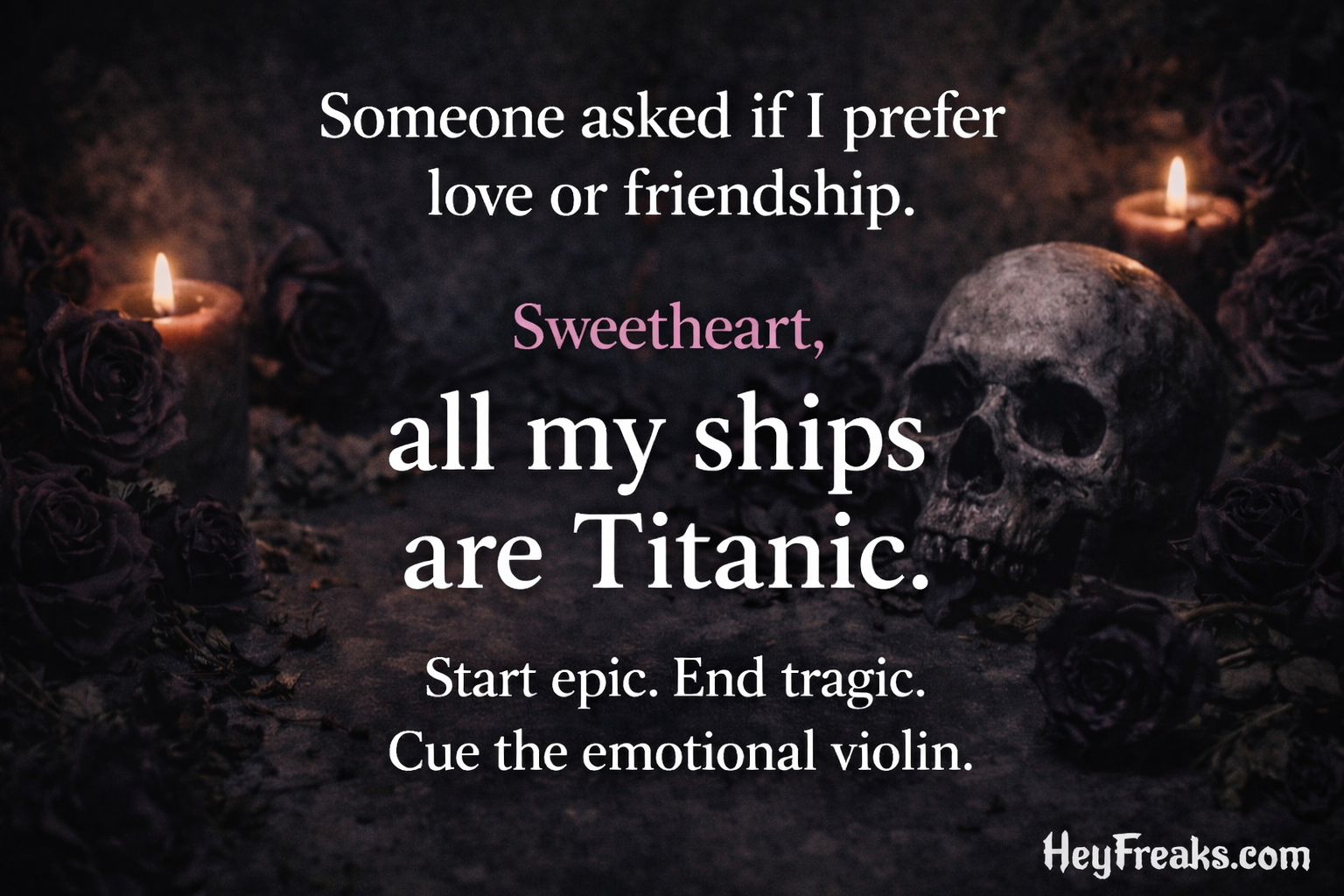
  • Someone asked if I prefer love or friendship.
    Sweetheart,
    all my ships are Titanic.
    Start epic.
    End tragic.
    Cue the emotional violin.
    Someone asked if I prefer love or friendship. Sweetheart, all my ships are Titanic. Start epic. End tragic. Cue the emotional violin.
    Rotten Laughs
    On Fire
    Dark Love
    Goth Vibes
    I'm Dead
    7
    2 التعليقات 0 المشاركات 2كيلو بايت مشاهدة
  • Well it's time to tidy up the apartment again and check whether a 15-year-old friendship is still working this weekend 🙃
    Well it's time to tidy up the apartment again and check whether a 15-year-old friendship is still working this weekend 🙃
    0 التعليقات 0 المشاركات 916 مشاهدة
  • [JoeMomma] This is how you should deal with the cops. I'm told the sheik and Trump are very close buddies. Offered him a jet as a token of their friendship.

    https://www.youtube.com/watch?v=RRoDUoL465Y
    [JoeMomma] This is how you should deal with the cops. I'm told the sheik and Trump are very close buddies. Offered him a jet as a token of their friendship. https://www.youtube.com/watch?v=RRoDUoL465Y
    Goth Vibes
    1
    8 التعليقات 0 المشاركات 2كيلو بايت مشاهدة
  • The worst feeling of betrayal and loneliness is realizing they didn't really mean it when they said 'always'...
    They meant only when it's not too much of a burden to carry for them... And then you are left all alone almost abandoned with that darkness you were finally trying to open up on...
    And that's why some people start speaking silence and live through entire tragedies in silence. Because no one bears to listen but themselves. And that's what trapps you in thst perpetual cycle of being a good listener to others but never be heard out.
    I'm so sick and tired of being emotionally exploited and permanently abandoned by others. Good enough as an emotional landfill.
    Real friendship is a myth...
    The worst feeling of betrayal and loneliness is realizing they didn't really mean it when they said 'always'... They meant only when it's not too much of a burden to carry for them... And then you are left all alone almost abandoned with that darkness you were finally trying to open up on... And that's why some people start speaking silence and live through entire tragedies in silence. Because no one bears to listen but themselves. And that's what trapps you in thst perpetual cycle of being a good listener to others but never be heard out. I'm so sick and tired of being emotionally exploited and permanently abandoned by others. Good enough as an emotional landfill. Real friendship is a myth...
    I'm Dead
    1
    3 التعليقات 0 المشاركات 3كيلو بايت مشاهدة
  • "Once the rain is over, an umbrella becomes a burden to carry. - That's why loyalty ends when benefits stop."

    Yeah...
    I'm experiencing that a lot. As soon as their problems are solved or they have dumped their emotional burden on me there is suddenly no time to listen to my troubles...as soon as I start sharing I'm dropped or quickly disregarded with one sentence...and people wonder why I never open up and talk about things easily...

    And once they stop benefiting from me altogether the friendship dies out... I'm not just worth being kept around just for the sake of it.
    It's not like I haven't been struggling with self loathing for months and my self view wasn't already ruined on many levels...

    "Once the rain is over, an umbrella becomes a burden to carry. - That's why loyalty ends when benefits stop." Yeah... I'm experiencing that a lot. As soon as their problems are solved or they have dumped their emotional burden on me there is suddenly no time to listen to my troubles...as soon as I start sharing I'm dropped or quickly disregarded with one sentence...and people wonder why I never open up and talk about things easily... And once they stop benefiting from me altogether the friendship dies out... I'm not just worth being kept around just for the sake of it. It's not like I haven't been struggling with self loathing for months and my self view wasn't already ruined on many levels...

    Dark Love
    1
    0 التعليقات 0 المشاركات 2كيلو بايت مشاهدة
  • #friendship
    #friendship
    Dark Love
    1
    0 التعليقات 0 المشاركات 885 مشاهدة
  • 💋😊🤪⭐Nature, Art, and Friendship A Fun-Filled Day Out New Video Alert!!! youtube.com/watch?v=nqdKUcFDA-I⭐⭐⭐
    💋😊🤪⭐Nature, Art, and Friendship A Fun-Filled Day Out New Video Alert!!! youtube.com/watch?v=nqdKUcFDA-I⭐⭐⭐
    0 التعليقات 1 المشاركات 714 مشاهدة
  • https://people.com/movies/chris-evans-jokes-with-jeremy-renner-about-snowplow-after-his-accident/

    LoL. That's friendship at its best. Joking during harsh times.
    https://people.com/movies/chris-evans-jokes-with-jeremy-renner-about-snowplow-after-his-accident/ LoL. That's friendship at its best. Joking during harsh times.
    PEOPLE.COM
    Chris Evans Jokes with Jeremy Renner After His Accident: 'Has Anyone Even Checked' on the Snowplow?
    Chris Evans playfully asked his Marvel costar Jeremy Renner how his 'snowcat' was doing in a tweet on Saturday, after the star was involved in a snowplow accident earlier this month
    Dark Love
    Goth Vibes
    2
    0 التعليقات 0 المشاركات 2كيلو بايت مشاهدة
إعلان مُمول
إعلان مُمول
HeyFreaks.com https://heyfreaks.com