

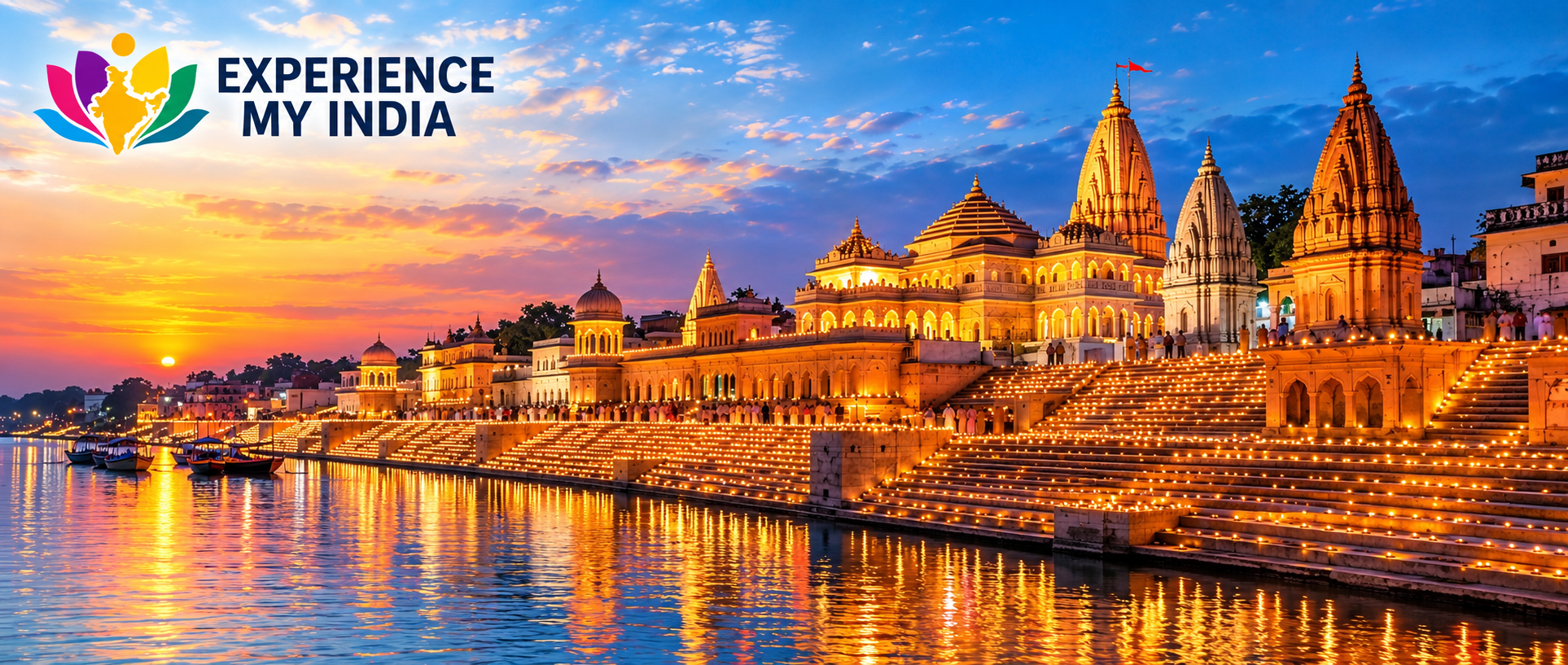

Ahmedabad heritage sites can add history, architecture and cultural experiences to a Gujarat pilgrimage without taking you far from the main travel routes. Spend a day exploring historic temples, mosques, stepwells and traditional neighbourhoods before continuing towards Dwarka and Somnath for darshan.
Why Include Ahmedabad Heritage in a Gujarat Pilgrimage?
Most visitors travelling to Gujarat plan their holidays around Somnath Temple, Dwarkadhish Temple and other important religious destinations. However, Ahmedabad offers another perspective on the state's spiritual and cultural identity.
Recognised as India's first UNESCO World Heritage City, Ahmedabad has a historic old city filled with traditional residential neighbourhoods, religious buildings, carved wooden houses and centuries old monuments.
Its architecture reflects the influence of different communities and historical periods. Hindu, Jain and Islamic traditions have all contributed to the city's distinctive character.
For pilgrims, this makes Ahmedabad an interesting starting point or stopping point before travelling towards the Saurashtra region.
You can visit Swaminarayan temples, explore historic mosques, walk through traditional pols and understand how religious communities have shaped everyday life in Gujarat.
There is also a practical advantage. Ahmedabad is a major transport centre, with railway, airport and road connections that make it convenient for visitors arriving from different parts of India.
If your main objective is a Somnath and Dwarka pilgrimage, adding one extra day in Ahmedabad can provide a more balanced travel experience.
1. Start with Ahmedabad's Historic Swaminarayan Temple
<PRIVATE_PERSON>
One of the most meaningful ways to begin exploring Ahmedabad is by visiting Swaminarayan Temple in Kalupur.
The temple is an important religious landmark and also forms the starting point of the official Ahmedabad Municipal Corporation heritage walk.
Its traditional architecture, colourful wooden carvings and peaceful atmosphere offer visitors an introduction to the city's religious heritage.
Allow enough time for darshan rather than treating the temple as a quick sightseeing stop.
Remember that temple timings can change during festivals and special occasions. Check the current schedule before visiting.
Visitors should dress modestly, follow the temple's photography rules and respect people attending daily prayers.
From here, you can continue towards the old city and explore the surrounding historic neighbourhoods.
This combination of religious visits and architectural exploration works particularly well for families who want something beyond the usual temple circuit. Somnathdwarkatourpackage has more on this.
2. Explore Ahmedabad Heritage Through the Old City Walk
The old city is arguably the most interesting part of Ahmedabad for visitors who enjoy history and traditional architecture.
The Ahmedabad Municipal Corporation organises a heritage walk that begins at Swaminarayan Temple in Kalupur and finishes near Jama Masjid.
The official morning walk is listed between 7:45 am and 10:30 am, with an estimated duration of approximately two to two and a half hours.
The route introduces visitors to several historic locations, including:
- Swaminarayan Temple in Kalupur
- Kavi Dalpatram Chowk
- Calico Dome
- Shantinath Ni Pol
- Manek Chowk
- Astapadji Mandir
- Fernandes Bridge
- Jama Masjid
The most interesting part is walking through the traditional pols.
Pols are historic residential neighbourhoods characterised by closely arranged houses, narrow lanes, community spaces and traditional architectural details.
Look carefully at the wooden entrances, balconies, carved windows and internal courtyards. These details explain how people lived in the old city.
For older travellers or visitors with mobility concerns, remember that the walk involves considerable walking through narrow streets. A vehicle based sightseeing plan may be more comfortable.
3. Visit Jama Masjid and Sidi Saiyyed Mosque
Ahmedabad's historic mosques deserve a place in any cultural itinerary.
Jama Masjid, located in the old city near Manek Chowk, is an important example of Gujarat Sultanate architecture.
Its large courtyard, stone columns and detailed architectural elements make it an interesting place for visitors interested in history.
The mosque also reflects the city's long standing Islamic traditions.
Another important stop is Sidi Saiyyed Mosque, famous for its intricately carved stone lattice windows.
The tree of life design is particularly recognisable. Its delicate appearance gives an impression of fine lacework, although the intricate pattern is carved from solid stone.
The mosque dates to 1573 and is among Ahmedabad's best known architectural landmarks.
Visitors should remember that these are active religious spaces, not simply tourist attractions.
Wear modest clothing, avoid disturbing worshippers and check whether visitors are permitted during prayer times.
Photography should always follow the instructions provided at the site.
You can comfortably combine these two monuments with Bhadra Fort and Teen Darwaza during an old city sightseeing session.
4. Add Hutheesing Jain Temple and Adalaj Stepwell
A pilgrimage itinerary becomes more interesting when it includes different forms of religious architecture.
Hutheesing Jain Temple is an important Jain religious landmark in Ahmedabad.
The temple is known for its intricate stone carvings, detailed pillars and traditional architectural style.
Visitors interested in Jain history and religious traditions should consider including it in their schedule.
Allow time for peaceful observation and follow the temple's rules regarding footwear, photography and entry into worship areas.
Another interesting destination is Adalaj Stepwell, situated outside the main city.
Although it is not a conventional pilgrimage destination, it is closely connected with Gujarat's historical water conservation practices and architectural traditions.
The stepwell features multiple levels, carved pillars and beautifully decorated stone structures.
It offers a different experience from visiting temples and mosques.
For a more relaxed day, visit Hutheesing Jain Temple in the morning and keep Adalaj Stepwell for a separate sightseeing session.
Do not try to cover every attraction in a few hours, particularly when travelling with senior citizens.
5. Include Sabarmati Ashram for a Different Spiritual Experience
Sabarmati Ashram is another worthwhile addition to an Ahmedabad itinerary.
Located beside the Sabarmati River, the ashram is closely associated with Mahatma Gandhi and India's freedom movement.
It provides an opportunity to understand Gandhi's principles of simplicity, self discipline, non violence and community living.
For pilgrims, this visit offers a different kind of reflection compared with traditional religious destinations.
You can explore the historic surroundings, learn about the independence movement and spend some quiet time understanding the values associated with the ashram.
Keep your visit respectful and check the official visitor information before arriving, particularly if you are travelling on a public holiday.
Sabarmati Ashram can be combined with Sardar Vallabhbhai Patel National Memorial if you have sufficient time.
These attractions are particularly suitable for families travelling with children because they provide educational and historical context alongside religious sightseeing.
6. How to Combine Ahmedabad with Somnath and Dwarka
The easiest approach is to treat Ahmedabad as the beginning of your Gujarat pilgrimage rather than squeezing its attractions into the same day as a long intercity drive.
A practical itinerary depends on your arrival time, travel preferences and the number of days available.
Here is a suggested seven day arrangement.
| Day | Destination | Suggested activities |
|---|---|---|
| Day 1 | Ahmedabad | Arrival, local temple visits and old city exploration |
| Day 2 | Ahmedabad | Heritage walk, Jama Masjid, Sidi Saiyyed Mosque and Sabarmati Ashram |
| Day 3 | Dwarka | Travel towards Dwarka and evening temple visit |
| Day 4 | Dwarka | Dwarkadhish Temple and nearby religious destinations |
| Day 5 | Porbandar and Somnath | Visit selected attractions and continue towards Somnath |
| Day 6 | Somnath | Somnath Temple darshan and local sightseeing |
| Day 7 | Departure | Return journey or onward travel |
This is a suggested arrangement rather than a fixed schedule. Actual driving time depends on traffic, road conditions and the number of sightseeing stops.
For travellers who want to understand different itinerary possibilities, the Somnath Dwarka pilgrimage route guide provides useful information about journey duration, route choices and accommodation arrangements.
If you have only four or five days, consider spending one day in Ahmedabad and keeping the remaining days for the main pilgrimage destinations.
However, travellers who particularly enjoy history and architecture will benefit from keeping two days for Ahmedabad.
7. Choose the Right Transport and Accommodation
Transport arrangements can make a significant difference to the comfort of a Gujarat pilgrimage.
Ahmedabad's old city has narrow streets, busy markets and areas where walking is more convenient than travelling by car.
A practical approach is to use a vehicle for transfers between major attractions and explore the historic neighbourhoods on foot.
For the longer journey towards Dwarka and Somnath, a private vehicle offers flexibility.
Families travelling with senior citizens may prefer a comfortable sedan or larger vehicle depending on the group size and luggage requirements.
Before finalising transport, clarify the following:
- Whether the vehicle is available for multiple days.
- Whether driver allowances are included.
- Whether sightseeing detours are covered.
- Whether tolls and parking charges are additional.
- Whether the driver will remain with the group throughout the journey.
You can compare travel arrangements through this Somnath Dwarka private taxi service.
Accommodation also deserves attention.
In Ahmedabad, staying somewhere with convenient access to your planned sightseeing locations can reduce unnecessary travel.
For the pilgrimage portion, staying reasonably close to the main temples can make early morning darshan and evening aarti more manageable.
Visitors comparing accommodation options in Somnath and Dwarka can refer to this guide to pilgrimage hotels.
If you are travelling with elderly family members, prioritise lifts, comfortable beds, clean bathrooms and convenient vehicle access rather than choosing accommodation purely on appearance.
Practical Tips Before Visiting Ahmedabad's Heritage Attractions
A little preparation can make your visit considerably easier.
Choose comfortable footwear. The old city heritage walk involves walking through narrow lanes, uneven surfaces and traditional neighbourhoods.
Start early. Morning visits are generally more comfortable, particularly during warmer months.
Check religious schedules. Temple and mosque access can vary around prayer times, festivals and special occasions.
Dress respectfully. Cover your shoulders and knees when visiting religious places. Follow any additional dress requirements displayed at the entrance.
Carry drinking water. Walking around the old city can be tiring, especially for children and senior citizens.
Keep cash available. Small local purchases and some services may not accept digital payments.
Avoid rushing. A heritage walk is more enjoyable when you have time to appreciate the buildings and understand their history.
For a broader understanding of religious destinations across Gujarat, the Gujarat temples and pilgrimage guide can help you identify additional places worth considering.
Travellers who want to adjust their route according to available days can also use this day wise Gujarat trip planning resource.
Frequently asked questions
1. Is Ahmedabad worth visiting during a Somnath and Dwarka pilgrimage?
Yes. Ahmedabad adds historical, architectural and cultural experiences to a religious trip. Its temples, mosques, traditional pols and Sabarmati Ashram offer a different perspective on Gujarat.
2. How many days should I spend exploring Ahmedabad heritage sites?
One full day is suitable for selected major attractions. Two days are better if you want to include the official heritage walk, religious sites, museums and attractions outside the old city.
3. Can I visit Ahmedabad before travelling to Dwarka and Somnath?
Yes. Ahmedabad works well as a starting point because it has major railway, air and road connections. You can explore the city first and then continue towards the Saurashtra pilgrimage circuit.
4. Is the Ahmedabad heritage walk suitable for senior citizens?
It depends on their walking ability. The walk takes approximately two to two and a half hours and includes narrow streets and uneven sections. Senior citizens who have difficulty walking may prefer selected attractions with vehicle transfers.
5. What is the best time to explore Ahmedabad and continue towards Somnath and Dwarka?
October to March is generally a comfortable period for exploring Gujarat. Temperatures are usually more suitable for outdoor sightseeing, heritage walks and long road journeys. During summer, plan outdoor activities early in the morning and allow additional rest breaks.



