

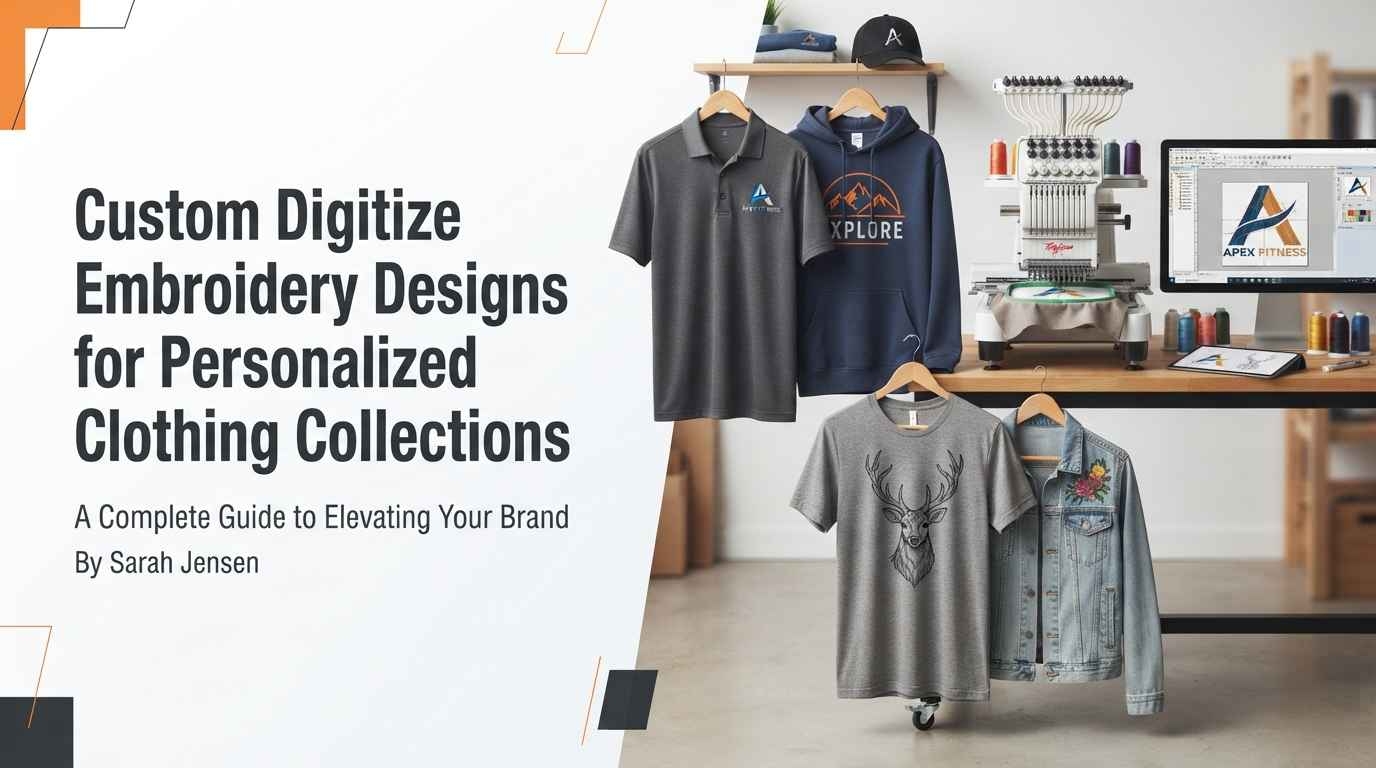
Custom Digitize Embroidery Designs for Personalized Clothing Collections

Using custom digitize embroidery designs for personalized clothing collections allows businesses, fashion designers, and embroidery enthusiasts to turn original artwork into machine-embroidered garments. From personalized names and monograms to decorative illustrations and custom brand logos, embroidery provides a creative way to customize clothing. Proper digitizing helps maintain accurate design shapes, readable lettering, suitable stitch coverage, and consistent embroidery quality.
Personalized clothing collections may include T-shirts, hoodies, polo shirts, jackets, sweatshirts, and other fashion products. Each garment has different fabric characteristics and embroidery requirements that should be considered during design preparation.
A carefully digitized embroidery design can help reduce fabric distortion, unnecessary thread buildup, and production errors.
This guide explains how custom embroidery digitizing works, suitable design ideas for personalized clothing, fabric selection, stitch techniques, and practical methods for developing a coordinated clothing collection.
What Are Custom Digitize Embroidery Designs?
Custom embroidery digitizing is the process of converting original artwork into machine-readable embroidery instructions according to specific project requirements.
These instructions tell an embroidery machine where and how to place stitches, change colors, and move between different design elements.
Unlike using a ready-made embroidery pattern, custom digitizing allows clothing designers to prepare artwork according to their preferred dimensions, fabric types, colors, and embroidery placements.
For example, a clothing brand may want to create a collection featuring embroidered floral patterns, personalized lettering, and original business logos.
Each design can be prepared according to the specific garment and intended appearance.
Custom embroidery digitizing involves more than converting an image into another file format. It requires careful planning of stitch types, density, underlay, pull compensation, and sewing sequence.
Why Custom Embroidery Digitizing Is Important for Personalized Clothing
Personalized clothing allows individuals and businesses to express their preferences through original designs.
However, artwork created for digital screens or printed products may not be immediately suitable for machine embroidery.
Small lettering, detailed illustrations, gradients, and narrow decorative lines may require adjustments before stitching.
Custom digitizing helps adapt these elements according to the physical requirements of embroidery.
It also allows designers to maintain consistent artwork across multiple clothing products while adjusting the technical settings for different fabrics.
Whether a collection features simple monograms or detailed decorative patterns, suitable embroidery preparation can help maintain product quality and reduce unnecessary rework.
Best Custom Embroidery Design Ideas for Personalized Clothing Collections
Personalized clothing collections can feature different embroidery styles depending on the intended audience, fashion concept, and garment characteristics.
1. Personalized Name Embroidery Designs
Embroidered names are a popular customization option for personalized clothing.
Names can be added to T-shirts, hoodies, jackets, sweatshirts, and other suitable garments.
Different font styles can create casual, decorative, or professional appearances.
When digitizing personalized names, letter thickness, spacing, and embroidery dimensions should be considered carefully.
Simple fonts may provide clearer results when the available embroidery area is limited.
2. Custom Monogram Embroidery Designs
Monogram embroidery combines one or more initials into a personalized design.
It can be used on formal shirts, polo shirts, jackets, and fashion accessories.
Monograms may feature traditional lettering, decorative borders, or simple geometric shapes.
Their compact dimensions make them suitable for chest areas, cuffs, collars, and sleeves.
Professional digitizing helps maintain readable initials and balanced stitch coverage.
3. Floral Embroidery Designs
Floral patterns offer numerous creative possibilities for personalized clothing collections.
Design ideas include roses, daisies, leaves, botanical illustrations, and decorative flower arrangements.
Small floral designs can be embroidered onto shirt pockets and sleeves, while larger arrangements may be suitable for denim jackets and sweatshirts.
Detailed floral artwork requires careful color separation, stitch direction, and density planning.
4. Minimalist Embroidery Designs
Minimalist embroidery uses simple shapes, clean lines, and limited decorative details.
This design style can complement casual clothing and modern fashion collections.
Examples include small geometric symbols, abstract illustrations, initials, and simple outline patterns.
Minimalist designs with limited stitch coverage may be suitable for lightweight garments that require flexibility.
5. Custom Logo Embroidery Designs
Clothing brands can use custom embroidery digitizing to reproduce original business logos and brand symbols.
These designs can be applied to polo shirts, hoodies, jackets, and promotional clothing.
Professional digitizing helps maintain recognizable brand shapes, readable lettering, and suitable thread coverage.
Different versions of the same logo may be required for different garment sizes and embroidery placements.
6. Animal and Nature-Inspired Embroidery Designs
Animal illustrations and nature-inspired patterns can add personalized decorative elements to clothing collections.
Popular design ideas include butterflies, birds, mountains, trees, and pet illustrations.
Simple outlines may work well on lightweight clothing, while larger garments can accommodate more detailed artwork.
The embroidery file should maintain recognizable shapes without adding unnecessary stitches.
7. Personalized Quote Embroidery Designs
Short quotes, meaningful phrases, and motivational messages can be used to customize clothing.
These designs are suitable for hoodies, sweatshirts, jackets, and selected T-shirts.
Choose lettering that remains readable at the intended embroidery size.
Long phrases may require a larger embroidery area or simpler typography.
8. Seasonal Embroidery Designs
Seasonal embroidery can help clothing businesses create themed collections throughout the year.
Spring collections may feature flowers and botanical patterns, while autumn collections can include leaves and woodland illustrations.
Winter clothing may feature snowflakes and holiday-themed artwork.
Preparing separate designs for seasonal collections allows businesses to offer different customization options while maintaining a consistent brand identity.
Custom Embroidery Design Ideas for Different Clothing Products
|
Clothing Type |
Suggested Embroidery Design |
Suitable Placement |
|---|---|---|
|
T-shirts |
Names, minimalist symbols, small illustrations |
Chest or sleeve |
|
Polo shirts |
Monograms and business logos |
Left chest |
|
Hoodies |
Quotes, lettering, decorative artwork |
Center chest or sleeve |
|
Sweatshirts |
Floral patterns and personalized names |
Chest or back |
|
Denim jackets |
Botanical designs and larger illustrations |
Back or chest |
|
Formal shirts |
Initials and compact monograms |
Cuff or chest |
|
Children's clothing |
Simple animals, names, and decorative symbols |
Chest |
|
Sportswear |
Team initials and compact logos |
Chest or sleeve |
|
Jeans |
Small floral patterns and initials |
Accessible pocket or leg panel |
These are creative suggestions rather than fixed design requirements. The final design should reflect the garment construction, fabric characteristics, and customer preferences.
How to Create Custom Digitize Embroidery Designs for Personalized Clothing
Creating a personalized embroidery collection involves several important steps. Each step contributes to the appearance, comfort, and quality of the finished garments.
Step 1: Develop a Clothing Collection Concept
Begin by defining the purpose and theme of your clothing collection.
Decide whether the collection will focus on casual fashion, personalized gifts, seasonal clothing, corporate branding, or decorative apparel.
Choose a consistent design style that connects the different garments within the collection.
For example, a botanical clothing collection may feature small leaf patterns on T-shirts and larger floral illustrations on denim jackets.
Step 2: Prepare High-Quality Original Artwork
Collect clear artwork for each embroidery design.
Vector files such as SVG, AI, and EPS can help digitizers identify accurate shapes and proportions.
High-resolution PNG images and suitable PDF files can also provide useful design references.
Review each design for small lettering, thin lines, gradients, and complicated details that may require adjustments.
Step 3: Select Suitable Clothing Materials
Identify the fabric type, weight, texture, and flexibility of each garment.
Different materials require different embroidery settings.
A design prepared for a heavyweight sweatshirt may require adjustments before being embroidered onto a lightweight T-shirt.
Providing accurate fabric information helps the digitizer prepare suitable stitching instructions.
Step 4: Determine Embroidery Dimensions
Measure the available embroidery area on each garment.
Consider the artwork's proportions, lettering size, garment construction, and machine embroidery limits.
Prepare different design sizes when necessary rather than relying on significant resizing after digitizing.
Step 5: Choose Appropriate Thread Colors
Select embroidery thread colors that complement the clothing collection.
Compare physical thread samples with the actual garment fabrics.
For branded clothing, maintain approved company colors wherever possible.
Record thread color numbers to support consistency across future production runs.
Step 6: Convert Artwork into Embroidery Instructions
The digitizer prepares the artwork using suitable stitch types, density, underlay, pull compensation, and sewing sequences.
Each design element should be prepared according to its shape, dimensions, and intended appearance.
Avoid unnecessary overlapping stitches that may create excessive thickness.
Step 7: Export Machine-Compatible Embroidery Files
Save the completed designs in file formats supported by the intended embroidery machine.
Common machine embroidery formats include DST, PES, JEF, EXP, and VP3.
Confirm machine compatibility before beginning production.
Keep the original editable design files whenever available for future adjustments.
Step 8: Test and Approve the Designs
Perform test embroidery using the intended garment materials.
Examine the finished designs for readable lettering, accurate shapes, consistent coverage, and fabric distortion.
Make necessary adjustments before approving the designs for commercial production.
Best Stitch Types for Custom Clothing Embroidery Designs
Different embroidery stitches create different textures, coverage, and decorative effects.
Selecting suitable stitch types helps maintain the appearance and functionality of personalized clothing.
Satin Stitches
Satin stitches are commonly used for personalized names, monograms, decorative borders, and narrow logo elements.
They provide smooth thread coverage and clearly defined shapes when used within suitable stitch widths.
Satin stitching can be particularly useful for compact embroidery designs on polo shirts and formal clothing.
Fill Stitches
Fill stitches provide thread coverage across larger design areas.
They can be used for floral illustrations, animal patterns, larger logos, and decorative artwork.
Adjusting stitch direction and spacing can help create different textures without unnecessary thread buildup.
Running Stitches
Running stitches are suitable for simple outlines, fine decorative details, and minimalist patterns.
They generally require less thread coverage than filled embroidery shapes.
This makes them useful for selected lightweight clothing designs.
Underlay Stitches
Underlay stitches provide structural support beneath visible embroidery.
Suitable underlay can help control fabric movement, maintain defined shapes, and improve stitch coverage.
The required foundation stitching depends on the fabric, design dimensions, and selected stitch type.
Choosing the Right Fabric for Personalized Embroidery Collections
Fabric selection plays an important role in clothing embroidery. Different materials require different digitizing and stabilization techniques.
Cotton Fabrics
Cotton is commonly used for personalized T-shirts, polo shirts, dresses, and casual clothing.
Stable woven cotton can support many embroidery designs, while knitted cotton requires careful stabilization.
Avoid excessive stitch density on lightweight cotton garments.
Polyester Fabrics
Polyester is widely used in sportswear, promotional clothing, and fashion apparel.
Some polyester materials are lightweight and stretchable, making them sensitive to dense embroidery.
Suitable backing and controlled stitch coverage can help maintain garment flexibility.
Denim Fabrics
Denim provides a relatively stable surface for decorative embroidery.
Larger floral arrangements, personalized illustrations, and company logos can be suitable for denim jackets.
However, thick seams and reinforced garment sections should be considered before choosing embroidery placement.
Fleece Fabrics
Fleece is commonly used for hoodies, sweatshirts, and winter clothing.
Its raised surface may cause embroidery stitches to sink into the material.
Suitable underlay and water-soluble topping can help maintain visible design details.
Linen Fabrics
Linen can be used for personalized summer clothing, decorative shirts, and fashion collections.
Its embroidery requirements depend on fabric weight and weave.
Lightweight designs and suitable stabilization can help reduce unwanted distortion.
Stretchable Fabrics
Stretchable fabrics require special attention because embroidery stitches may restrict material movement.
Compact embroidery designs with controlled stitch coverage may be more suitable than large, densely filled illustrations.
Test the embroidery before using it on fitted clothing.
Recommended Stabilizers for Personalized Clothing
Stabilizers help support the fabric during machine embroidery and reduce unwanted movement.
|
Clothing Material |
Suggested Stabilizer |
Main Purpose |
|---|---|---|
|
Cotton T-shirts |
Lightweight cut-away |
Supports knitted fabric |
|
Polo shirts |
Cut-away |
Maintains design stability |
|
Denim jackets |
Tear-away or cut-away |
Supports decorative stitching |
|
Fleece hoodies |
Cut-away with suitable topping |
Improves stitch visibility |
|
Woven linen |
Compatible lightweight backing |
Controls fabric movement |
|
Polyester sportswear |
Lightweight performance backing |
Maintains flexibility |
|
Formal woven shirts |
Tear-away or lightweight cut-away |
Supports compact embroidery |
|
Stretchable clothing |
Cut-away |
Provides continued support |
These recommendations are general starting points. Final stabilizer selection should depend on fabric construction, design size, stitch density, and garment care requirements.
How to Choose the Right Embroidery Size for Personalized Clothing
Embroidery dimensions influence the appearance, comfort, and production requirements of personalized garments.
A design that looks balanced on a large sweatshirt may appear oversized on a small T-shirt.
Measure the intended embroidery area before preparing the artwork.
Consider both the width and height of the design to maintain appropriate proportions.
|
Clothing Type |
Embroidery Placement |
Suggested Design Width |
|---|---|---|
|
T-shirts |
Left chest |
2.5–4 inches |
|
Polo shirts |
Left chest |
3–4 inches |
|
Hoodies |
Center chest |
5–8 inches |
|
Sweatshirts |
Center chest |
5–10 inches |
|
Denim jackets |
Back |
8–12 inches |
|
Formal shirts |
Cuff |
0.75–1.5 inches |
|
Children's clothing |
Chest |
2–3 inches |
|
Casual jackets |
Sleeve |
1.5–3 inches |
These dimensions are illustrative suggestions rather than universal embroidery requirements. Always measure the actual garment and confirm the machine's supported embroidery area.
Best Embroidery Placement Ideas for Personalized Clothing
Choosing the correct embroidery placement helps maintain balanced clothing designs and suitable visual proportions.
Left-Chest Embroidery
Left-chest placement is suitable for personalized names, monograms, small business logos, and decorative symbols.
It can complement polo shirts, T-shirts, jackets, and casual clothing.
Center-Chest Embroidery
Center-chest embroidery provides additional space for personalized quotes, floral illustrations, and decorative artwork.
It is suitable for many hoodies, sweatshirts, and casual fashion garments.
Sleeve Embroidery
Sleeve embroidery offers a compact area for personalized initials, small patterns, and decorative lettering.
Avoid placing dense designs in areas that require frequent bending.
Back Embroidery
Back embroidery provides more space for larger illustrations and decorative patterns.
It can be suitable for denim jackets, promotional clothing, and selected sweatshirts.
Collar and Cuff Embroidery
Collars and cuffs provide subtle customization options for formal clothing.
Small monograms, initials, and simple decorative symbols are generally suitable for these limited areas.
How Custom Digitizing Helps Maintain Clothing Collection Consistency
A personalized clothing collection may include several garment styles featuring related embroidery designs.
Custom digitizing allows designers to maintain similar visual characteristics while adapting embroidery settings to different products.
For example, a clothing collection may feature the same butterfly illustration on a T-shirt, hoodie, and denim jacket.
The T-shirt version may use simple outline stitching, while the denim jacket version may contain additional colors and filled details.
Both versions can retain recognizable design elements while meeting different fabric requirements.
Maintain records of approved artwork, embroidery dimensions, thread colors, and digitized file versions.
These records can help businesses maintain consistency across future clothing collections.
Different Custom Embroidery Techniques for Personalized Clothing
Personalized clothing collections can feature various embroidery techniques depending on the desired appearance.
Flat Embroidery
Flat embroidery uses ordinary machine embroidery stitches to reproduce artwork directly onto fabric.
It is suitable for personalized names, company logos, monograms, and decorative illustrations.
This technique provides a practical option for many clothing collections.
3D Puff Embroidery
3D puff embroidery uses specialized foam beneath suitable stitches to create a raised appearance.
It can be used for bold lettering and selected decorative designs, especially on structured caps.
The artwork requires specialized digitizing and may not be appropriate for detailed lettering or flexible clothing.
Applique Embroidery
Applique embroidery involves attaching fabric pieces to a base material using embroidery stitches.
This technique can be useful for larger decorative designs on hoodies, sweatshirts, and other suitable garments.
It may reduce the need for extensive fill stitching, depending on the artwork.
Embroidered Patches
Embroidered patches are produced separately and attached to clothing using a suitable application method.
They provide an alternative when garments are difficult to hoop or when a distinct badge appearance is preferred.
Patch construction and attachment methods should match the garment's intended use and care requirements.
Outline Embroidery
Outline embroidery uses simple stitched lines to reproduce shapes and decorative artwork.
It can be suitable for lightweight garments, botanical illustrations, and minimalist fashion collections.
How to Combine Multiple Embroidery Designs in One Clothing Collection
Using several related embroidery designs can help create a coordinated clothing collection without making every garment look identical.
Begin by selecting a consistent design theme and color palette.
Choose a primary embroidery design and prepare complementary patterns that share similar visual characteristics.
For example, a floral clothing collection may include a rose illustration as its primary design, with smaller leaves and botanical outlines used on other garments.
Maintain similar thread colors and decorative details where appropriate.
Avoid overcrowding garments with multiple large embroidery designs.
Consider how each embroidered element relates to the garment's construction, available space, and intended appearance.
Test the complete garment design before starting production.
How to Choose Thread Colors for Personalized Clothing Collections
Thread colors contribute to the overall appearance and visual consistency of embroidered clothing.
Choose colors that complement the garment fabrics and collection theme.
Neutral thread colors such as black, white, beige, and gray may suit minimalist clothing collections.
Soft pastel shades can complement selected floral and seasonal embroidery designs.
Contrasting thread colors may improve the visibility of lettering and decorative illustrations.
However, thread colors should be selected according to the actual artwork and fabric rather than general color preferences alone.
Physical thread samples provide a useful way to evaluate color combinations before production.
How Professional Digitizing Improves Multi-Color Clothing Designs
Multi-color embroidery designs require careful preparation because their individual color sections must remain accurately aligned.
Professional digitizing helps separate the artwork into individual embroidery objects and determine the appropriate sewing sequence.
Suitable stitch direction and pull compensation can help maintain accurate alignment between neighboring objects.
Unnecessary overlapping stitches should be reduced where doing so does not affect coverage or structural support.
For clothing designs containing gradients, carefully planned color blending or simplified solid shades may provide suitable results.
Test stitching helps determine whether the original artwork has been reproduced accurately on the selected garment.
How to Prevent Puckering in Personalized Embroidery Clothing
Fabric puckering can affect both the appearance and comfort of personalized clothing.
It may occur because of excessive stitch density, unsuitable stabilization, incorrect tension, or improper hooping.
Custom digitizing helps address potential problems by adjusting embroidery settings according to the fabric.
Use suitable underlay to support visible stitches without creating unnecessary thread thickness.
Avoid significant design resizing without recalculating the stitches.
Prepare the garment using compatible backing and secure it without excessive stretching.
For lightweight clothing, consider simple outline designs or smaller embroidery objects instead of extensive filled areas.
Always perform a test stitch-out on the intended material.
How to Digitize Small Lettering for Personalized Clothing
Personalized clothing often includes names, initials, family quotes, and short decorative messages.
Small lettering requires careful digitizing because embroidery thread has physical thickness.
Choose fonts with clear letter shapes and sufficient character spacing.
Avoid excessively narrow lines and complicated decorative elements.
Suitable satin stitches can help maintain readable lettering when the available space permits.
Finer embroidery thread may help reproduce smaller text when paired with compatible needles and adjusted digitizing settings.
If a phrase cannot be reproduced clearly, consider increasing the embroidery dimensions or shortening the message.
Custom Embroidery Designs for Seasonal Clothing Collections
Seasonal clothing collections provide opportunities to introduce different embroidery themes throughout the year.
|
Seasonal Collection |
Suggested Embroidery Designs |
Suitable Clothing |
|---|---|---|
|
Spring |
Flowers, butterflies, leaves |
T-shirts, dresses, lightweight jackets |
|
Summer |
Sun, waves, botanical outlines |
Casual shirts and lightweight clothing |
|
Autumn |
Leaves, woodland animals |
Sweatshirts and denim jackets |
|
Winter |
Snowflakes, winter symbols |
Hoodies and warm jackets |
|
Wedding collections |
Monograms, dates, floral designs |
Personalized shirts and robes |
|
Holiday collections |
Festive symbols and lettering |
Sweatshirts and personalized apparel |
These are creative collection ideas that can be adapted according to customer preferences and garment requirements.
Seasonal designs should maintain suitable embroidery dimensions and fabric compatibility.
How to Reduce Embroidery Production Costs for Custom Clothing
Embroidery production costs depend on several factors, including artwork complexity, stitch count, thread changes, garment preparation, and machine operating time.
Professional digitizing can help reduce unnecessary production work by improving the sewing sequence and removing redundant stitches.
Choose suitable stitch types rather than using dense fill stitching for every design element.
Prepare approved embroidery files for commonly used garment materials and design sizes.
Maintaining organized production records can also reduce repeated digitizing work for future orders.
However, reducing production costs should not compromise design coverage, garment comfort, or lettering clarity.
Common Embroidery Problems and Their Solutions
|
Embroidery Problem |
Possible Cause |
Suggested Solution |
|---|---|---|
|
Fabric puckering |
Excessive density or poor stabilization |
Review stitch spacing and backing |
|
Unclear lettering |
Small or crowded characters |
Adjust lettering dimensions |
|
Thread breakage |
Incorrect tension or stitch buildup |
Review machine and digitizing settings |
|
Distorted illustrations |
Fabric movement or unsuitable compensation |
Improve stabilization and digitizing |
|
Stiff embroidery |
Excessive thread coverage |
Reduce unnecessary overlapping stitches |
|
Poor color visibility |
Insufficient thread contrast |
Select more suitable colors |
|
Uneven placement |
Incorrect measurements or hooping |
Use positioning templates |
|
Visible fabric gaps |
Insufficient coverage |
Review stitch spacing and underlay |
These are possible causes and suggested solutions. Controlled embroidery testing may be necessary to identify the actual problem.
Common Mistakes to Avoid When Creating Personalized Clothing Collections
Using the Same Embroidery File for Every Fabric
Different fabrics require different embroidery settings.
A design prepared for denim may not produce suitable results on lightweight cotton or stretchable sportswear.
Adapt the embroidery file according to the actual garment material.
Choosing Oversized Embroidery Designs
Large and densely stitched designs may create uncomfortable areas on lightweight clothing.
Measure the available embroidery area before selecting final dimensions.
Using Excessive Stitch Density
Adding unnecessary stitches may cause thread breaks, fabric puckering, and stiffness.
Focus on suitable coverage rather than maximizing stitch count.
Selecting Unsuitable Thread Colors
Thread colors that are too similar to the garment fabric may reduce embroidery visibility.
Compare physical color samples before production.
Ignoring Artwork Ownership
Original illustrations, business logos, and protected characters may be subject to intellectual property rights.
Ensure that you have the necessary permission before reproducing artwork for commercial clothing collections.
Resizing Designs Without Adjusting Stitch Settings
Significant resizing may affect stitch density, lettering clarity, and design proportions.
Use compatible embroidery editing software or professional redigitizing when necessary.
Skipping Test Embroidery
A digital preview cannot fully demonstrate how embroidery thread will behave on actual clothing.
Always evaluate a physical sample before beginning larger production orders.
How to Test Custom Embroidery Designs Before Production
Test embroidery is important when developing personalized clothing collections.
Begin by selecting a sample of the intended garment material.
Use the embroidery file, thread, needle, stabilizer, and machine settings planned for production.
After stitching, examine the design for readable lettering, accurate shapes, consistent coverage, and suitable color contrast.
Check the surrounding fabric for puckering, stiffness, and distortion.
Evaluate whether the embroidered garment remains comfortable during normal wear.
For washable clothing, laundering a test sample according to its care instructions can help identify possible durability issues.
Make necessary adjustments before approving the final embroidery design.
How Small Businesses Can Sell Personalized Embroidered Clothing
Small businesses can develop personalized clothing collections for individual customers, corporate clients, special occasions, and seasonal events.
Potential products include embroidered hoodies, personalized T-shirts, monogrammed jackets, family clothing sets, and custom sweatshirts.
Begin with a manageable selection of embroidery designs and garment styles.
Prepare physical samples that demonstrate different embroidery techniques, thread colors, and placement options.
Allow customers to select approved personalization options such as names, initials, dates, and colors.
Provide clear pricing that accounts for garment costs, digitizing, embroidery materials, machine time, labor, and packaging.
Confirm customer spelling, artwork, and placement preferences before beginning production.
Maintaining organized embroidery files can help simplify repeat orders and future clothing collections.
Benefits of Custom Digitize Embroidery Designs for Clothing Brands
Custom embroidery digitizing provides several practical opportunities for clothing designers and personalized apparel businesses.
It allows brands to create original embroidery patterns according to their preferred artwork, garment dimensions, and fabric requirements.
Carefully prepared designs can help maintain consistent visual characteristics across different clothing products.
Custom digitizing also provides greater flexibility when developing seasonal collections, personalized gifts, and limited-edition clothing.
Suitable stitch planning may reduce unnecessary thread buildup, avoidable production interruptions, and material waste.
However, embroidery quality depends on the complete production process, including suitable materials, machine settings, and quality testing.
How to Choose a Professional Custom Embroidery Digitizing Service
Selecting a suitable digitizing service is important when preparing original clothing designs.
Look for a provider that considers artwork complexity, fabric characteristics, embroidery dimensions, and intended placement.
Provide clear original artwork along with accurate information about your clothing collection.
Explain whether the designs will be used on T-shirts, hoodies, denim jackets, or other materials.
Confirm the required embroidery file formats, pricing, delivery schedule, and revision policy.
Ask whether technical adjustments are available if test stitching reveals problems.
Review actual embroidered samples whenever possible rather than relying only on digital previews.
A suitable service should prepare the embroidery files according to individual project requirements.
How to Care for Personalized Embroidered Clothing
Proper garment care helps maintain embroidery appearance and clothing functionality.
Always follow the washing instructions provided for the garment, embroidery thread, and backing materials.
For suitable washable clothing, turning garments inside out may help reduce friction against embroidered surfaces.
Avoid cleaning products that are incompatible with the selected materials.
Do not pull loose embroidery threads because this can damage surrounding stitches.
When ironing is permitted, use a suitable temperature and protect raised embroidery from excessive direct pressure.
Clothing businesses should provide appropriate care instructions with their personalized embroidered products.
Conclusion
Custom digitize embroidery designs for personalized clothing collections provide a practical way to convert original artwork into customized embroidered apparel. From personalized names and monograms to detailed floral illustrations and business logos, custom digitizing allows designers to prepare artwork according to their specific clothing requirements.
Choosing suitable fabrics, thread colors, embroidery dimensions, stitch types, and stabilization techniques can help maintain consistent embroidery quality. Proper underlay, balanced stitch density, and test stitching are equally important for reducing production errors.
Whether you are starting a personalized clothing business, developing a fashion collection, or creating custom garments for special occasions, professional embroidery preparation can support your creative requirements. With custom embroidery digitizing services from zdigitizing.net, businesses and embroidery enthusiasts can prepare original designs for different clothing collections and machine embroidery applications.
Frequently Asked Questions About Custom Digitize Embroidery Designs
What Are Custom Digitize Embroidery Designs?
Custom digitize embroidery designs are original artwork converted into machine-readable embroidery instructions according to specific fabric, size, color, and design requirements.
Can I Create Personalized Embroidery Designs from My Own Artwork?
Yes. Original illustrations, handwritten names, business logos, and decorative artwork can often be converted into machine embroidery files. Complex details may require adjustments.
What Are the Best Embroidery Designs for Personalized Clothing?
Names, monograms, floral patterns, minimalist illustrations, custom logos, and personalized quotes are useful options. The most suitable design depends on the clothing type and customer preferences.
What Is the Best Fabric for Custom Clothing Embroidery?
Stable woven cotton, denim, and canvas are suitable for many embroidery applications. Knitted cotton, polyester, fleece, and stretchable fabrics can also be embroidered with appropriate preparation.
Can I Use the Same Embroidery Design on Different Garments?
Yes, the same original artwork can be adapted to different garments. However, stitch density, underlay, pull compensation, and design dimensions may require adjustments.
What File Format Is Best for Custom Embroidery Designs?
The correct file format depends on the embroidery machine. Common options include DST, PES, JEF, EXP, and VP3.
Can Custom Embroidery Designs Include Multiple Colors?
Yes. Multi-color embroidery designs can include different thread shades, decorative elements, and lettering when suitable color registration and sewing sequences are used.
How Much Does Custom Embroidery Digitizing Cost?
The cost depends on artwork complexity, embroidery dimensions, specialized techniques, revision requirements, and the service provider's pricing policy.
Can Custom Digitizing Help Prevent Fabric Puckering?
Suitable digitizing can help reduce puckering through balanced stitch density, appropriate underlay, and carefully planned stitching. Correct stabilization and machine settings are also important.
Is Custom Embroidery Suitable for Small Clothing Businesses?
Yes. Small clothing businesses can use custom embroidery to create personalized apparel, branded merchandise, seasonal collections, and made-to-order garments.
Why Is Test Stitching Important for Personalized Clothing?
Test stitching helps identify problems with fabric distortion, lettering clarity, color alignment, and stitch coverage before commercial production.



