

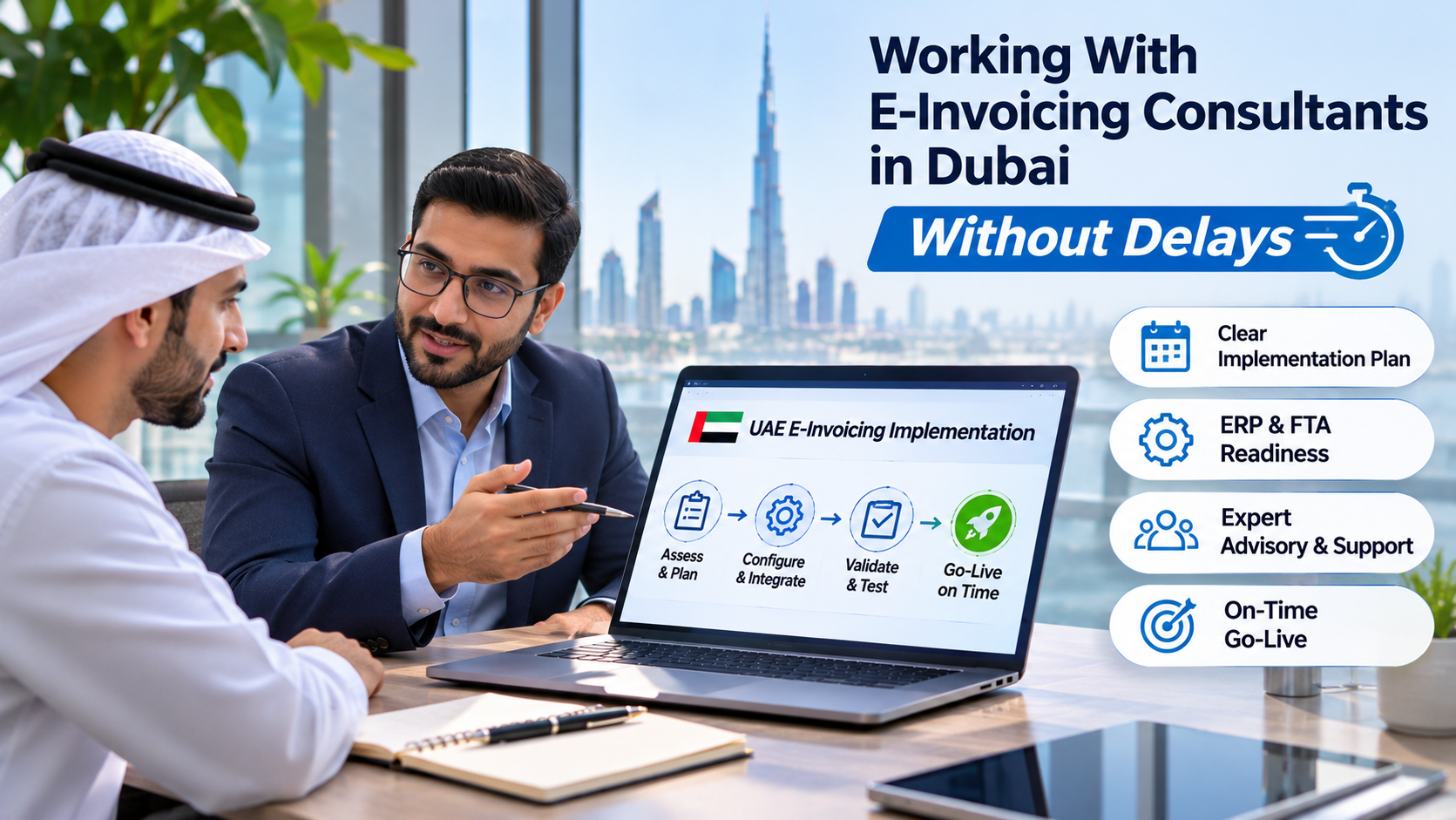

An e-invoicing project can lose time before the technical work even begins. Finance teams may not have complete invoice data, IT teams may be unclear about integration requirements, and different departments may have different expectations about the implementation.
These issues can become more difficult when businesses are working towards UAE e-invoicing deadlines. Choosing experienced e invoicing consultants in dubai can help businesses organise the work, identify potential problems early and avoid unnecessary delays during implementation.
Why E-Invoicing Projects Get Delayed
Most implementation delays are connected to preparation, coordination or unclear responsibilities. Software installation is only one part of the process.
Some common reasons include:
- Incomplete invoice data: Customer details, supplier records and VAT information may need correction.
- Unclear system requirements: Businesses may not know how their existing ERP will connect with the e-invoicing solution.
- Late technical involvement: IT teams may be brought into the project after important decisions have already been made.
- Limited testing: Businesses may test only basic invoices and overlook credit notes or other transaction scenarios.
- Unassigned responsibilities: Finance, IT and external service providers may not know who is responsible for each task.
Consultants should identify these issues during the initial assessment instead of waiting for them to appear during testing.
What Should E-Invoicing Consultants in Dubai Handle?
A consulting engagement should cover the business and technical work required to prepare for e-invoicing. The exact scope will depend on the company's existing systems, transaction volume and operational requirements.
1. Review Existing Invoicing Processes
The first step is to understand how invoices are currently created, approved, stored and shared.
Consultants should review the process across departments and identify where information is entered manually or transferred between systems.
This helps establish which activities can remain unchanged and which require modification for structured electronic invoicing.
2. Check ERP and Accounting System Readiness
The next step is to assess the systems that generate invoice information.
Businesses using SAP, Oracle or other accounting platforms should understand how their existing setup will support the required invoice data and integration process.
The assessment should identify:
- Available invoice fields and missing information
- Customer and supplier master-data issues
- Tax configuration requirements
- Integration points with the e-invoicing platform
- Dependencies on other business applications
This gives IT teams a defined scope before development or configuration starts.
3. Plan Data Preparation and Integration
Invoice information must be mapped correctly before it can be converted into the required structured format.
Consultants should work with finance and IT teams to identify data gaps, confirm field mappings and agree on how information will move between the ERP and the e-invoicing system.
A documented integration plan also helps avoid repeated changes caused by unclear technical requirements.
Managing Migration From Manual Invoicing
Businesses that still depend on spreadsheets, PDFs or manually prepared invoices may need additional preparation.
The migration from manual invoicing requires a review of how invoice information is collected and maintained before it can be transferred into an automated process.
For example, a business may create invoices using spreadsheets but maintain customer VAT details separately. Moving to structured e-invoicing means these records need to be organised and mapped to the appropriate fields.
Consultants can help businesses plan this transition by:
- Reviewing existing invoice templates and records
- Standardising customer and supplier information
- Identifying missing tax and transaction details
- Defining the new invoice creation workflow
- Planning how historical records will be retained
- Training employees on the updated process
Trying to automate an inconsistent manual process without reviewing its data can create problems later. Preparing the information first makes implementation easier to manage.
Use a Clear Implementation Plan to Avoid Delays
A project should have defined stages, owners and expected outputs. This gives every team a clear understanding of what needs to happen before the next stage begins.
| Implementation Stage | Main Activity | Expected Output |
|---|---|---|
| Initial assessment | Review systems and invoicing workflows | Documented requirements |
| Data preparation | Check invoice and master data | Corrected and mapped information |
| Integration planning | Define ERP and ASP connectivity | Agreed integration scope |
| Configuration | Set up the required workflows | Configured environment |
| Testing | Validate invoice scenarios and exchange | Tested invoice process |
| Go-live preparation | Train users and confirm readiness | Go-live approval |
| Post-go-live support | Monitor issues and resolve exceptions | Stable operating process |
The timeline for each stage will vary according to the business's systems and the complexity of its invoicing operations. Setting realistic milestones is more useful than committing to a go-live date before the assessment is complete.
Questions to Ask Before Hiring an E-Invoicing Consultant
Before selecting a consultant, businesses should understand what the engagement actually includes.
Consider asking:
-
Will you assess our existing ERP and invoicing workflow before recommending an implementation approach?
-
How will you identify and resolve invoice data gaps?
-
What support is included for integration with our selected ASP?
-
Which invoice scenarios will be covered during testing?
-
Will our finance and IT teams receive implementation guidance?
-
Who will handle issues during and after go-live?
Businesses should also clarify which activities are handled by the consultant, which depend on the ASP and which remain the responsibility of their internal teams.
Prepare Early and Keep the Project Moving
Avoiding implementation delays requires coordination from the beginning. Finance teams need to prepare accurate invoice information, IT teams need to understand integration requirements, and management needs visibility into project progress.
E-invoicing consultants can help bring these activities together through a defined assessment, implementation plan and testing process.
For businesses in Dubai, the focus should be on selecting a consulting partner that understands both the technical requirements and the day-to-day invoicing process. This makes it easier to identify potential issues early and move towards go-live with fewer unexpected changes.



