

PRP Hair Treatment in London: How It Works, Who It Suits and What to Expect

|
Key takeaways • PRP (platelet-rich plasma) uses a concentrate made from your own blood, injected into the scalp to support thinning hair. • Research is encouraging, particularly for early-stage pattern hair loss, but protocols vary and results differ from person to person. • PRP is not suitable for everyone. A proper diagnosis comes first, because the right treatment depends on why your hair is thinning. • Most people need a course of sessions and then maintenance. Changes in density usually take several months to judge. |
If you are searching for PRP hair treatment in London, you have probably noticed two things: there are a lot of clinics offering it, and very few explain it honestly. This guide is written by the team at Dr L’Art in Holborn to answer the questions we hear most often in consultation, including what PRP can and cannot do.
What is PRP hair treatment?
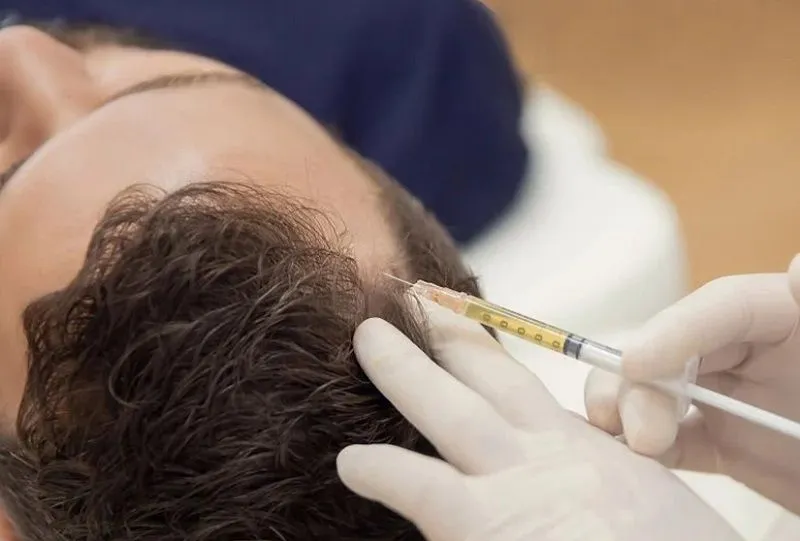
Platelet-rich plasma is made from a small sample of your own blood. The blood is spun in a centrifuge to separate the platelet-rich layer from the red cells. Platelets carry growth factors, which are signalling proteins involved in tissue repair. The concentrate is then injected into the scalp, usually in the areas where hair is thinning.
The aim is not to “replace” lost hair. It is to support follicles that are still alive but have become smaller and less active, which is typical of androgenetic alopecia (pattern hair loss). If follicles have been completely lost, for example in some scarring conditions, PRP is unlikely to help.
What does the evidence say?
PRP for hair is one of the better-studied non-surgical options, but it is not as well standardised as a licensed medicine. A 2018 meta-analysis by Giordano and colleagues, published in the Journal of Cosmetic Dermatology, found that PRP was associated with improvements in hair density in androgenetic alopecia. Reviewers also point out that studies differ in how PRP is prepared, how many sessions are given and how results are measured.
In practical terms, that means two honest statements can both be true: PRP can help many people with early to moderate thinning, and no clinic can promise a specific outcome. Be cautious of any provider who guarantees regrowth.
Who is PRP hair treatment suitable for?
PRP is most often considered for people with:
• early or moderate pattern hair loss in men or women, where follicles are thinner but still present
• diffuse thinning that has been assessed and any underlying cause (such as low iron or a thyroid problem) addressed
• hair that has thinned after a trigger such as illness or stress, once the trigger has settled and a doctor has confirmed it is appropriate
PRP may not be advisable if you have certain blood disorders, a low platelet count, an active scalp infection or skin condition, are taking blood-thinning medication, are pregnant or breastfeeding, or have a history of some cancers. This is why a medical consultation is essential rather than optional.
What happens during a PRP hair appointment?
1. Consultation and scalp assessment. Your doctor asks about your hair history, health, medication and family history, and examines the scalp. Blood tests may be suggested to look for treatable causes.
2. Blood sample. A small amount of blood is taken from your arm, similar to a routine blood test.
3. Preparation. The sample is processed to concentrate the platelets.
4. Injections. The PRP is injected into the scalp using fine needles. Numbing cream or other comfort measures can be used.
5. Aftercare. You can usually return to normal activities straight away. Your doctor will give specific advice on washing hair and avoiding strenuous exercise for a short period.
Exact protocols differ between clinics, so ask your doctor to explain precisely what will be done at your appointment.
Side effects and downtime
Because PRP comes from your own blood, allergic reactions are unlikely. Common effects are short-lived: tenderness, redness, mild swelling, pinpoint bleeding and occasional bruising at the injection sites. Headache can occur. Rarely, infection or scalp irritation can develop, which is why treatment should be carried out in a clean clinical environment by a trained doctor.
How many sessions and how long until you see results?
Many protocols use a course of around three to four sessions spaced about a month apart, followed by maintenance sessions every few months. Hair grows slowly, so changes in shedding may appear sooner, while density and thickness are usually assessed after three to six months. Your doctor will tailor the plan to your type and stage of hair loss.
PRP works best as part of a plan. Many people also use proven medical options such as topical minoxidil, and some combine PRP with scalp mesotherapy. The right combination depends on your diagnosis.
How to choose a PRP hair treatment clinic in London
You will see clinics describe themselves as “the best PRP hair treatment in London”. Rather than relying on that kind of claim, look for substance:
• A doctor-led consultation with a proper diagnosis before any treatment is recommended.
• Transparent credentials. Check that clinicians are registered, for example with the General Medical Council (GMC).
• Honest expectations. Realistic timelines, no guarantees, and a willingness to say when PRP is not right for you.
• Clear pricing. Know what a course includes. Our guide to PRP hair treatment costs in London explains what to ask.
• Real before-and-after photos with consistent lighting and a clear statement that results vary.
• Aftercare and follow-up built into the plan.
PRP hair treatment in Holborn, Central London
Dr L’Art is a doctor-led aesthetic clinic at Unit 3, The Post Building, 29–31 New Oxford Street, Holborn, London WC1A 1BA, a short walk from Holborn and Tottenham Court Road stations. Our team is led by Dr Dianni Dai (MBChB, MSc, MBA, GMC-registered), who has more than 11 years of clinical experience. You can contact the clinic or book an appointment online. If you are searching for PRP hair treatment near you in Holborn, Covent Garden or Bloomsbury, we are easy to reach by Tube, bus or on foot. See our price list for current fees.
Frequently asked questions
Does PRP hair treatment hurt?
Most people describe mild to moderate discomfort, similar to a series of small pinpricks. Numbing cream or other comfort measures can reduce this. The sensation settles quickly after the appointment.
Is PRP hair treatment permanent?
No. PRP supports follicles but does not stop the underlying cause of pattern hair loss, so maintenance is usually needed to sustain benefit.
Can women have PRP for hair loss?
Yes, once the cause of thinning is understood. See our guide to female hair loss treatment in London.
Is PRP better than mesotherapy?
They work differently. PRP uses your own platelets; mesotherapy delivers a formulated solution. Read our comparison of hair mesotherapy vs PRP.
How do I know if PRP is right for me?
Book a consultation. A doctor can diagnose the type of hair loss and tell you whether PRP, another treatment or a referral is the better next step.
|
Thinking about PRP for thinning hair? Speak to a doctor first. Book a consultation at Dr L’Art, Holborn, to discuss whether PRP suits your hair loss. Book an appointment | Contact Dr L’Art | Call 020 8087 0777 |



