

Care Dependency Grant Application in South Africa: A Step-by-Step Guide for Parents and Caregivers
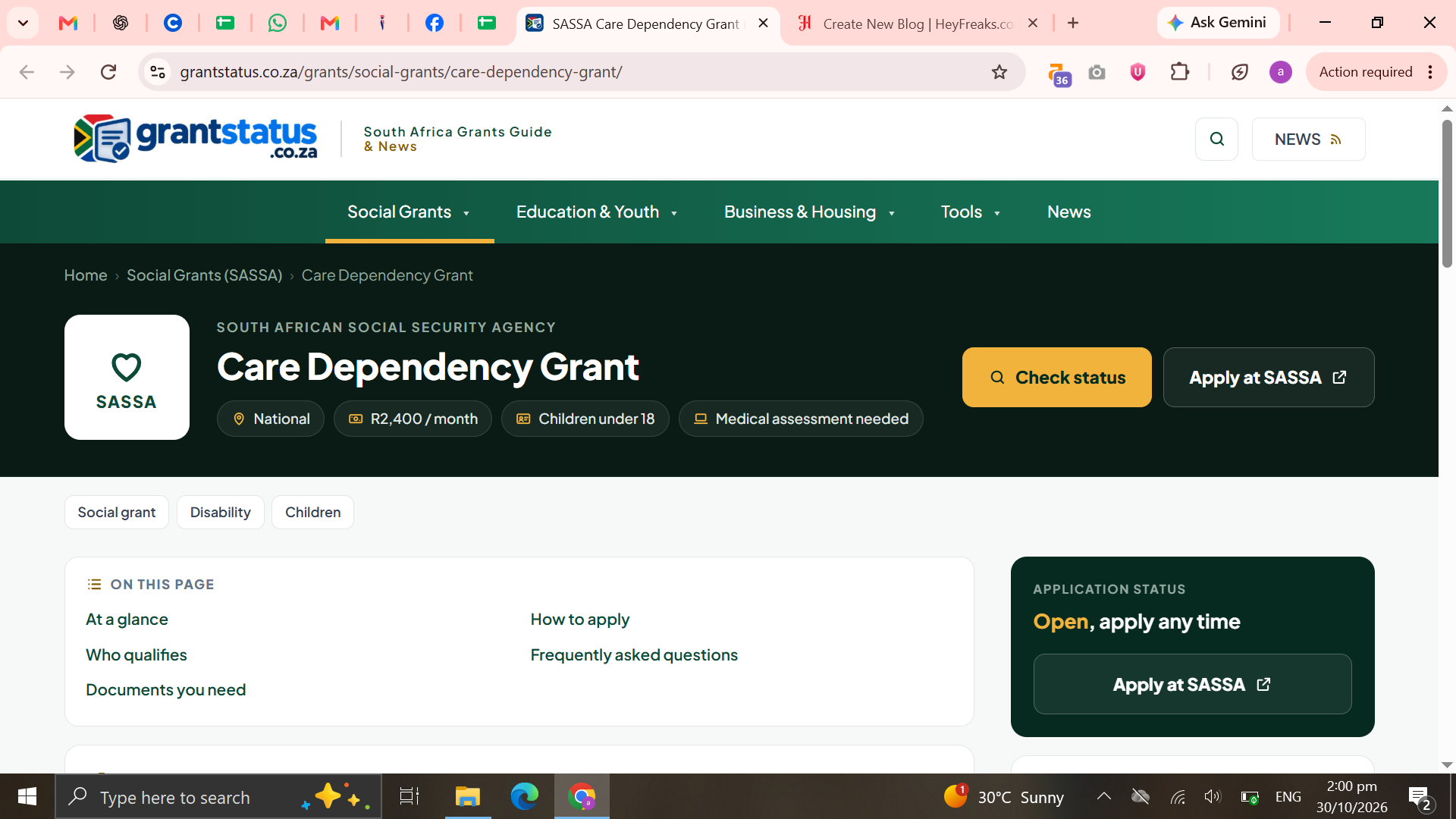
Caring for a child with a severe disability often involves additional responsibilities, from arranging healthcare visits to managing daily support and household expenses. For eligible families in South Africa, understanding the https://grantstatus.co.za/grants/social-grants/care-dependency-grant/ process can make it easier to prepare the necessary documents and understand what SASSA expects. With the right information, caregivers can approach each stage more confidently and avoid some common application mistakes.
Who Should Consider Applying?
The Care Dependency Grant is intended to assist qualifying caregivers who look after children under the age of 18 who require permanent care because of a severe disability.
Applicants must meet the relevant residency and financial requirements, while the child's medical condition and care needs must satisfy the grant criteria. A medical assessment is generally required as part of the process.
Parents, foster parents and other recognised caregivers should check the requirements that apply to their circumstances before starting an application.
Preparing Before Visiting a SASSA Office
Good preparation can make the application process more straightforward. Before visiting a SASSA office, caregivers should find out which documents are required and whether any medical appointments or assessments need to be arranged.
Depending on the applicant's circumstances, the supporting documents may include:
-
The caregiver's valid identification document.
-
The child's birth certificate or accepted identification.
-
Medical reports describing the child's condition.
-
Proof of residence.
-
Relevant income and financial information.
-
Banking details and any additional documents requested by SASSA.
It is advisable to keep copies of important paperwork and make sure that all personal information is accurate.
Why the Medical Assessment Is Important
The medical assessment helps determine whether the child's condition meets the requirements for the grant. It considers the nature of the disability and the level of ongoing care required.
Caregivers should provide relevant medical information and follow the assessment instructions given by SASSA. If further reports or clarification are requested, they should find out exactly what is needed.
An assessment does not automatically guarantee approval. The final decision depends on whether all applicable requirements are satisfied.
Common Mistakes to Avoid During the Application
Some application difficulties can be avoided through careful preparation. Caregivers should pay attention to the following:
Submitting incomplete documents: Check the document requirements before submitting the application.
Providing incorrect details: Make sure names, identification numbers and contact information are accurate.
Overlooking medical information: Confirm that the necessary medical reports and assessments have been completed.
Ignoring follow-up requests: Respond to official requests for additional information as soon as possible.
Losing application records: Keep reference numbers, receipts and correspondence in a safe place.
These simple precautions can help applicants manage the process more effectively.
How to Follow Up After Applying
Once the application has been submitted, caregivers should retain any reference number or acknowledgement received. They can use these details when contacting SASSA to ask about progress.
If there is a delay, applicants should ask whether additional documents, verification or medical assessments are outstanding. They should also ensure that SASSA has their correct contact information.
For an unsuccessful application, the caregiver should request the reason for the decision and ask about the available appeal or reconsideration procedure and any relevant deadlines.
Planning for the Child's Ongoing Needs
Grant assistance can form part of a wider household plan for supporting a child with a disability. Caregivers may need to organise transport, healthcare appointments, daily care supplies and other essential expenses.
A monthly budget can help families prioritise important costs and understand how available resources are being used. Keeping medical records organised and maintaining a regular care schedule can also make everyday responsibilities easier to manage.
Where additional assistance is needed, caregivers can ask social workers or community organisations about services available in their area.
Conclusion
Applying for the Care Dependency Grant requires careful attention to eligibility, medical assessments and supporting documentation. Preparing in advance, checking information and keeping application records can help caregivers navigate the process with greater confidence.
Since grant requirements and administrative procedures may change, applicants should confirm the latest information directly with SASSA or official South African government resources. This helps families make informed decisions while focusing on the care and wellbeing of their children.



