

Buzzer Cum Flasher vs Separate Buzzer and Indicator Light: What Should You Choose?

Introduction
Industrial control panels use different types of signalling devices to communicate equipment status and draw attention to selected operating conditions. Some installations use separate buzzers and indicator lights, while others use a combined device that provides audible and flashing visual warnings in one assembly.
Choosing between these arrangements requires an understanding of the panel's purpose, available space, control logic, and maintenance requirements. A buzzer cum flasher can be a practical option when sound and flashing light are needed together. However, separate devices may be more suitable when the two signals need independent control or different functions.
There is no single arrangement that fits every application. The right decision depends on how the warning system is expected to work.
What Is a Buzzer Cum Flasher?
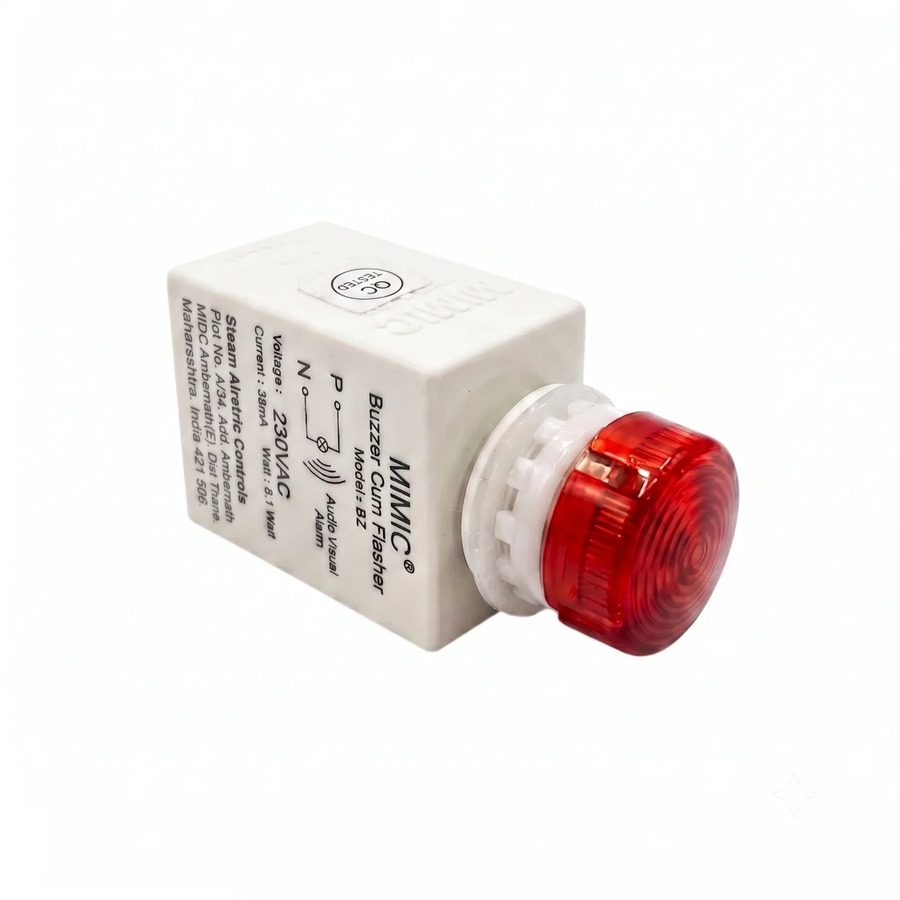
A buzzer cum flasher combines an audible warning and a flashing light within one device. When the appropriate electrical input is applied, the unit produces its specified sound and visual indication.
It can be used in electrical panels, machinery control systems, industrial automation, and other applications where operators need to notice a defined condition. The device provides a convenient way to combine two warning outputs without installing separate components for each function.
Its operation depends on the model and the connected control circuit. The device does not automatically determine whether equipment is faulty or identify the source of a problem. It communicates the condition represented by the electrical signal that activates it.
What Are Separate Buzzers and Indicator Lights?
A separate arrangement uses one device for audible signalling and another for visual indication. The buzzer produces sound, while the indicator light communicates status through its illumination or flashing pattern.
These components can be selected and controlled independently, depending on the circuit design. For example, a panel may use a steady indicator to show a normal operating state and a separate buzzer to signal a particular alarm. Another arrangement may use a flashing lamp with an audible signal that can be acknowledged independently.
Separate components provide design flexibility, but they require additional attention to wiring, mounting, labelling, and coordination between the two signals.
Comparing the Two Arrangements
1. Space inside the control panel
A combined buzzer cum flasher can reduce the number of individual components mounted on the panel front. This may be useful when the panel has limited space or when the design calls for one combined warning point.
Separate devices require their own mounting positions. Depending on the application, this may be acceptable or even preferable because it allows the designer to place the light and buzzer where each performs best.
The available panel area should be evaluated alongside the clearance required behind the panel. A compact front layout does not automatically mean the device will fit within the available internal space.
2. Independent control
A combined device is a natural choice when the audible and flashing outputs are intended to operate together. It can simplify the physical arrangement for a warning that has one shared activation signal.
Separate components offer more flexibility when sound and light must operate under different conditions. For instance, the control logic may need to keep a visual status indicator active after the audible warning has been acknowledged. That behaviour can be designed using appropriate components and control circuitry.
The required sequence should be defined before selecting the hardware. Do not assume that every combined device supports separate control of its sound and light outputs.
3. Wiring and circuit design
A combined unit may reduce the number of separately mounted components and can simplify the physical installation. However, the actual wiring requirements depend on its terminals, voltage rating, and control arrangement.
Separate devices may need additional wiring and switching outputs, particularly when each indication has independent logic. This can increase the complexity of the panel design but may provide more control over how each signal behaves.
In both cases, the circuit should be documented clearly. The design must also ensure that connected outputs, relays, and control equipment are electrically compatible with the selected devices.
4. Visibility and sound placement
A combined device places the audible and visual indicators together. This can help create a single, easily recognised warning point on the panel.
However, some installations may need the sound to be heard in a larger area while the visual indication remains close to a specific control. Separate devices allow their positions to be chosen independently, subject to the design and environmental requirements.
The final choice should account for background noise, ambient lighting, viewing angle, operator position, and any physical barriers. A device that is technically functional may still be ineffective if personnel cannot hear or see it clearly.
5. Maintenance and replacement
With a combined device, the sound and flashing light are housed in one assembly. If the unit fails and the manufacturer does not permit component-level repair, the complete device may need replacement.
In a separate arrangement, a failed buzzer or indicator light may be replaced individually. This can be useful where components have different service requirements or where independent replacement is important.
However, separate components also mean more individual items to inspect and document. The better arrangement depends on the equipment design, replacement strategy, and availability of compatible spares.
6. Cost considerations
Purchase price alone is not enough to determine which arrangement is more economical. A combined unit may reduce the number of mounting positions and associated installation work. Separate components may cost less individually or provide greater flexibility for future changes.
A more complete comparison should consider the devices, panel space, wiring, installation labour, spare parts, maintenance time, and expected replacement requirements. These factors can vary substantially between installations, so the total cost should be evaluated for the actual project rather than assumed.
When a Buzzer Cum Flasher May Be the Better Choice
A combined device is worth considering when:
-
Audible and flashing visual warnings should activate together.
-
The panel design benefits from a single warning assembly.
-
Space on the panel front is limited.
-
The control circuit is compatible with the model's electrical requirements.
-
A common warning signal is sufficient for the intended operator response.
Typical applications may include selected industrial control panels, machinery alerts, and automation systems. The suitability of the device still depends on its ratings and the conditions in which it will operate.
When Separate Devices May Be More Suitable
Separate buzzers and indicator lights may be preferable when the two signals need independent operation, when the light and sound must be positioned differently, or when the panel requires several distinct status indications.
They may also be appropriate where the visual indicator needs to communicate a condition continuously while the audible signal can be acknowledged or silenced through a separately designed control circuit.
In more complex systems, the choice may involve several indicators, alarm priorities, and a human-machine interface. The signalling strategy should be planned as part of the overall control design rather than decided only by component size.
Safety and Design Considerations
Whether the installation uses a combined device or separate components, the warning must have a clear purpose. Panel labels and operating procedures should explain what each signal represents and what action is expected from the operator.
Neither arrangement automatically identifies the cause of a fault. The underlying control system must detect the relevant condition and activate the appropriate output. Critical protection functions should be designed to the applicable requirements and should not rely on a general-purpose warning device as their sole safeguard.
The selected components must also match the supply voltage, mounting dimensions, and environmental conditions. Follow the manufacturer's wiring instructions and the site's electrical safety procedures during installation and maintenance.
Exploring Buzzer Cum Flasher Options from Mimic Products
Mimic Products lists buzzer cum flasher products for electrical and industrial warning applications. The range can be reviewed when a combined audible and visual device is being considered for a control panel.
Check the individual product details for the specific voltage, dimensions, and operating characteristics. The model should be selected according to the control circuit and application rather than appearance alone.
Conclusion
A buzzer cum flasher provides a combined audible and flashing visual warning in one assembly, making it useful when both signals should operate together. Separate buzzers and indicator lights can offer greater flexibility when independent control or different mounting positions are required.
The best choice depends on panel space, alarm logic, wiring, visibility, sound requirements, maintenance planning, and total installation cost. By evaluating these factors before selecting components, panel designers and maintenance teams can create a warning arrangement that is practical, understandable, and suited to the intended industrial application.



