

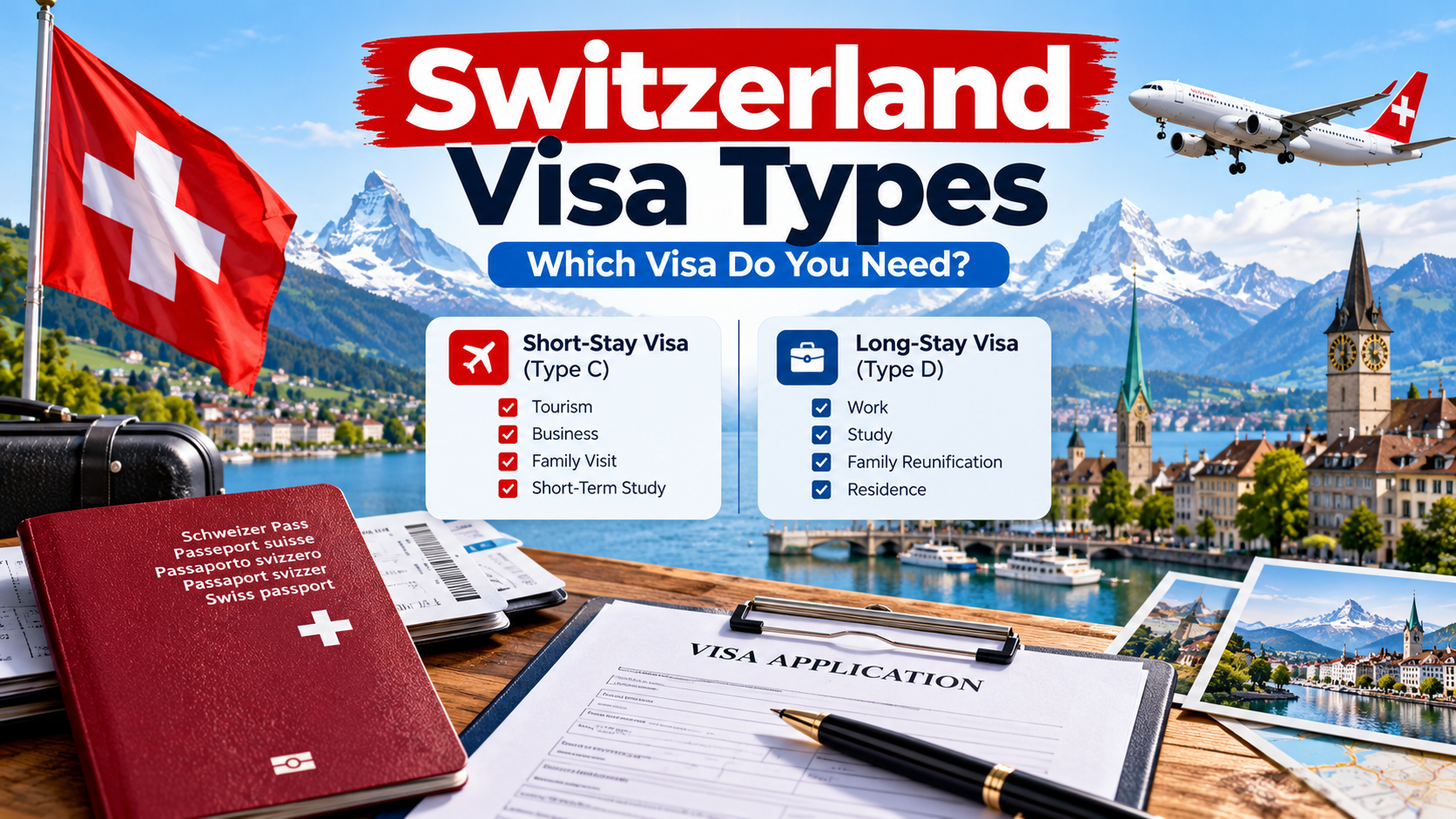

Switzerland is known for its mountains, its high salaries, and its tidy rules. That last part also applies to immigration. The country has clear visa categories, but the right one depends on why you are going and how long you plan to stay.
Before you fill in any form, it helps to learn the main Switzerland visa types and how they differ. Once you know your category, the document list and timeline become much easier to follow. This guide explains each option in plain language.
Does Switzerland Use the Schengen System?
Yes. Switzerland is part of the Schengen Area, although it is not a member of the European Union. This means a Schengen short-stay visa issued for Switzerland also lets you travel in other Schengen countries, within the rules of that visa.
Citizens of the EU and EFTA countries generally enjoy free movement and have simpler rules. Citizens of other countries usually need a visa, unless their nationality is exempt for short visits. Check the rules for your passport on the official Swiss government website or at the nearest Swiss embassy.
Short-Stay Visa (Type C)
The short-stay visa allows visits of up to 90 days within any 180-day period. It suits several purposes:
- Tourism and holidays
- Visiting family or friends
- Short business trips, meetings, and conferences
- Short courses or events
This visa does not allow you to take up a job in Switzerland. If you plan to work or study for longer, you need a different category.
Documents Usually Needed
- A valid passport with blank pages
- A completed application form and recent photos
- Travel health insurance covering medical costs in the Schengen Area
- Proof of accommodation, such as a hotel booking or an invitation
- Proof that you can pay for your stay
- Your flight or travel plan
Long-Stay National Visa (Type D)
A stay longer than 90 days needs a national long-stay visa. After arrival, you normally register with the local authorities and receive a residence permit. This visa covers studying, working, and joining family.
Swiss authorities often review long-stay cases before the visa is issued, so processing can take longer than for a short visit. Apply early and follow the instructions for your specific purpose.
Airport Transit Visa (Type A)
Some nationalities need a transit visa even if they only change planes at a Swiss airport and never enter the country. Whether this applies to you depends on your passport and your route. Check before you book a connection through a Swiss airport.
Studying in Switzerland
Swiss universities are well known and attract students from around the world. Non-EU students usually need a long-stay visa and an admission from a recognized institution.
What You Typically Need
- An admission or enrollment letter from a Swiss school
- Proof of funds to cover tuition and living costs
- Proof of accommodation
- Health insurance valid in Switzerland
- A study plan or motivation letter, in some cases
Living costs in Switzerland are high, so authorities pay close attention to proof of funds. Work rights for students are limited, and the rules depend on the canton and your permit.
Working in Switzerland
Switzerland gives priority to residents and to citizens of EU and EFTA countries in the job market. Workers from other countries face limits, and the number of permits may be capped each year. Employers usually need to show that they could not fill the role locally.
How the Process Usually Works
- A Swiss employer offers you a job.
- The employer applies to the cantonal authority for approval.
- If approved, you apply for the work visa at the Swiss embassy or consulate.
- After arrival, you register and receive your residence permit.
Because approval comes before the visa, you should not resign from your current job or book non-refundable travel until you have a decision.
Joining Family in Switzerland
Spouses and children of people who live legally in Switzerland may apply for family reunification. You will need proof of the relationship, such as marriage or birth certificates, and the sponsor must show suitable housing and enough income. Rules differ depending on the sponsor’s nationality and permit type.
Quick Comparison
| Your Purpose | Likely Visa |
|---|---|
| Holiday or short visit | Type C short-stay |
| Business trip under 90 days | Type C short-stay |
| Study at a Swiss school | Type D long-stay |
| Employment with a Swiss employer | Type D long-stay, after approval |
| Joining family | Type D long-stay |
| Layover at a Swiss airport | Type A transit, if required |
Common Mistakes to Avoid
- Applying for a short-stay visa when your plans need a long-stay visa
- Submitting documents without the required translations or stamps
- Showing too little money for Swiss living costs
- Applying too close to your travel or start date
- Starting a job or course before the permit allows it
Final Thoughts
Choosing the right Swiss visa comes down to three questions: why are you going, how long will you stay, and what will you do there? Answer those first, match them to a category, and prepare complete documents early. Rules, fees, and processing times change, so confirm the latest details with the Swiss embassy or consulate that handles your case. This guide is general information and not legal advice.



