


Candle Packaging 101 - Boxes, Materials and Design
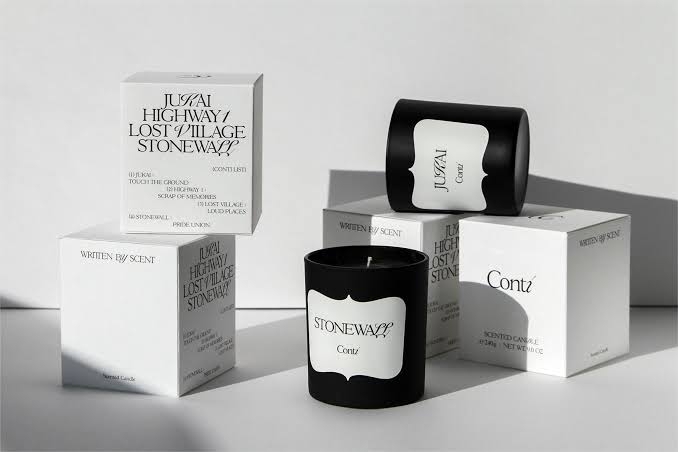
Candle box packaging has to do more than most people assume before they start selling candles commercially. It protects a genuinely fragile product, wax chips, cracks and scuffs more easily than people expect, carries fire safety information that UK regulations require.
And does the visual selling work on a shelf crowded with competing scents and brands. Getting the basics right early saves a lot of reprinting and re-ordering later.
What "Candle Packaging" Actually Covers
The term spans several distinct jobs that don't always get separated clearly by new candle brands: the box itself (structural protection and branding), any inner packaging (tissue, inserts, shrink wrap), and the label directly on the candle vessel, which usually carries the safety information rather than the outer box.
Understanding which job each layer is doing helps avoid duplicating information unnecessarily or, worse, leaving required safety text off entirely because it was assumed to live somewhere else.
The Core Material Options
Kraft board is the most common starting point for independent and small-batch candle brands. It's inexpensive, looks intentionally rustic rather than cheap, and takes a single spot-colour print well.
Coated cardboard, printed full colour and often finished with a matte or gloss lamination, suits brands wanting a more polished, retail-ready look and is the standard choice for mid-market candle ranges sold through shops rather than direct to consumer only.
Rigid board — thicker, sturdier, usually wrapped rather than printed directly — sits at the premium end, generally reserved for higher-priced candles where the packaging needs to justify a higher price point on the shelf.
Structural Formats: Cartons, Sleeves, Tubes and Rigid Boxes
Folding cartons are the default for most candle brands: cost-effective, quick to produce, and flexible enough to suit almost any candle vessel shape with the right internal sizing.
Sleeve-style packaging, an open-ended card wrap rather than a fully enclosed box, works well for candles already sold in a finished glass or tin vessel where full enclosure isn't structurally necessary, and it costs less material to produce.
Tube packaging, a cylindrical format, suits taper or pillar candles particularly well, following the product's natural shape rather than forcing it into a rectangular box.
Rigid two-piece boxes, a separate base and lid, are the premium option, typically used for gift sets or higher-value single candles.
Fire Safety Labelling Requirements
UK candle sellers are subject to general product safety regulations that require clear safety information on or accompanying the product, burn time guidance, safe distance from flammable materials, and instructions such as never leaving a burning candle unattended.
This information usually sits on the candle's own label rather than the outer box, but for candles sold in fully enclosed packaging where the label isn't visible until unboxed, it's worth confirming the required information is genuinely accessible to the customer before purchase, not just after.
Getting this wrong isn't just a compliance risk, it's a genuine safety issue, and it's one of the few areas of candle packaging where getting it right isn't optional.
Protecting Candles From Damage Before They're Lit
Wax is softer and more prone to marking than most new candle sellers expect, particularly in transit or during warm weather storage.
A snugly-fitted box, rather than one with excess internal space, reduces the chance of a candle shifting and scuffing against the box sides.
For candles with delicate surface finishes, embedded botanicals, hand-painted details, unusual textures, a card insert or divider adds a meaningful layer of protection for a small extra cost.
Wax is also sensitive to heat, and storage conditions before a candle even reaches packaging matter, candles stored somewhere warm can soften or lose shape before they're boxed at all, which is worth managing at the production and storage stage rather than trying to solve with packaging alone.
Printing and Finishing Choices
A single spot-colour print on kraft stock is the most cost-effective way to get a branded look without a large print-run commitment, and it suits smaller, independent candle makers well.
Full-colour printing with a matte laminate finish is the standard mid-market choice, giving a polished look that photographs well for e-commerce listings.
Foiling or embossing, reserved for a logo or a small design element rather than the whole box, adds a premium touch without the cost of foiling an entire surface.
Sizing a Box Around the Candle, Not the Other Way Around
It's tempting to order one standard box size and use it across an entire candle range, but this usually backfires - a box sized for your largest candle will look under-filled and cheap around your smallest one.
Measuring each vessel size in the range and ordering box sizes accordingly, even if that means two or three box sizes rather than one, generally pays for itself in how much better each candle looks once boxed.
Cost Ranges to Expect
For a standard printed kraft or cardboard carton at reasonable volume, expect roughly 30p to £1 per unit depending on size and print complexity.
Coated cardboard with a laminate finish typically runs £1 to £2 per unit. Rigid boxes, given their sturdier construction and separate lid, generally start around £2 and can run considerably higher with additional finishing.
Unit costs drop meaningfully past the 500–1,000 unit mark for most suppliers, which is worth factoring into how far ahead to plan stock ordering.
Working With a Packaging Supplier for the First Time
For candle brands ordering custom boxes for the first time, it's worth asking a prospective supplier a few direct questions before committing: what their minimum order quantity is at the material and finish level being considered.
What their standard turnaround time looks like outside of peak seasonal periods, and whether they can provide a physical sample before a full production run.
Screen renders and digital proofs are useful for checking layout and text, but they rarely represent colour and material texture accurately enough to commit to a full order without a physical check first.
- Goth Lifestyle
- Fashion & Style
- Music & Bands
- Art & Photography
- Creative Writing & Poetry
- Events & Scene
- Occult & Spirituality
- DIY & Tutorials
- Beauty & Self-Care
- Relationships & Dating
- Gaming & Media
- Tech & Gadgets
- Body Art & Piercings
- Underground Culture
- Spotlights & Interviews
- Travel & Places
- Lifestyle & Daily Life
- Fitness & Health
- Travel & Adventure
- Books & Literature
- Tech & Gaming
- Movies & TV
- Food & Drinks
- Humor & Memes
- Pets & Animals
- General Arts & Crafts
 English
 Arabic
 French
 Spanish
 Portuguese
 Deutsch
 Turkish
 Dutch
Dutch
 Italiano
 Russian
 Romaian
 Portuguese (Brazil)
 Greek
Greek