


How AI Is Changing Education in Pakistan
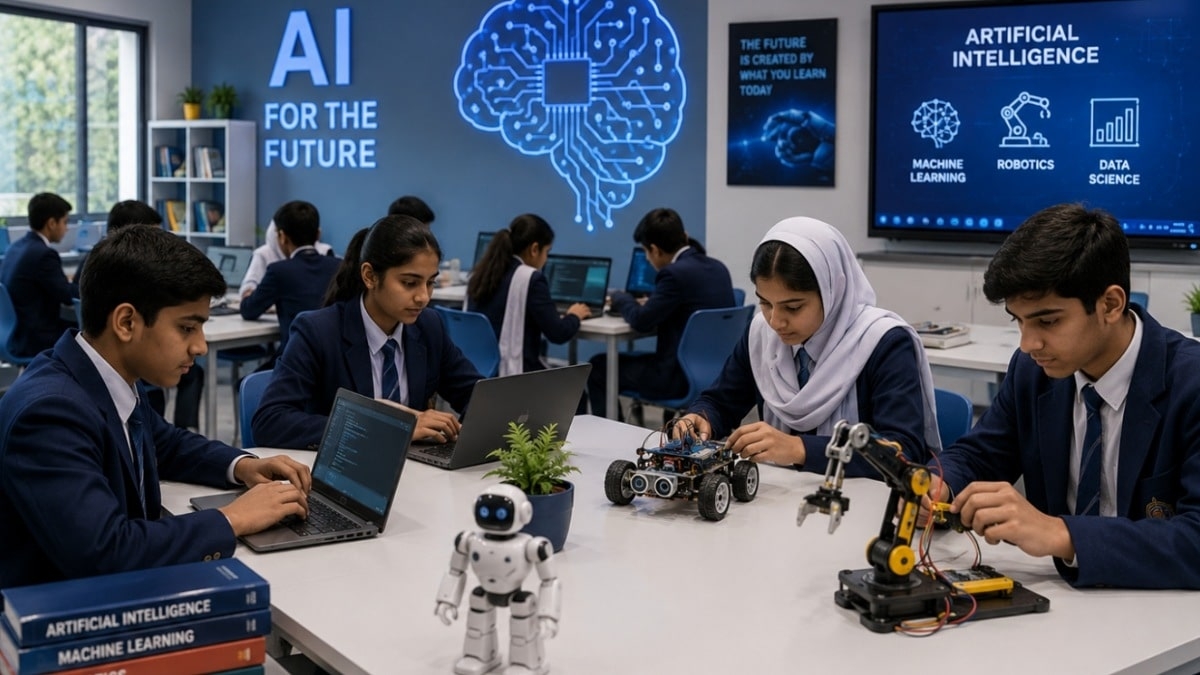
Technology is rapidly transforming classrooms, teaching methods, and learning experiences across the country. The growing use of AI in education in Pakistan is helping institutions explore smarter teaching tools, personalized learning, automated assessments, and digital resources. As artificial intelligence becomes more accessible, schools and universities are increasingly looking at ways to prepare students for a technology-driven future.
The impact of artificial intelligence is not limited to classrooms. It is also changing how teachers prepare lessons, how students access information, and how educational institutions manage academic activities. With responsible implementation, AI can support both educators and learners while improving access to quality educational resources.
How AI Is Transforming Classrooms
Artificial intelligence can make learning more personalized by analyzing students' performance and identifying areas where they need additional support. Digital learning platforms can recommend educational material based on individual progress, allowing students to spend more time on difficult subjects and move faster through topics they already understand.
Teachers can also use AI-powered tools to prepare lesson plans, generate practice questions, organize educational content, and provide learning recommendations. This does not replace the role of teachers; instead, it can reduce repetitive tasks and allow educators to focus more on classroom interaction and student development.
Benefits of AI for Students
The growing use of AI education in Pakistan can provide students with new ways to learn and practice academic concepts. AI-powered educational applications can provide instant explanations, generate practice exercises, and help learners identify mistakes.
Some important benefits include:
-
Personalized learning experiences
-
Faster access to educational information
-
AI-powered practice and assessments
-
Assistance with difficult academic concepts
-
Improved digital literacy
-
Flexible learning opportunities
-
Support for independent study
AI and Teachers
Teachers remain central to the education system, but artificial intelligence can provide them with additional tools to improve teaching efficiency. AI can assist educators with administrative work, content preparation, student assessments, and identifying learning gaps.
For example, teachers can use digital tools to create customized quizzes for different groups of students. AI can also help analyze performance patterns, allowing educators to identify learners who may require additional attention. This combination of teacher expertise and technology can create a more responsive learning environment.
AI in Higher Education
Universities in Pakistan are also exploring artificial intelligence in education through digital classrooms, research programs, learning management systems, and technology-focused degree programs. Students studying computer science, engineering, business, medicine, and social sciences can increasingly encounter AI-related applications within their academic fields.
For students, understanding AI is becoming an important part of digital literacy. Even learners who do not plan to become software developers may need to understand how AI tools work and how they can be used responsibly in their future professions.
For more education, university, admission, and technology-related updates, Parhlo Pakistan provides useful resources for Pakistani students and learners.
Artificial Intelligence in Education and Personalized Learning
One of the biggest advantages of artificial intelligence in education is its ability to support personalized learning. Traditional classrooms often require teachers to teach a large group of students at the same pace, even though learners have different abilities and educational needs.
AI-powered platforms can analyze learning behavior and recommend resources according to individual performance. A student struggling with mathematics, for example, may receive additional practice questions and explanations, while another student can move toward more advanced material.
Challenges of AI in Education
Despite its advantages, the use of AI also creates challenges that educational institutions need to address carefully. Students may become overly dependent on automated tools instead of developing independent thinking, research, and problem-solving abilities.
Important challenges include:
-
Risk of excessive dependence on AI tools
-
Accuracy and reliability of generated information
-
Student data and privacy concerns
-
Unequal access to technology
-
Academic integrity and plagiarism
-
Need for teacher training
-
Digital skills gaps
Preparing Students for an AI-Driven Future
The future of education in Pakistan will require students to develop both traditional academic knowledge and modern technological skills. Schools and universities can introduce students to responsible AI use while emphasizing creativity, critical thinking, communication, and independent research.
Students should learn how to evaluate information produced by AI instead of accepting every response without verification. They should also understand ethical considerations, copyright, privacy, and appropriate academic use of AI tools.
The Future of Education in Pakistan
AI is likely to become an increasingly important part of Pakistan's education system as institutions adopt digital technologies and develop new learning approaches. Its successful integration will depend on proper teacher training, reliable technology infrastructure, responsible policies, and equal access for students.
The goal should not be to replace teachers with artificial intelligence but to use technology to strengthen teaching and learning. When educators remain actively involved, AI can become a valuable supporting tool that improves efficiency and creates new educational opportunities.
Conclusion
AI is changing education in Pakistan by introducing personalized learning, digital assistance, automated academic tools, and new approaches to teaching and research. The development of AI and students is particularly important because today's learners will enter a job market where technological literacy is increasingly valuable.
As educational institutions continue adopting AI, students and teachers must learn to use these technologies responsibly. With the right balance between human expertise and technology, AI can contribute significantly to a more accessible, flexible, and future-ready education system in Pakistan.
Read more education technology, university, and student updates in the News Section for the latest information.
- Goth Lifestyle
- Fashion & Style
- Music & Bands
- Art & Photography
- Creative Writing & Poetry
- Events & Scene
- Occult & Spirituality
- DIY & Tutorials
- Beauty & Self-Care
- Relationships & Dating
- Gaming & Media
- Tech & Gadgets
- Body Art & Piercings
- Underground Culture
- Spotlights & Interviews
- Travel & Places
- Lifestyle & Daily Life
- Fitness & Health
- Travel & Adventure
- Books & Literature
- Tech & Gaming
- Movies & TV
- Food & Drinks
- Humor & Memes
- Pets & Animals
- General Arts & Crafts
 English
 Arabic
 French
 Spanish
 Portuguese
 Deutsch
 Turkish
 Dutch
Dutch
 Italiano
 Russian
 Romaian
 Portuguese (Brazil)
 Greek
Greek