


Powering the Rice Supply Chain: Why the Modern Rice Mill Matters
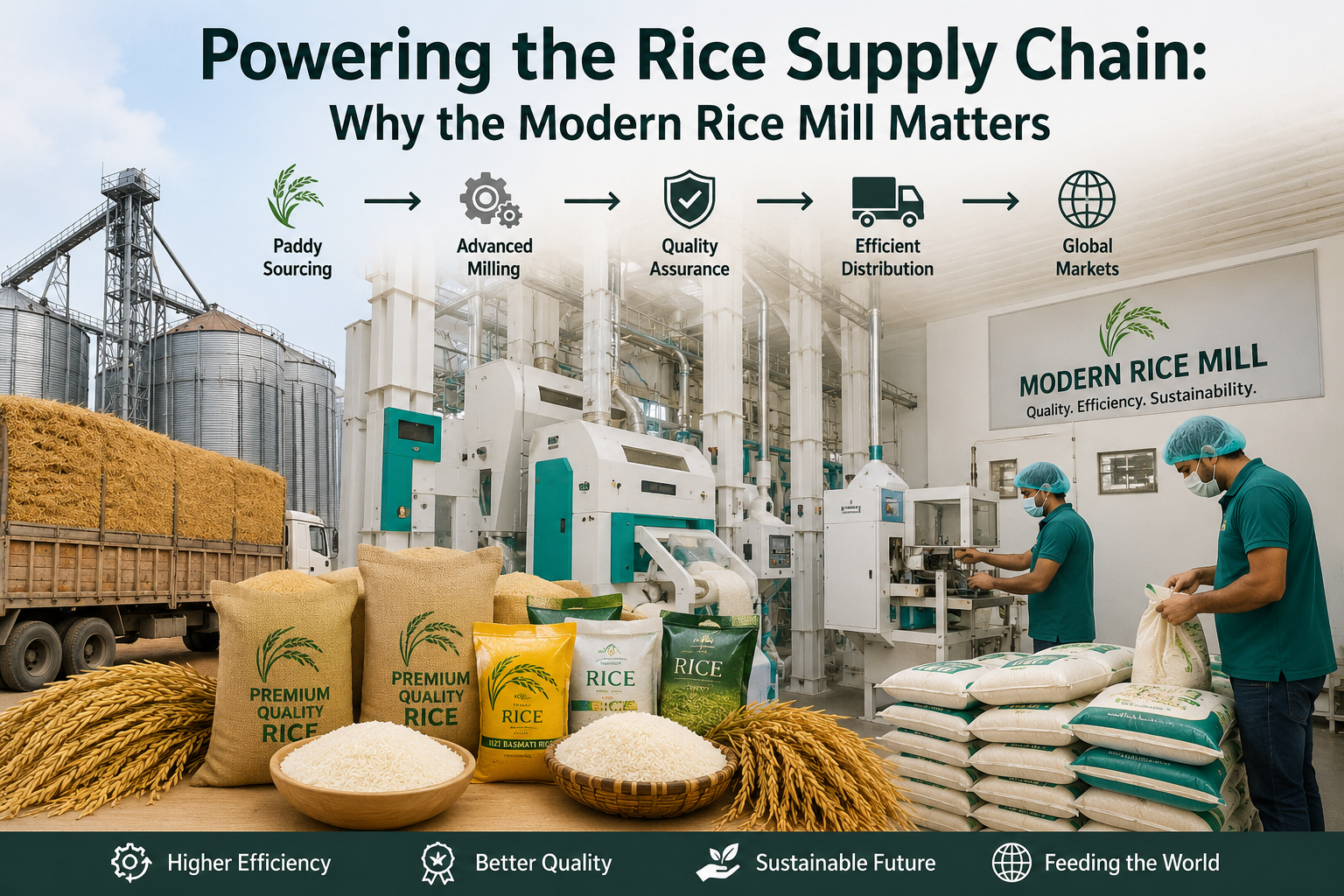
Rice is one of the most important staple foods in the world, supporting millions of farmers, traders, processors, and consumers. Behind every bag of high-quality rice is a carefully organized process that begins with harvesting and continues through cleaning, milling, grading, packaging, and distribution. At the center of this process is the modern rice mill, which plays a critical role in transforming harvested paddy into market-ready rice.
As consumer expectations and international trade standards continue to evolve, traditional processing methods are increasingly being replaced by advanced systems. Modern facilities combine technology, skilled operations, and quality control to improve productivity while protecting the natural characteristics of the grain.
The Changing Role of Rice Mills
A rice mill is no longer simply a facility where paddy is converted into edible rice. Today, it is an important part of the agricultural value chain. Modern mills handle multiple stages of processing, including cleaning, dehusking, whitening, polishing, grading, and packaging.
The integration of automated equipment has significantly improved the consistency of these operations. Instead of depending entirely on manual handling, processors can use specialized machinery to control each stage more accurately. This helps reduce unnecessary grain breakage and improves the overall appearance of the finished product.
Modern facilities also allow processors to respond more efficiently to different market requirements. Buyers may demand specific grain sizes, levels of polishing, packaging formats, or quality standards. Advanced processing systems make it easier to meet these expectations.
How Technology Improves Processing
One of the biggest developments in the industry has been the adoption of advanced rice processing technology. Modern equipment is designed to perform individual processing stages with greater accuracy and efficiency.
Automated cleaning systems remove unwanted materials such as stones, dust, straw, and other impurities before milling begins. Dehusking equipment then separates the outer husk from the grain, while whitening and polishing systems prepare the rice for final consumption.
Optical sorting technology has also become valuable for premium rice production. These machines can identify discolored, damaged, or unwanted grains and separate them from acceptable products. Such precision is especially useful when producing rice for demanding domestic and international markets.
Technology does not simply increase speed. It also provides greater control over processing conditions, helping mills maintain a consistent product from one production cycle to another.
Improving Rice Production Efficiency
Efficiency has become an essential factor for businesses operating in a competitive agricultural market. A well-designed milling facility can process larger quantities of paddy while minimizing waste and unnecessary operating costs.
Modern machinery helps optimize the use of raw materials by reducing grain losses during different processing stages. Better equipment can also improve recovery rates, meaning a greater proportion of usable rice can be obtained from the original paddy.
Energy-efficient machinery and improved plant layouts can further contribute to operational savings. When different processing stages are properly coordinated, the movement of materials becomes smoother and production delays can be reduced.
For mill owners, these improvements can strengthen profitability. For farmers and suppliers, efficient processing can create a more reliable market for harvested crops.
Maintaining Grain Quality
Quality is one of the most important considerations throughout the milling process. Poor handling, incorrect machine settings, excessive pressure, or unsuitable storage conditions can negatively affect the final product.
Effective grain quality management begins before milling. Paddy must be properly harvested, dried, and stored to protect it from moisture-related problems and contamination. Once it enters the mill, each processing stage must be carefully monitored.
Modern facilities often use quality-control procedures to check factors such as moisture content, grain appearance, broken rice percentage, and overall cleanliness. Consistent monitoring allows operators to identify problems early and make necessary adjustments.
This focus on quality is particularly important for exporters because international buyers often have strict specifications. A consistent product helps businesses build trust and maintain long-term commercial relationships.
Strengthening the Rice Supply Chain
The modern rice mill connects agricultural production with consumers and commercial markets. Farmers produce the crop, while processors add value by converting paddy into a finished food product suitable for distribution.
Efficient milling operations can make the entire rice supply chain more responsive. Better processing capacity can help businesses handle larger harvests, prepare products for different markets, and maintain dependable delivery schedules.
Packaging is another important part of this process. Modern mills can prepare rice in different package sizes and formats according to customer requirements. Proper packaging protects the product during transportation and helps preserve its quality until it reaches the consumer.
Supporting Growth in the Rice Industry
The importance of modern rice mills extends beyond processing alone. They can contribute to agricultural development by creating employment, supporting local suppliers, encouraging investment in technology, and increasing the value of locally produced crops.
As demand for quality Rice mill in pakistan to grow, processing facilities will need to focus on innovation, efficiency, and responsible resource management. Businesses that invest in modern equipment and professional quality-control practices can position themselves more effectively in competitive markets.
Conclusion
The modern rice mill is a vital component of today's agricultural economy. By combining advanced machinery, quality management, efficient production methods, and reliable packaging systems, these facilities help transform harvested paddy into high-value food products.
From improving processing accuracy to reducing waste and supporting dependable distribution, modern milling technology strengthens every stage of the journey from farm to consumer. As the rice industry continues to develop, efficient and well-managed mills will remain essential for building a stronger, more reliable, and competitive rice market.
- Goth Lifestyle
- Fashion & Style
- Music & Bands
- Art & Photography
- Creative Writing & Poetry
- Events & Scene
- Occult & Spirituality
- DIY & Tutorials
- Beauty & Self-Care
- Relationships & Dating
- Gaming & Media
- Tech & Gadgets
- Body Art & Piercings
- Underground Culture
- Spotlights & Interviews
- Travel & Places
- Lifestyle & Daily Life
- Fitness & Health
- Travel & Adventure
- Books & Literature
- Tech & Gaming
- Movies & TV
- Food & Drinks
- Humor & Memes
- Pets & Animals
- General Arts & Crafts

 English
 Arabic
 French
 Spanish
 Deutsch
 Turkish
 Dutch
Dutch
 Italiano
 Russian
 Romaian
 Portuguese (Brazil)
 Greek
Greek