


UAE E-Waste Management Advances Through Circularity, Digitalization, and Formal Recycling
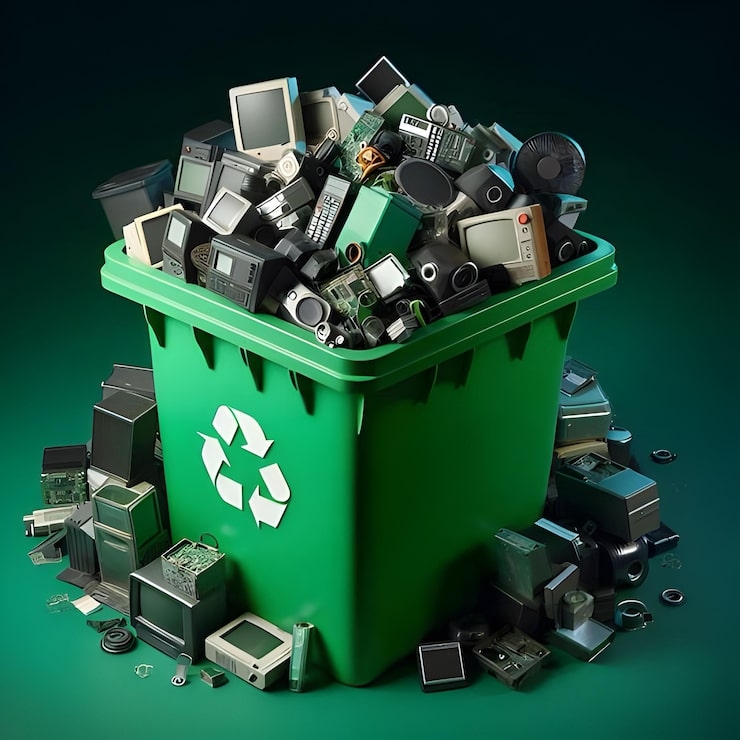
The United Arab Emirates is strengthening its electronic waste management ecosystem as widespread technology adoption, shorter device replacement cycles, and expanding digital infrastructure increase the need for organized collection and responsible treatment. Discarded electronics contain recoverable materials as well as components requiring controlled handling, making collection, sorting, recycling, refurbishment, and compliant disposal increasingly relevant to the country’s waste-management framework.
According to MarkNtel Advisors, the UAE e-waste management sector was valued at USD 169 million in 2025 and is projected to increase from USD 182 million in 2026 to USD 275 million by 2032, reflecting a CAGR of 7.12% during 2026–2032. The assessment links sector development with government sustainability policies, circular-economy reforms, AI-enabled waste-management technologies, and expanding recycling and material-recovery infrastructure.
Circular Economy Policies Support Formal E-Waste Management
Government policy is creating a stronger foundation for organized electronic waste handling across the UAE. The country’s environmental framework emphasizes waste reduction, recycling, resource recovery, waste tracking, and responsible treatment while encouraging systems that can shift waste from a disposal burden toward a productive resource stream.
The UAE General Environmental Policy specifically includes extended product responsibility for electronic waste, mechanisms for sorting and collection, smart waste-management technologies, waste-transport tracking, and systems for transforming waste into resources within the economic cycle. These measures support the development of more structured pathways for discarded electronics.
Extended Producer Responsibility Gains Relevance
Extended Producer Responsibility (EPR) is becoming an important element of the UAE’s evolving waste-management structure. The approach places greater responsibility on producers and suppliers for managing products and waste generated after use, encouraging greater consideration of product lifecycles.
In December 2024, the Ministry of Climate Change and Environment announced the development of an EPR framework covering packaging, electrical and electronic equipment, and batteries. The initiative is intended to increase recycling, reduce waste sent to landfills, and strengthen private-sector participation in waste treatment. The UAE’s EPR framework announcement also links the initiative with the Federal Law on Integrated Waste Management.
Collection and Transportation Form the Core of the Value Chain
Collection and transportation represented approximately 45% of the sector in 2026, making it the leading process segment. Efficient collection is important because downstream activities, including sorting, dismantling, recycling, recovery, refurbishment, and treatment, depend on a consistent flow of electronic waste into formal facilities.
The UAE’s highly urbanized population and substantial use of consumer electronics create recurring residential and commercial waste streams. Take-back programmes, retail collection, municipal collection, third-party services, and direct producer collection can provide multiple channels through which obsolete devices enter formal recycling systems.
Improved collection also supports traceability. Documented movement and authorized handling can reduce the likelihood of electronic waste entering unsuitable disposal channels while providing recyclers with a more consistent supply of recoverable material.
Residential Users Generate a Significant Waste Stream
The residential segment accounted for approximately 42% of the sector in 2026, according to the study. Smartphones, laptops, tablets, televisions, gaming equipment, and smart-home devices are widely used across UAE households, creating recurring volumes of end-of-life electronics as consumers replace or upgrade products.
The concentration of residents in urban communities can support organized collection because designated drop-off points and take-back systems can be positioned close to large population clusters. Convenience remains important, as consumers are more likely to participate in formal recycling systems when collection options are accessible and clearly communicated.
Retailer-led collection and producer-supported take-back programmes can complement municipal systems by creating additional routes for unwanted electronics to reach authorized processors.
AI-Enabled Waste Management Expands Operational Capabilities
Artificial intelligence is becoming an increasingly relevant technology within the UAE’s wider waste-management ecosystem. AI-enabled cameras, sensors, analytics, and connected systems can help improve collection planning, waste identification, route optimization, monitoring, and regulatory oversight.
In 2025, Tadweer Group launched Tajmee’e, an AI-enabled waste collection system in Abu Dhabi that integrates cameras, sensors, and real-time analytics to optimize collection routes and generate waste-composition data. The development illustrates how digital technologies are being integrated into waste-management operations and can provide a foundation for more data-driven segregation and collection planning.
For e-waste, similar digital capabilities can support infrastructure planning, material-flow monitoring, collection forecasting, and improved coordination between waste generators and recycling facilities.
Material Recovery Strengthens Circular Resource Flows
Electronic equipment contains metals, plastics, glass, and other materials that can potentially be recovered and returned to productive use. Increasing recovery rates can reduce the quantity of waste requiring final disposal while creating secondary material streams for industrial applications.
The UAE’s circular-economy direction is also encouraging more organized markets for recyclable materials. In September 2025, the Ministry of Climate Change and Environment launched Tahweel, a national digital marketplace for recyclable materials designed to strengthen connections between sellers and buyers and create additional economic value from recovered resources. The Tahweel digital marketplace initiative forms part of the UAE’s broader transition toward integrated waste management and circular resource use.
For e-waste, digital marketplaces can complement physical recycling infrastructure by improving visibility around available recyclable materials and supporting more organized material transactions.
Infrastructure Investment Supports Higher Recycling Capacity
The development of advanced material-recovery infrastructure is another factor influencing the UAE’s waste-management ecosystem. Large-scale facilities can combine manual, mechanical, and automated sorting technologies to separate recyclable materials and improve recovery efficiency.
Although not all material-recovery facilities are dedicated exclusively to electronic waste, their development demonstrates the UAE’s broader investment in processing infrastructure. Specialized e-waste facilities can build on this ecosystem through dedicated dismantling, sorting, metal recovery, refurbishment, and treatment capabilities.
Such infrastructure is particularly relevant as regulatory requirements become more structured and the volume of electronic equipment entering end-of-life streams continues to increase.
Compliance Remains an Important Consideration
The expansion of formal e-waste management also brings greater compliance requirements for collection operators, recyclers, producers, and other participants. Licensing, documentation, transportation, storage, segregation, treatment, and disposal requirements can increase operational complexity.
For smaller operators, meeting regulatory and infrastructure requirements may require additional investment in equipment, trained personnel, and documentation systems. At the same time, stronger compliance can improve traceability and environmental performance across the value chain.
A More Integrated E-Waste Ecosystem Takes Shape
The UAE’s e-waste management landscape is increasingly influenced by circular-economy policy, formal collection systems, extended producer responsibility, digital technologies, and recycling infrastructure. Collection and transportation remain central to the value chain, while residential users represent an important source of discarded electronic equipment.
Future development will depend on expanding convenient collection channels, strengthening processing capacity, improving digital traceability, and increasing material recovery. As national waste policies continue to emphasize resource efficiency and circularity, electronic waste management is becoming increasingly connected with the broader objective of keeping valuable materials within productive economic cycles.
- Goth Lifestyle
- Fashion & Style
- Music & Bands
- Art & Photography
- Creative Writing & Poetry
- Events & Scene
- Occult & Spirituality
- DIY & Tutorials
- Beauty & Self-Care
- Relationships & Dating
- Gaming & Media
- Tech & Gadgets
- Body Art & Piercings
- Underground Culture
- Spotlights & Interviews
- Travel & Places
- Lifestyle & Daily Life
- Fitness & Health
- Travel & Adventure
- Books & Literature
- Tech & Gaming
- Movies & TV
- Food & Drinks
- Humor & Memes
- Pets & Animals
- General Arts & Crafts

 English
 Arabic
 French
 Spanish
 Portuguese
 Deutsch
 Turkish
 Dutch
Dutch
 Italiano
 Russian
 Portuguese (Brazil)
 Greek
Greek