


How to Properly Place Patches on a Men's Leather Motorcycle Vest
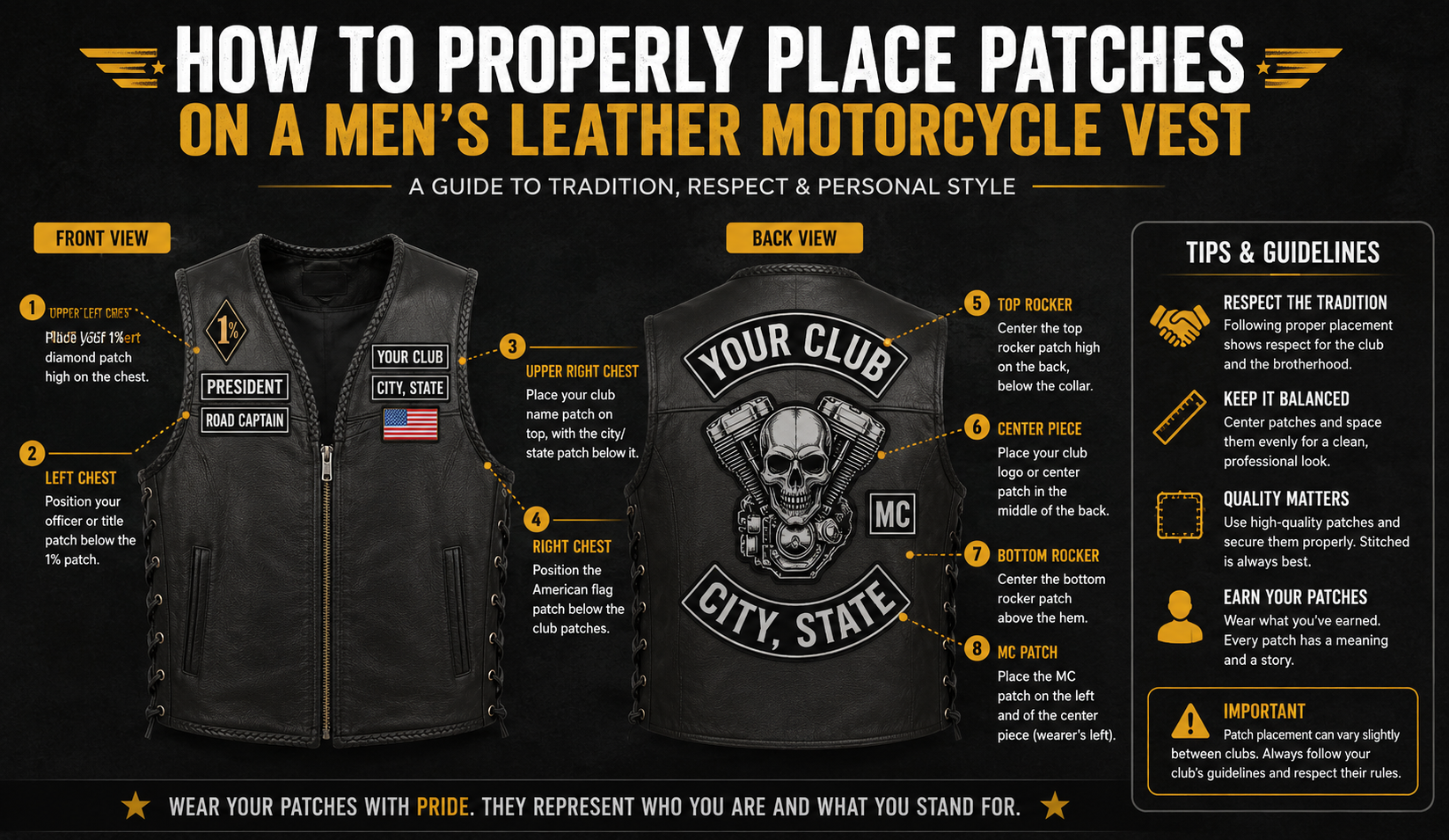
Your men's leather motorcycle vest isn't truly yours until it's patched. A plain vest is a starting point. A patched vest tells your story, where you've ridden, who you ride with, what matters to you on the road, and what kind of rider you are.
But patch placement isn't random, and it's not just about aesthetics. There are cultural rules worth knowing, practical considerations that affect how your vest looks and wears, and a few mistakes that mark you as someone who doesn't understand motorcycle culture.
This guide walks through proper patch placement from the perspective of real riding culture, not Pinterest boards or fashion blogs. Whether you're building your first patched vest or adding to one you've worn for years, you'll know exactly where patches belong and why it matters.
Why Patch Placement Actually Matters
In motorcycle culture, your vest communicates before you say a word. Patch placement signals whether you're part of a club, riding independent, honoring a cause, or commemorating rides and rallies. Get it wrong and you either look like you don't know what you're doing, or worse, you accidentally signal affiliations you don't actually have.
Beyond culture, placement affects how patches wear over time. A patch sewn in a high-friction area will fray faster. One placed where it interferes with movement becomes annoying every single ride. And patches placed without consideration for the vest's overall balance create a cluttered, chaotic look instead of an intentional one.
Taking patch placement seriously shows respect for the culture and ensures your highway ready men's leather biker vest looks and functions the way it should.
Understanding the Back Panel — Sacred Ground
The back of your vest is the most important real estate you have. In traditional motorcycle club culture, this space is reserved exclusively for club patches, specifically, a three-piece patch set consisting of a top rocker (club name), center patch (club logo), and bottom rocker (club location or chapter).
If You're in a Club
Your club dictates what goes on your back. Period. You don't choose this yourself. The club patches are earned, placed according to club rules, and that back panel belongs to your organization. Other patches go elsewhere.
If You're an Independent Rider
You have freedom here, but use it wisely. Many independent riders use the back panel for:
-
A single large memorial patch honoring a fallen rider or loved one
-
A statement patch representing a cause or belief that defines them
-
A large artistic or custom design that serves as the vest's focal point
-
Rally or event patches from significant rides
-
Or they leave it completely blank as a conscious choice
What independent riders should avoid: Don't place a three-piece rocker set on your back unless you're actually in a club. This sends a signal you're claiming affiliation you don't have, and in some regions, that creates real problems with clubs that take their territory and symbols seriously.
Front Panel Placement: The Details That Define You
The front of your real leather motorcycle vests for men is where you get more flexibility and room for personal expression. Here's the traditional breakdown:
Left Chest (Over the Heart):
-
Name patch if you're in a club
-
Small personal patches that hold deep meaning
-
Memorial patches for close friends or family
-
Veteran or service patches if applicable
-
State or country flag patches
Right Chest:
-
Position or rank patch if you're in a club
-
Rally or event patches from rides you've attended
-
Brand loyalty patches (Harley, Indian, etc.)
-
Small humor or statement patches
-
Club support patches if you're a supporter but not a member
Lower Front Panels (Below Chest):
-
Additional rally patches
-
Smaller pins or patches that complement the chest area
-
Cause-related patches (motorcycle rights groups, charities, foundations)
The key is balance. If your left chest has a large patch, balance it with something on the right, not necessarily the same size, but visually weighted so one side doesn't look empty.
Shoulder Placement and Upper Panels
Shoulders are tricky. Some riders love shoulder patches; others avoid them entirely because they can interfere with movement or catch on jacket collars.
If you do place patches on the shoulders, keep these points in mind:
-
Keep them small: Large shoulder patches pull, shift, and wear faster due to constant movement.
-
Position carefully: Patches too far forward on the shoulder get hidden when you wear a jacket over the vest. Too far back and they rub against your neck.
-
Use them sparingly: One small patch per shoulder is plenty. Overcrowding this area looks cluttered and creates physical discomfort.
Upper side panels (just below the armholes) work better for additional patches than shoulders do. The leather flexes less here, and patches stay visible without interfering with movement.
How to Attach Patches to Leather Properly
Placement is only half the job. Attachment method matters just as much for how long patches stay put and how good they look.
Here's what works on a men's leather motorcycle vest:
-
Hand sewing is the gold standard: Use heavy-duty thread (polyester or nylon, preferably waxed) and a leather needle. Sew around the entire patch border with small, even stitches. This holds permanently and looks clean.
-
Use a leather awl for thick hides: Punching small holes first makes sewing through heavyweight leather far easier and prevents bent needles or sore fingers.
-
Never use iron-on patches on leather: Heat damages leather, and the adhesive doesn't bond properly. Iron-on patches will peel off, leaving residue that's hard to remove.
-
Fabric glue as temporary hold only: A small dab of fabric glue can hold a patch in place while you sew, but never rely on glue alone for permanent attachment.
-
Consider a professional for large back patches: A leather shop or experienced tailor can sew large patches evenly and securely, which is worth the cost for your most important patch.
Common Patch Placement Mistakes to Avoid
Here's where riders go wrong and how to avoid it:
Overcrowding Too Soon
Don't rush to cover every inch of your vest immediately. A patched vest should build over time as you ride and collect patches that mean something. Covering it in six months makes it look bought, not earned.
Mismatched Sizes Without Balance
Mixing large and small patches works, but do it intentionally. A huge patch next to three tiny ones on the same panel looks unplanned. Group similar sizes together or use smaller patches to frame larger ones.
Ignoring Symmetry
Your vest doesn't need to be perfectly symmetrical, but it should feel balanced when you look at it. If one side is loaded with patches and the other is bare, the eye notices immediately.
Patching Over Functional Elements
Don't sew patches over pockets you actually use, snap closures, or lacing panels. You'll regret it the first time you need access to what's underneath.
Sewing Through the Liner
If your vest has a removable liner, don't sew patches through both the leather and liner. This makes removing the liner impossible and traps moisture between layers.
Building Your Vest Over Time
The best patched vests aren't planned in advance like an art project. They're built ride by ride, year by year, with patches that represent actual experiences.
Start with one or two meaningful patches placed intentionally. Ride that vest. Attend a rally and add a patch from the event. Ride a memorable trip and commemorate it. Support a cause and wear the patch. Over months and years, your vest fills naturally with patches that tell your real story.
This organic approach creates a vest that looks authentic because it is. Every patch has context. Every placement happened for a reason. And the vest becomes a visual timeline of your riding life.
Related Read: How to Choose the Right Motorcycle Vest for Long Rides
Respect the Culture, Make It Yours
Patch placement follows cultural guidelines that exist for good reasons. Understanding those guidelines keeps you from making mistakes that create problems or mark you as someone who doesn't know better.
But within those guidelines, there's room for personal expression. Your men's leather biker vest should reflect who you are as a rider, the roads you've traveled, the people you've ridden with, the things you care about.
Place patches with intention. Attach them properly. Build your vest over time through real riding. And wear it with the understanding that what's on your back means something, to you, and to the culture you're part of every time you throw a leg over your bike.
- Goth Lifestyle
- Fashion & Style
- Music & Bands
- Art & Photography
- Creative Writing & Poetry
- Events & Scene
- Occult & Spirituality
- DIY & Tutorials
- Beauty & Self-Care
- Relationships & Dating
- Gaming & Media
- Tech & Gadgets
- Body Art & Piercings
- Underground Culture
- Spotlights & Interviews
- Travel & Places
- Lifestyle & Daily Life
- Fitness & Health
- Travel & Adventure
- Books & Literature
- Tech & Gaming
- Movies & TV
- Food & Drinks
- Humor & Memes
- Pets & Animals
- General Arts & Crafts

 English
 Arabic
 French
 Spanish
 Portuguese
 Deutsch
 Turkish
 Dutch
Dutch
 Russian
 Romaian
 Portuguese (Brazil)
 Greek
Greek