

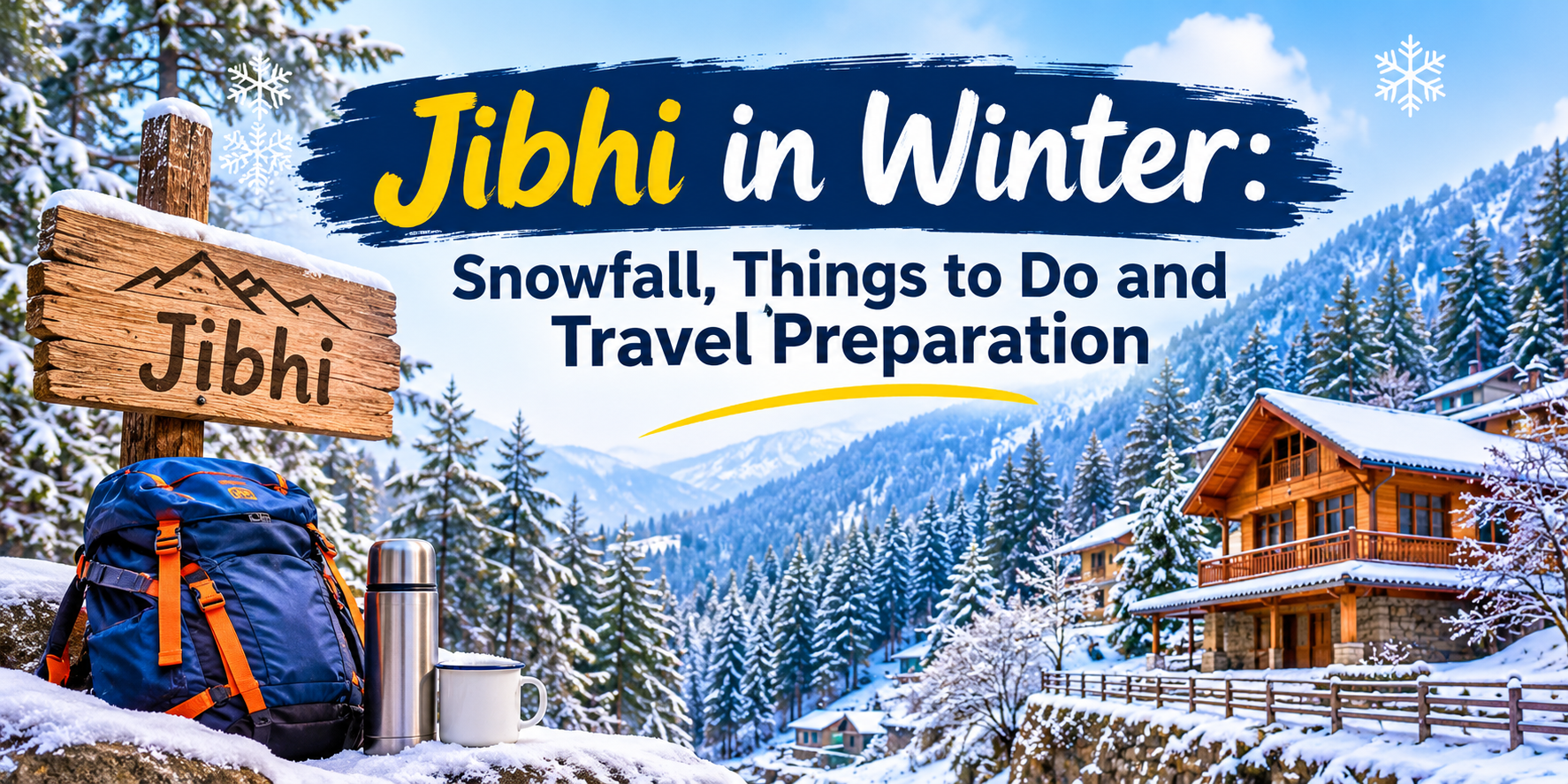

Winter brings a different charm to the mountains of Himachal Pradesh. As temperatures drop, pine forests take on a quiet atmosphere, rivers flow through peaceful valleys and snow-covered landscapes create beautiful views. Among the destinations worth exploring during this season, Jibhi stands out for its relaxed mountain setting, traditional wooden houses and scenic surroundings.
Located in the Banjar Valley of Himachal Pradesh, Jibhi attracts travellers looking for a break from crowded hill stations. Whether you want to enjoy fresh snowfall, spend time in a cosy mountain stay or explore nearby villages, winter offers plenty of reasons to visit.
However, travelling to the mountains during colder months requires some preparation. Understanding the weather, road conditions and local travel options can help make your holiday more comfortable.
What to Expect from a Winter Visit to Jibhi
A winter visit to Jibhi is less about rushing between tourist attractions and more about enjoying the mountain atmosphere. You can spend your mornings admiring mist-covered hills, explore forest trails during suitable weather and relax in a warm cottage after a day outdoors.
Snowfall is one of the biggest attractions during this season, but it is important to remember that snow is not guaranteed throughout winter. Higher-altitude areas around Jibhi may receive more snowfall than the main village.
Temperatures can drop considerably after sunset, and some roads may become difficult to access during heavy snowfall. Travellers should therefore keep their itinerary flexible and check local conditions before heading out.
1. What Makes Jibhi Special During Winter?
Jibhi has a peaceful atmosphere throughout the year, but winter gives the destination a distinct character. The surrounding hills and forests look especially beautiful when covered in fresh snow. Wooden cottages, quiet walking paths and mountain views create an inviting setting for travellers who prefer slower holidays.
Unlike some of Himachal Pradesh's busier tourist destinations, Jibhi offers opportunities to enjoy nature without following a packed sightseeing schedule.
Winter temperatures can fall considerably, particularly at night and in nearby higher-altitude areas. Snowfall is possible during the winter months, but it is not guaranteed every day or throughout the season. Conditions vary depending on weather patterns and altitude.
2. Best Time to Experience Snowfall in Jibhi
The winter season in Jibhi generally extends from December to February. January is often one of the coldest months, while snowfall opportunities depend on local weather conditions.
Here is what travellers can generally expect:
-
December: Temperatures begin dropping, and the surrounding mountains may receive snowfall during suitable weather conditions.
-
January: Colder days and nights make it a good period for travellers hoping to experience a winter atmosphere and possible snowfall.
-
February: The weather gradually begins changing, although cold conditions and occasional snowfall may still occur.
Snowfall is not equally common in every part of Jibhi. Nearby higher-altitude destinations may offer better opportunities to see snow, depending on current conditions.
It is best to avoid planning a trip around a guaranteed snowfall date. Instead, allow some flexibility so you can explore nearby locations if the weather changes.
3. Best Things to Do in Jibhi During Winter
A winter holiday in Jibhi does not need to involve constant sightseeing. Some of its best experiences come from enjoying the surroundings, discovering nearby places and spending time outdoors when conditions allow.
Explore Jibhi Waterfall
Jibhi Waterfall is one of the area's popular attractions. Reaching it involves a short walk through a scenic forest setting. During winter, the surroundings can look particularly beautiful, especially after fresh snowfall.
However, paths may become slippery due to ice or moisture. Wear shoes with good grip and avoid walking on unsafe sections.
Visit Jalori Pass
Jalori Pass is a well-known mountain route connecting the Banjar Valley with other parts of the region. It offers impressive views of the surrounding Himalayan landscape.
During winter, the pass can experience heavy snowfall and temporary road closures. Travellers should check local road conditions before planning a visit and never attempt to cross blocked or unsafe sections.
Discover Shoja Village
Shoja is a peaceful mountain village near Jibhi, known for its forest views and quiet surroundings. It is a lovely place to spend time away from busy tourist areas.
During colder months, the village offers a beautiful winter setting. Snowfall may occur depending on the weather, making it worth considering as part of a flexible itinerary.
Spend Time Near the Tirthan River
The Tirthan River adds to the natural beauty of the region. Travellers can enjoy the peaceful riverside atmosphere, take photographs and explore suitable walking areas.
During winter, mornings and evenings can be particularly cold near the water, so carry warm clothing even if the daytime weather feels pleasant.
Enjoy a Cosy Mountain Stay
One of the simplest pleasures of a winter holiday in Jibhi is staying in a comfortable wooden cottage or homestay. Many travellers enjoy waking up to mountain views, having a warm breakfast and spending quiet evenings indoors.
Choose accommodation with suitable heating arrangements, reliable access and clear information about winter facilities.
4. How to Reach Jibhi During Winter
Jibhi is accessible by road, but winter conditions can affect travel time and route availability.
By road: Travellers can reach Jibhi from major Himachal destinations such as Manali and Shimla, depending on their route. The journey involves mountain roads, so allow additional time during winter.
By bus: Travellers can take a bus towards Aut or Banjar and arrange local transport for the remaining journey. Check available services and timings before travelling.
By air: Bhuntar Airport is one of the nearest airports, although flight availability can be limited and weather-dependent. From there, travellers need to arrange road transport.
By train: The nearest convenient major railway connections are some distance away, so the remaining journey needs to be completed by road.
For a more comfortable journey, plan your arrival during daylight hours. Avoid driving on unfamiliar mountain roads late at night, particularly when temperatures are low or snowfall is expected.
5. Essential Travel Preparation for a Winter Trip
Good preparation can make a significant difference to your winter holiday. Mountain weather can change quickly, and conditions that seem manageable during the afternoon may become uncomfortable after sunset.
Before leaving, consider packing:
-
Thermal innerwear and warm layers.
-
A waterproof winter jacket and comfortable trousers.
-
Woollen socks, gloves, scarves and a warm cap.
-
Waterproof shoes with good grip.
-
Personal medicines and a basic first-aid kit.
-
Power banks, chargers and a torch.
-
Essential identity documents and some cash.
It is also sensible to keep a few extra snacks and drinking water in your vehicle during longer journeys.
Check the weather forecast, road conditions and accommodation availability before travelling. If heavy snowfall is expected, follow local authorities' instructions and postpone journeys through unsafe routes.
6. Planning Your Jibhi Winter Holiday
A well-planned itinerary helps you enjoy the destination without spending too much time travelling between places. A three-to-five-day holiday can provide enough time to explore Jibhi, Shoja and suitable nearby attractions.
Travellers can look at different Jibhi tour packages to compare accommodation, transport, sightseeing and the overall travel schedule. Choosing a package that allows flexibility is especially useful during winter because snowfall and road conditions can affect planned activities.
For a smoother experience, consider working with a travel planner who understands the region, local transport arrangements and seasonal conditions. This can make it easier to organise accommodation, sightseeing and transfers without having to manage every detail independently.
7. Is Jibhi Worth Visiting in Winter?
Yes, Jibhi can be a rewarding winter destination for travellers who enjoy peaceful mountain holidays, scenic views and a slower pace of travel. It is particularly suitable for couples, small groups and nature lovers looking to spend a few days away from busy city life.
The destination is also a good choice for photography, relaxed walks and exploring nearby villages when weather conditions permit. However, visitors should remember that snowfall is not guaranteed and some high-altitude routes may close temporarily.
With suitable clothing, flexible planning and attention to local travel advice, a winter visit can be a memorable experience.
Final Thoughts
Jibhi offers a refreshing winter escape with its forest surroundings, mountain villages and relaxed atmosphere. From exploring Jibhi Waterfall to visiting Shoja and enjoying a cosy cottage stay, there are plenty of ways to experience the region beyond simply waiting for snowfall.
If you are planning a Himachal holiday, Trip Planners India can help you explore suitable travel arrangements based on your preferred dates, accommodation and sightseeing interests. Plan carefully, stay updated on local conditions and give yourself enough time to enjoy the beauty of the mountains.



