


How Religious Charity on Wealth is Calculated in Islam Guide
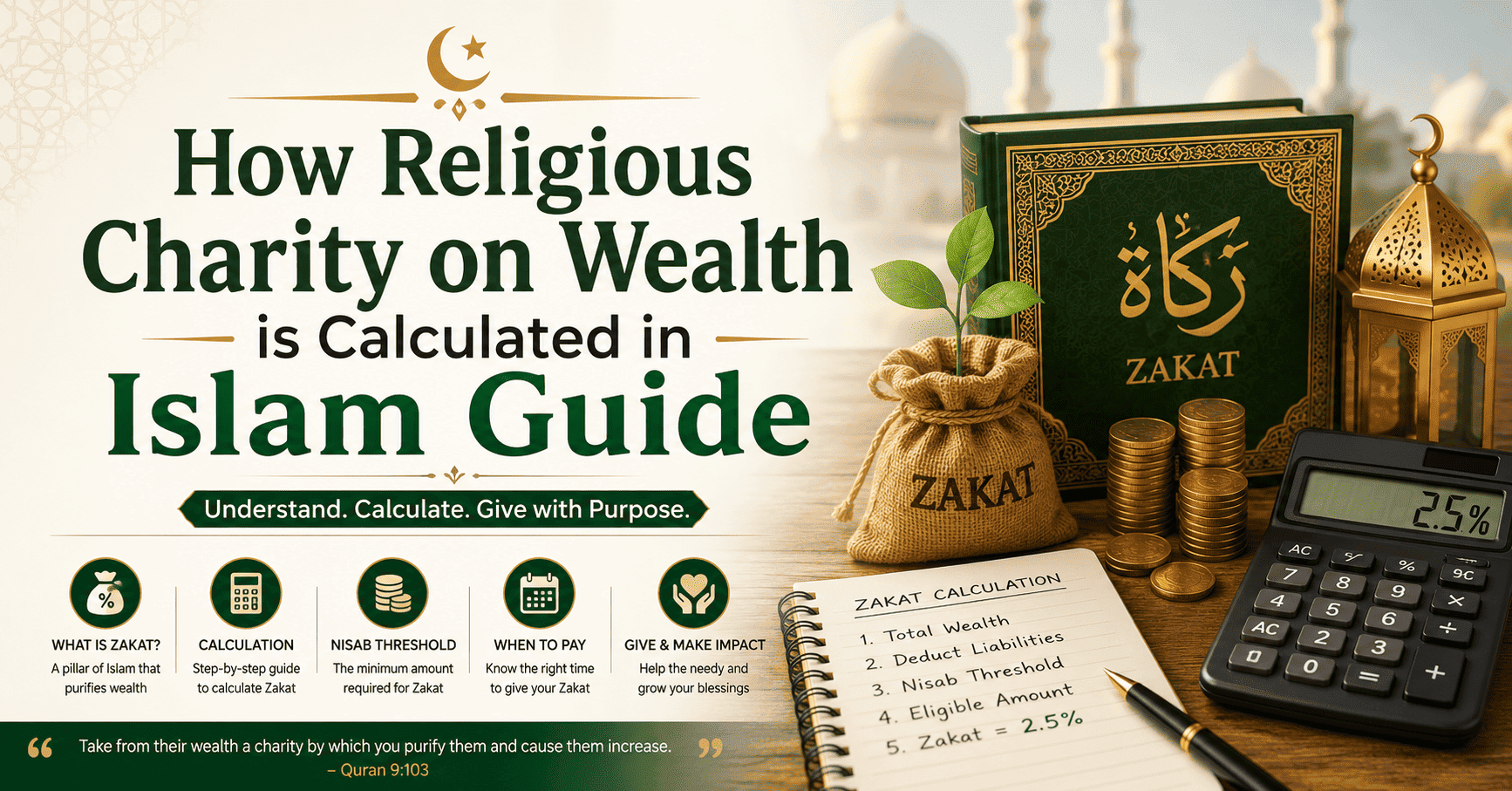
Islam places great emphasis on social responsibility and helping those in need. One of the most important acts of worship related to wealth is Zakat, the obligatory charity that eligible Muslims must pay annually. Understanding how religious charity on wealth is calculated in Islam is essential for fulfilling this pillar of faith correctly. Whether you are calculating Zakat for the first time or reviewing your annual obligations, this guide explains everything you need to know, including how to calculate your zakat, the Nisab threshold, Zakat on savings, gold, silver, and modern methods such as how to pay zakat online.
What Is Zakat?
Zakat is a mandatory form of charity that purifies wealth and promotes economic balance within society. The word "Zakat" means purification and growth. It is one of the Five Pillars of Islam and is required from Muslims who possess wealth above a certain minimum threshold known as Nisab.
The standard rate of Zakat is 2.5% of eligible wealth held for one lunar year. This includes cash, savings, investments, gold, silver, and certain business assets.
Paying Zakat is not merely an act of generosity; it is a religious obligation that strengthens communities and supports vulnerable individuals, including the poor, needy, debtors, and travelers in distress.
What Is the Nisab Threshold for Zakat?
One of the most common questions Muslims ask is: what is the nisab threshold for zakat?
Nisab is the minimum amount of wealth a Muslim must possess before Zakat becomes obligatory. The Nisab is traditionally measured using either:
-
87.48 grams of gold
-
612.36 grams of silver
Most scholars recommend using the silver value because it results in a lower threshold and enables more people to contribute to those in need.
The exact monetary value of Nisab changes according to current market prices of gold and silver. Therefore, Muslims should check the latest rates each year before calculating their Zakat obligation.
If your total Zakatable wealth equals or exceeds the Nisab threshold and remains above that amount for one lunar year, Zakat becomes due.
How to Calculate Your Zakat
Many Muslims wonder how to calculate your zakat accurately. The process can be broken down into a few simple steps.
Step 1: Add All Zakatable Assets
Include:
-
Cash in hand
-
Bank account balances
-
Savings accounts
-
Gold and silver
-
Investment assets
-
Business inventory
-
Money owed to you that is expected to be repaid
Step 2: Subtract Immediate Liabilities
Deduct debts and expenses that are due immediately, such as:
-
Outstanding bills
-
Short-term loans
-
Immediate financial obligations
Step 3: Determine Net Zakatable Wealth
Subtract liabilities from your total assets.
Step 4: Calculate 2.5%
Multiply your net Zakatable wealth by 2.5%.
For example:
-
Total assets: $10,000
-
Immediate liabilities: $2,000
-
Net wealth: $8,000
Zakat due:
$8,000 × 2.5% = $200
This amount should be distributed among eligible recipients according to Islamic guidelines.
Zakat on Savings
One of the most important categories of wealth is zakat on savings.
Any money kept in savings accounts, current accounts, or cash reserves is subject to Zakat if it remains above the Nisab threshold for a full lunar year.
For example, if a Muslim maintains savings of $5,000 above the Nisab level throughout the year, they would pay:
$5,000 × 2.5% = $125
Many people mistakenly believe that only income is taxable for Zakat purposes. In reality, the focus is on accumulated wealth that remains in your possession after meeting living expenses.
Therefore, annual savings should always be included when calculating Zakat.
Zakat on Gold and Silver
Another major area of concern is Zakat on Gold and Silver.
Gold and silver have historically served as the basis for determining Nisab and remain important Zakatable assets today.
Gold
Most scholars agree that gold owned for investment, savings, or wealth preservation is subject to Zakat.
The owner should:
-
Determine the total weight of gold.
-
Calculate its current market value.
-
Pay 2.5% of that value.
Silver
Silver follows the same principle.
Muslims should calculate:
-
Total silver owned
-
Current market value
-
2.5% of the total value
For example:
If a person owns gold worth $4,000 and silver worth $1,000:
Total precious metals value = $5,000
Zakat due:
$5,000 × 2.5% = $125
Proper valuation ensures compliance with Islamic obligations and prevents underpayment.
When Should You Pay Zakat?
Another common question is when should you pay zakat.
Zakat becomes due once:
-
Your wealth reaches or exceeds Nisab.
-
One lunar year passes while maintaining ownership of that wealth.
Many Muslims choose a fixed Islamic date each year, such as:
-
Ramadan
-
The first day of Muharram
-
A personal Zakat anniversary
Ramadan is especially popular because charitable rewards are believed to be multiplied during this blessed month.
However, Zakat should not be delayed unnecessarily once it becomes due.
Paying promptly ensures that those in need receive assistance without delay.
How to Pay Zakat Online
Modern technology has made charitable giving more accessible than ever. Many Muslims now ask how to pay zakat online.
The process is generally straightforward:
Choose a Trusted Organization
Select a reputable Islamic charity or humanitarian organization with transparent financial reporting.
Calculate Your Zakat
Use a reliable Zakat calculator or perform the calculation manually.
Submit Your Donation
Most organizations allow payment through:
-
Credit cards
-
Debit cards
-
Bank transfers
-
Digital wallets
Receive Confirmation
Keep records of your donation for personal financial tracking.
Online payment options make it easy to fulfill religious obligations regardless of location and allow charities to distribute aid efficiently around the world.
Can You Give Zakat to Palestine?
Many Muslims also ask, can you give zakat to palestine?
In general, yes. If recipients in Palestine fall within the categories eligible for Zakat under Islamic law—such as the poor, needy, displaced persons, or those facing severe hardship—then Zakat funds may be directed to them.
Numerous humanitarian organizations provide Zakat-compliant aid programs that support vulnerable families, refugees, widows, and orphans in Palestine.
Before donating, it is advisable to verify that the organization clearly states its Zakat distribution policies and ensures compliance with Islamic guidelines.
Supporting struggling communities through Zakat can provide essential food, shelter, healthcare, and educational assistance to those experiencing significant hardship.
Benefits of Paying Zakat
Beyond fulfilling a religious obligation, Zakat offers numerous spiritual and social benefits.
Purifies Wealth
Islam teaches that Zakat cleanses wealth from selfishness and greed.
Supports the Poor
Funds help individuals meet basic needs such as food, clothing, housing, and healthcare.
Strengthens Communities
Zakat promotes economic circulation and social solidarity.
Encourages Gratitude
Paying Zakat reminds believers that wealth is ultimately a trust from Allah.
Reduces Poverty
Proper distribution contributes to long-term community development and poverty alleviation.
Common Mistakes When Calculating Zakat
To ensure accuracy, avoid these common errors:
-
Forgetting to include savings accounts
-
Ignoring investment assets
-
Using outdated gold or silver prices
-
Deducting long-term debts improperly
-
Delaying payment after Zakat becomes due
Reviewing calculations carefully each year helps maintain compliance with Islamic principles.
Conclusion
Understanding how religious charity on wealth is calculated in Islam is essential for every eligible Muslim. By learning what is the nisab threshold for zakat, understanding how to calculate your zakat, including zakat on savings, and properly assessing Zakat on Gold and Silver, believers can fulfill this important pillar of Islam with confidence.
Knowing when should you pay zakat ensures timely fulfillment of your obligation, while modern options such as how to pay zakat online make the process more convenient than ever. Additionally, many Muslims seeking to support humanitarian causes may ask, can you give zakat to palestine, and in many cases the answer is yes when donations reach eligible recipients according to Islamic guidelines.
Through proper calculation and sincere intention, Zakat becomes a powerful means of spiritual growth, wealth purification, and social justice that benefits both the giver and those in need.
- Goth Lifestyle
- Fashion & Style
- Music & Bands
- Art & Photography
- Creative Writing & Poetry
- Events & Scene
- Occult & Spirituality
- DIY & Tutorials
- Beauty & Self-Care
- Relationships & Dating
- Gaming & Media
- Tech & Gadgets
- Body Art & Piercings
- Underground Culture
- Spotlights & Interviews
- Travel & Places
- Lifestyle & Daily Life
- Fitness & Health
- Travel & Adventure
- Books & Literature
- Tech & Gaming
- Movies & TV
- Food & Drinks
- Humor & Memes
- Pets & Animals
- General Arts & Crafts

 English
 Arabic
 French
 Spanish
 Deutsch
 Turkish
 Dutch
Dutch
 Italiano
 Russian
 Romaian
 Portuguese (Brazil)
 Greek
Greek